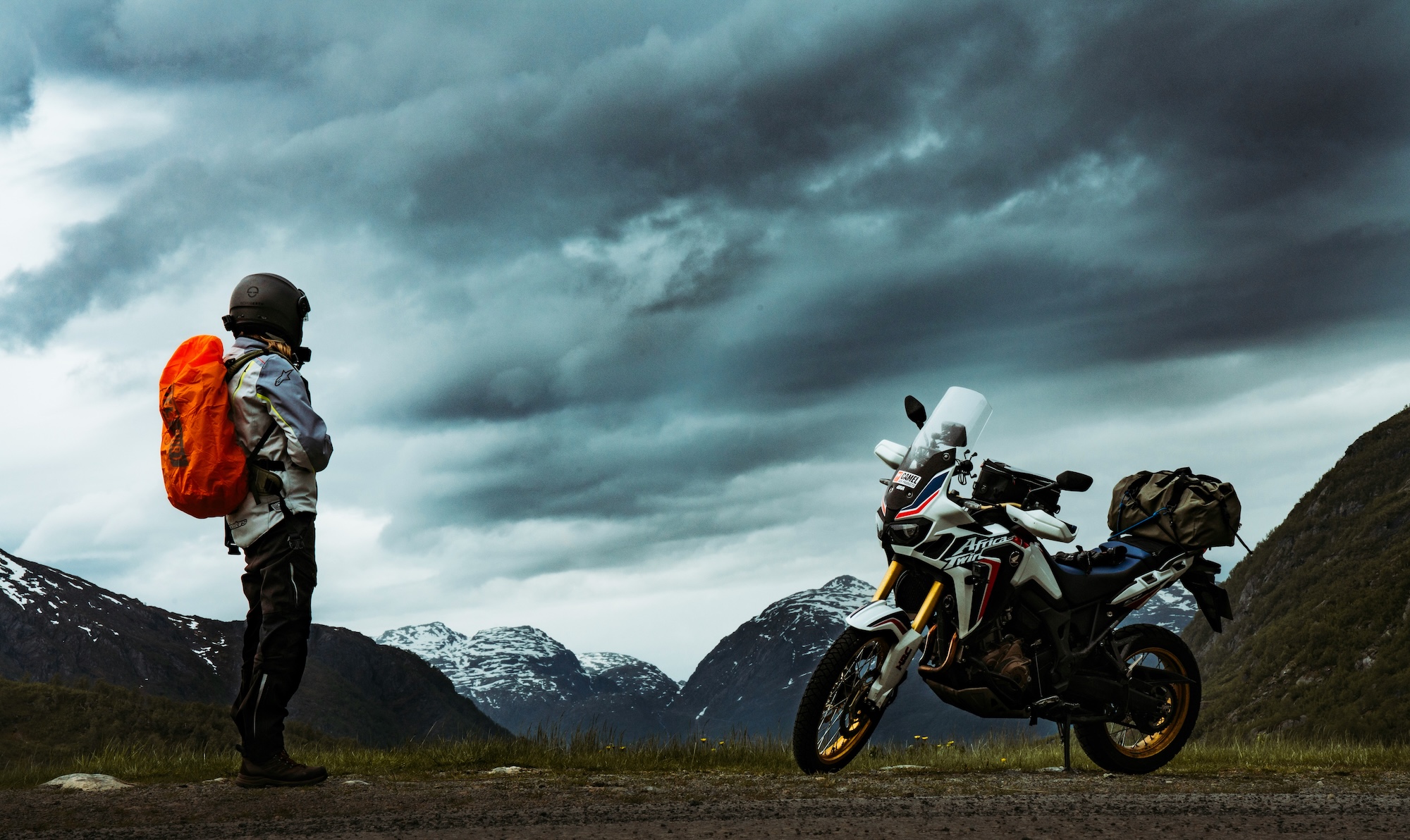
You have been riding for a while. Maybe a season, maybe a few years. You know how to handle your bike on the highway. You have logged some weekend miles. And lately, you have noticed that when you pass a dirt road or a gravel turnoff, part of you wonders where it goes.
ADV riding might be exactly what you’re itching for.
The good news is that you do not need to overhaul your entire riding life to find out if adventure riding is for you. You just need to take a first ride and build from there. Here is how to dip your toe into the world of adventure riding without getting in over your head.
What You Already Know Transfers
If you have spent time on pavement, you are not starting from zero. Far from it.
The fundamentals of motorcycling carry directly into adventure riding. Throttle control, braking technique, reading the road ahead, managing your body position, and understanding how your bike responds under different conditions. All of it applies.
What changes off-pavement is that the terrain is less predictable. Gravel shifts. Dirt gets loose. Rocks push back. The inputs that work on asphalt need to be adjusted, not abandoned.
Think of it this way: street riding teaches you how to ride. ADV riding teaches you how to ride in conditions that aren’t consistent.
That distinction is worth holding onto when you feel uncertain. You are not learning to ride again. You are adding range to what you already know.
What Is Actually New
A few things will feel genuinely different when you first take a bike off pavement.
Standing on the pegs. Off-road riders stand for a reason. When you are upright with your knees slightly bent, your legs become their own suspension. You absorb bumps, you stay balanced, and you have a better view of what is coming. Sitting down on rough terrain locks you into the bike’s movement instead of working with it. Standing feels awkward at first, then natural surprisingly fast.
Slow speed control. Gravel, sand, and dirt punish riders who rely on speed for stability. Off-pavement, slow and smooth is your friend. Learning to ride at a walking pace with confidence is one of the most useful skills you can build, and it is harder than it sounds until you practice it.
Looking further ahead. On pavement, you read maybe 10 to 15 seconds of road ahead. Off-road, the terrain changes faster, and the consequences of surprises are higher. Train your eyes to scan further and identify the line you want before you get there.
Letting the bike move. Street riders often grip hard and hold the bike still. Off-road, the bike needs room to track through loose terrain. Relaxing your grip, loosening your elbows, and letting the bike find its own line is a skill that feels counterintuitive but makes an enormous difference.
These elements are not complex, but they all take repetition to master.
Start Small and Stay Close
Your first ADV experience does not need to involve a mountain pass, a river crossing, or anything you cannot walk back from.
The best way to start is on familiar ground. Find a gravel road, a dirt parking lot, a fire road, or a maintained trail near where you already ride. Land somewhere you can make mistakes without consequence and practice the same stretch of terrain multiple times.
Spend time on the basics before you go exploring. Practice standing at low speed. Practice stopping on loose ground. Practice starting from a stop on gravel. Get comfortable with how your bike feels when the surface changes beneath you.
This kind of slow, deliberate practice is not glamorous, but it builds the foundation that makes real adventure riding enjoyable instead of stressful.
Give yourself a few of these shorter sessions before you plan anything with distance or elevation. An hour of intentional practice on accessible terrain will do more for your confidence than a full day of riding in over your head.
Gear Considerations for Your First Ride
You do not need to buy everything at once. But a few things matter more off-road than they do on pavement.
Boots with ankle support. Your feet will contact the ground more often than on pavement, and ankle injuries are the most common ADV casualty. A proper riding boot with ankle protection is worth prioritizing early.
Gloves that work for falls. Off-road falls are more common and typically have a lower speed than street incidents. Gloves designed for impact protection matter here.
A helmet with a peak or sun visor. Not mandatory, but off-road helmets and dual-sport helmets are designed for the upright riding position and the sun angles that come with it. Even adding a sun visor to your existing helmet helps.
Your existing gear is fine to start. You do not need to replace everything before your first ride. Ride what you have, identify what creates problems, and upgrade from there.
What Bike Do You Need
If you already own a motorcycle, your first ADV ride can happen on it.
Street bikes have limits off-pavement, but a moderate amount of packed gravel or maintained dirt roads is manageable on most bikes if you ride appropriately. Your first goal is to experience the terrain and build skills, not to push into technical off-road conditions.
When you are ready to go further, purpose-built adventure and dual sport motorcycles open up significantly more terrain. They are designed for exactly this kind of riding, with suspension, geometry, and ground clearance built around the conditions you will encounter.
But do not let gear or the perfect bike stop you from starting. The first ADV ride is about exposure, not equipment.
The Honest Truth About Your First Time Off-Pavement
It will probably feel harder than you expect.
Loose terrain is humbling, even for experienced street riders. Your instincts will be slightly wrong in ways that take repetition to correct. You may drop the bike. You will almost certainly ride more slowly than you planned.
That is all completely normal.
ADV riders are not riders who never struggle off-pavement. They are riders who kept going back until it started to feel natural. The learning curve is real and worth it.
Every mile you put in on mixed terrain makes you a more capable, more confident rider everywhere. The skills you build off-road translate back to the street in ways that will surprise you.
So find a gravel road. Stand up on the pegs. Let the bike move.
That is how the first ADV ride starts. And once it does, it tends not to be the last one.
Ready to find a bike built for adventure? Use our bike finder to explore ADV and dual sport options. And if you want to understand the full ADV world before you ride, start with Adventure Motorcycles Explained.