Everything you need to ride one of America’s most iconic roads, whether you’re planning the whole thing or just a taste of it.
What comes to mind when you think of Route 66?
Mention the name to just about anyone, rider or not, and you’ll see something click in their imagination. They’ll probably conjure up images of vintage neon lights against a twilight sky, classic Americana roadside diners slinging hot coffee, or simply a wide open road that represents total freedom. There’s a reason it’s the one route every rider knows by name.
Route 66 isn’t the fastest way to cross the country, nor is it the twistiest ride or most remote adventure, either. Yet it’s the closest thing American motorcycling has to a rite of passage: a two-lane ribbon of asphalt that once carried a changing nation west and now guides riders through living history.
This legendary route represents the very heart of motorcycle travel. It’s an iconic journey packed with American history, mid-century architecture, Indigenous culture, natural scenery, roadside oddities, and local folklore, rightly sitting at the top of most riders’ bucket lists.
Route 66 turns 100 years old this year, so if you’ve been looking for a reason to go, that’s a pretty darn good one. Here’s what you need to know to plan an unforgettable ride.
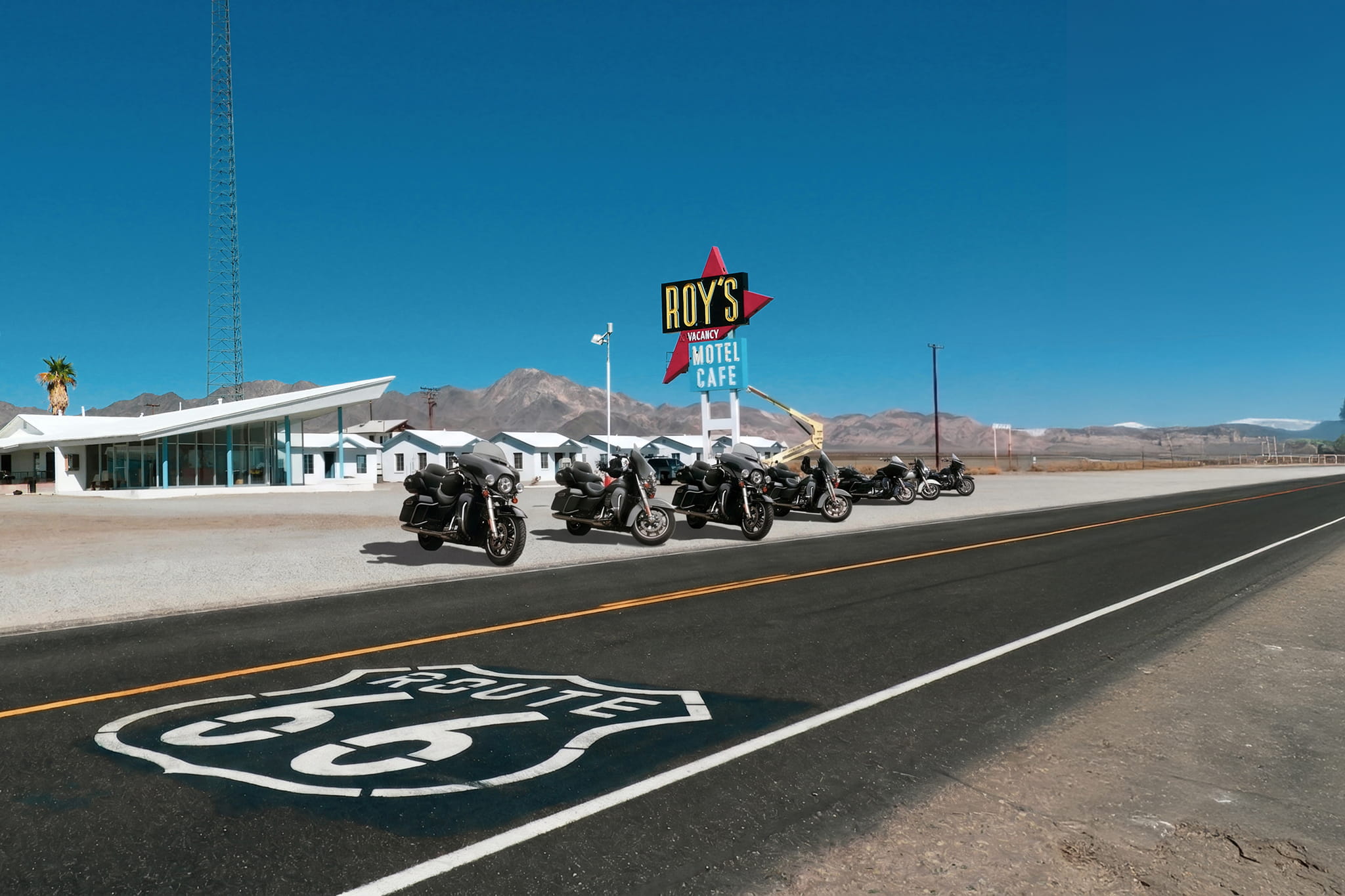
What Exactly Is Route 66?
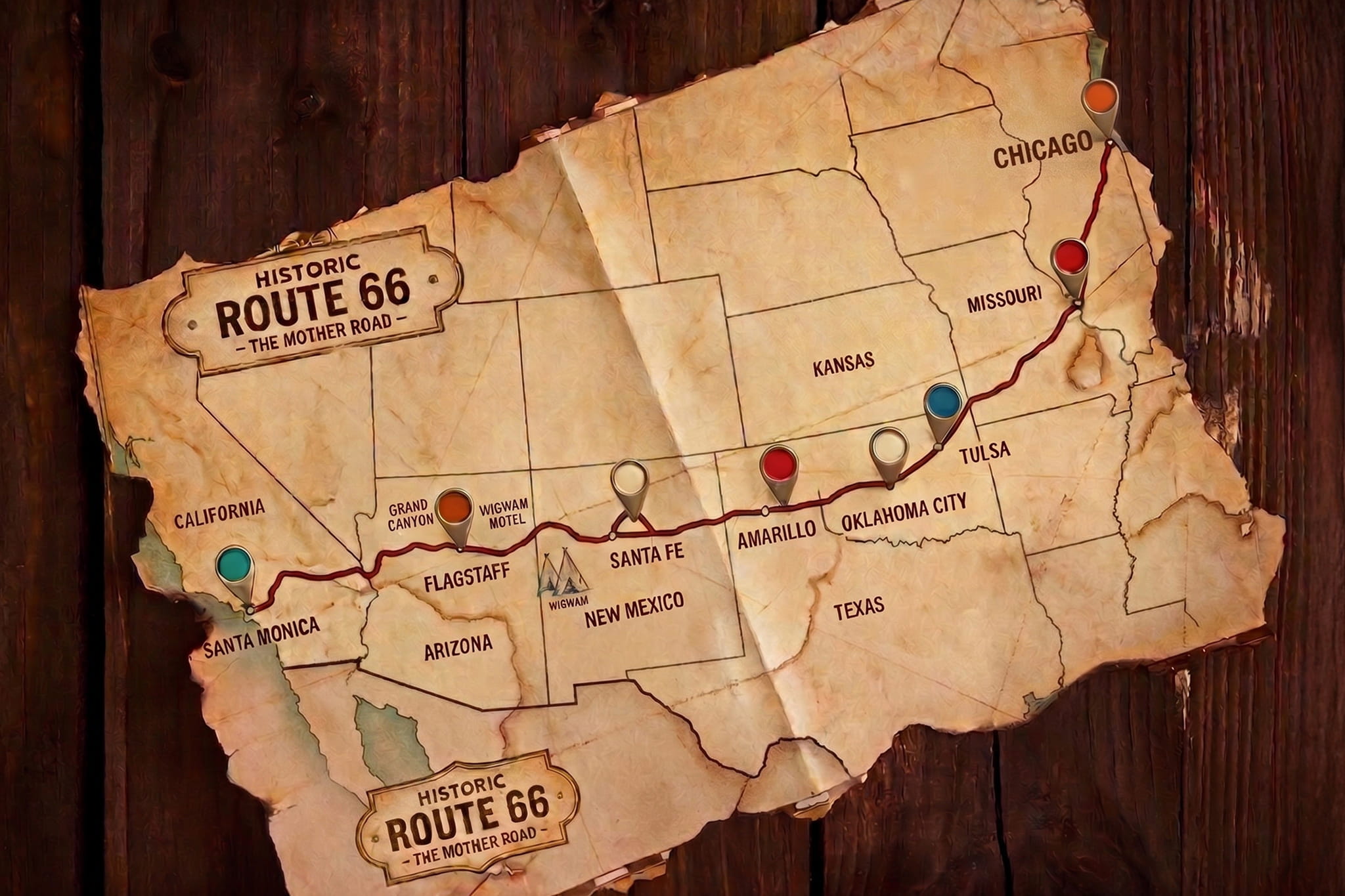
Officially established in 1926, Route 66 was one of America’s original paved federal highways, spanning around 2,400 miles from the shores of Lake Michigan in Chicago all the way to the Pacific Ocean in Santa Monica, California. Along the way, it cuts through eight states: Illinois, Missouri, Kansas, Oklahoma, Texas, New Mexico, Arizona, and California.
During its mid-century heyday, the route completely transformed the small towns it passed through. Roadside mom-and-pop diners, motels, and quirky attractions sprang up along the route, many of which are still standing today—earning the nickname “The Main Street of America.”
Author John Steinbeck famously gave it the nickname the “Mother Road” in his classic novel The Grapes of Wrath, and the name has followed it ever since—through the Dust Bowl migration of the 1930s, the post-war family road trip boom of the ‘50s, and its official decommissioning in 1985 after the interstate system made it functionally obsolete.
That last part matters for planning as Route 66 doesn’t technically exist as a single, unified highway anymore. It survives instead as a patchwork of original alignments, frontage roads, loops through main streets of small towns, and brief stretches of highway that connect it all. You’ll be keeping an eye out for the iconic, brown “Historic Route 66” markers that line the roadside.
None of that takes away from the ride. If anything, it only adds to it. You’re following in the footsteps of history, mile by mile, the same way generations of riders before you have.
Do You Need to Ride the Whole Thing?
Absolutely not, and that’s the beauty of it.
Making the full haul from Chicago to Santa Monica is a serious undertaking that requires at least a couple of weeks if you actually want to slow down and take in the sights. Most riders don’t do the entire route in one go, so picking a specific stretch that calls to you is a great place to start.
Every section of the route has a totally distinct personality. Starting at the “Begin Route 66” sign in Chicago, the Illinois and Missouri stretches are known for their classic midwestern farmland, rolling green hills, and tight-knit historic communities. It’s an incredibly peaceful and nostalgic ride through America’s heartland, where tree-lined roads connect beautifully preserved mid-century downtowns.
Further west, Oklahoma holds the highest number of driveable miles of the original route, running through rich tribal lands, past historic cattle-ranching country, and straight into the red-dirt prairies. Right after that, the Texas Panhandle opens up into massive, wide-open horizons where you can really feel the scale of the American plains.
If you want a pure taste of the old school West, Arizona has some of the longest and best-preserved sections of original road left. A long weekend spent riding between the desert towards Seligman, Kingman, and Oatman gives you a real feel for the spirit of the road with plenty to stop and see.
There’s no wrong way to explore the Mother Road. Start with what interests you most, or whatever is closest, and go from there. Half the fun is what you’ll find along the way.
Iconic Stops Along Route 66
You could easily fill a book with everything worth seeing on the Mother Road. If you can’t stop at all of them, here are a handful of the most iconic sights that should be on every rider’s itinerary.
The Gemini Giant and Launching Pad, Wilmington, Illinois. Located just an hour outside of Chicago, this towering 30-foot fiberglass spaceman is one of the last remaining “Muffler Men” from the 1960s. Rocket ship in hand, he stands guard right outside the Launching Pad Drive-In. For many itineraries, this makes for a great place to pull over, snap your first couple of road trip photos, and grab a classic Midwestern smash burger and a malt milkshake.
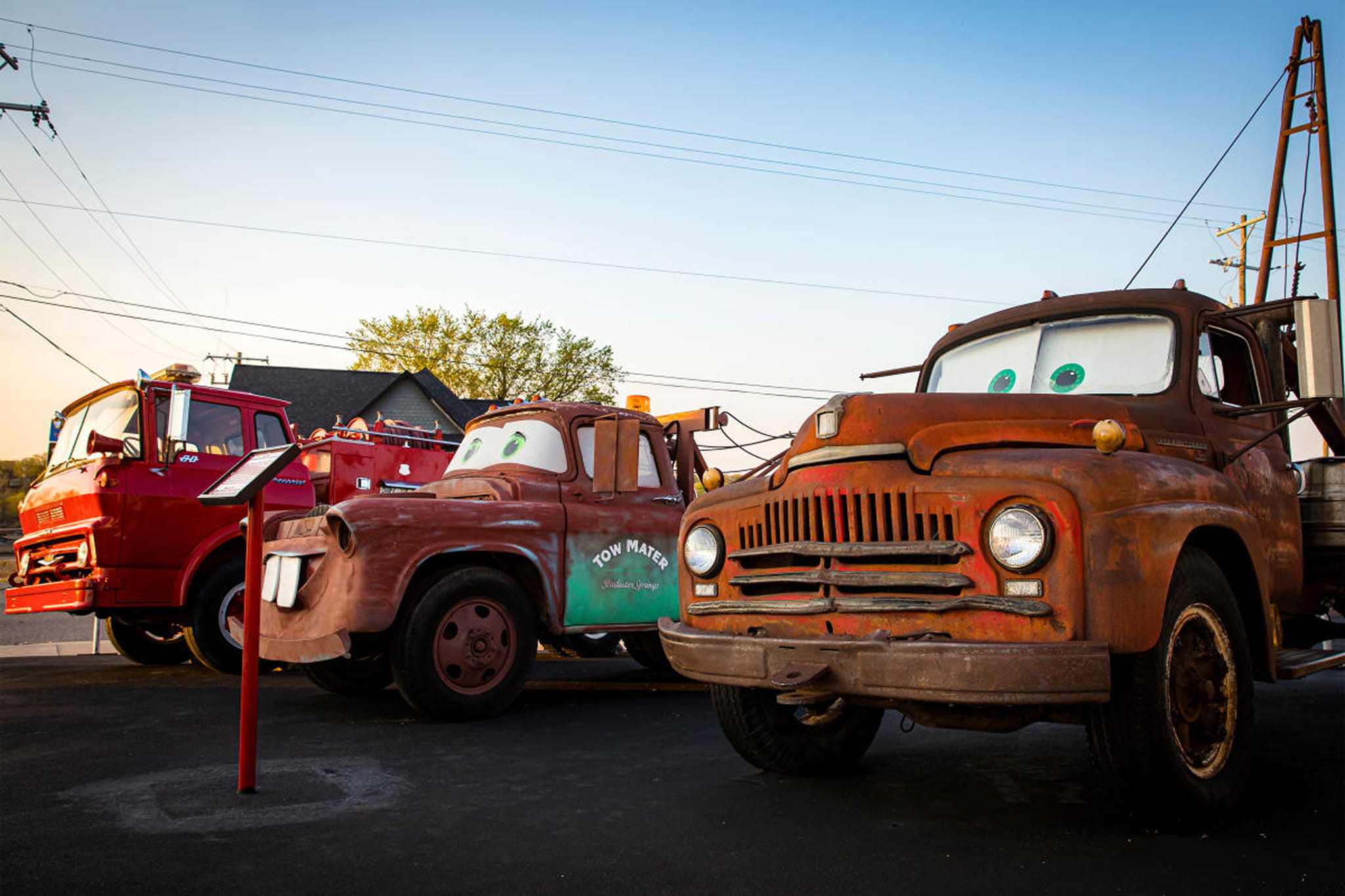
Cars on the Route, Galena, Kansas. Kansas holds just thirteen miles of Route 66, but that includes one of our favorite stops along the way. This beautifully restored 1934 Kan-O-Tex service station is famous for housing the vintage boom truck that inspired the beloved character Tow Mater in the movie Cars. It’s a fantastic, friendly place to grab a cold drink and chat with the local caretakers.
The Blue Whale, Catoosa, Oklahoma. One of the most beloved roadside attractions in the country, this whimsical waterfront landmark was hand-built in the 1970s by a local man as an anniversary gift for his wife. It quickly became a favorite swimming hole for travelers seeking relief for the summer heat, and today it remains a quintessential stop that perfectly captures the spirit of the historic route.
Cadillac Ranch, Amarillo, Texas. Ten vintage Cadillacs, buried nose-down in a dusty field just off the interstate, covered in decades of spray paint from visitors who couldn’t resist adding their own layer. It’s completely free, open around the clock, and yes, you’re encouraged to bring a can of paint and leave your mark. Just don’t expect your masterpiece to survive the week.
The MidPoint Cafe, Adrian, Texas. Exactly what it sounds like: the geographic halfway point of Route 66, sitting precisely 1,139 miles from both Chicago and Santa Monica. Beyond the iconic photo op at the halfway sign, this is a non-negotiable lunch stop. Be sure to grab a slice of their famous “Ugly Crust Pie,” and don’t be surprised if the whole place feels a little familiar. The former owner was the inspiration for Flo and the V8 Cafe in the movie Cars.
The Blue Swallow Motel, Tucumcari, New Mexico. If you only stay overnight in one classic Route 66 motor court, make it this one. Open since 1939 and complete with its legendary neon sign and individual garages attached to each room, it’s one of the most iconic motels in the country. Staying here is a complete time capsule experience that transports you straight back to the golden age of highway travel. Plus, you’re just down the road from Del’s Restaurant, another local staple that, since 1956, has been famous for its friendly service and authentic New Mexican green chile.
Standing on a Corner Park, Winslow, Arizona. You can’t ride this close to Winslow without humming the classic Eagles song, Take It Easy. This dedicated park features a life-sized bronze statue of a guitar-toting balladeer, a bright red flatbed Ford parked on the street, and a massive Route 66 shield painted directly onto the asphalt. After getting your photo, feel free to join other riders across the street at the RelicRoad Brewing Company for a bite and some great local craft beer.
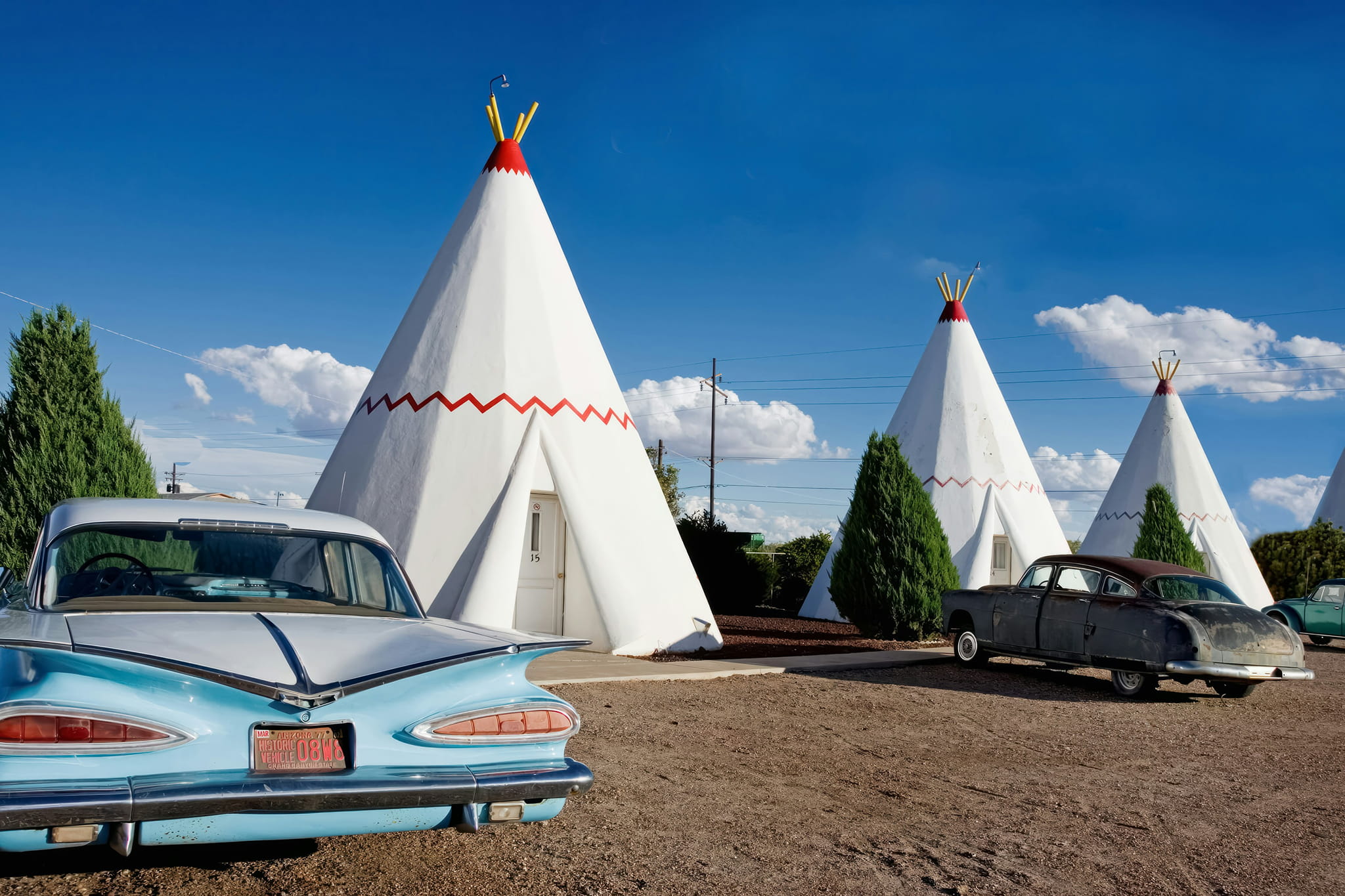
The Wigwam Motel, Holbrook, Arizona. Another legendary lodging option, this spot allows you to sleep inside a collection of fifteen towering, concrete teepees built in the 1950s. The property is surrounded by vintage classic cars, all parked permanently in the driveways, making a slow cruise through the property feel like a literal trip back in time.
Oatman, Arizona. Tucked into the rugged Black Mountains of Arizona, this former gold mining town is famous for the wild burros that freely wander the main street looking for snacks. It’s historic and a little chaotic, which is exactly the kind of stop that makes Route 66 what it is.
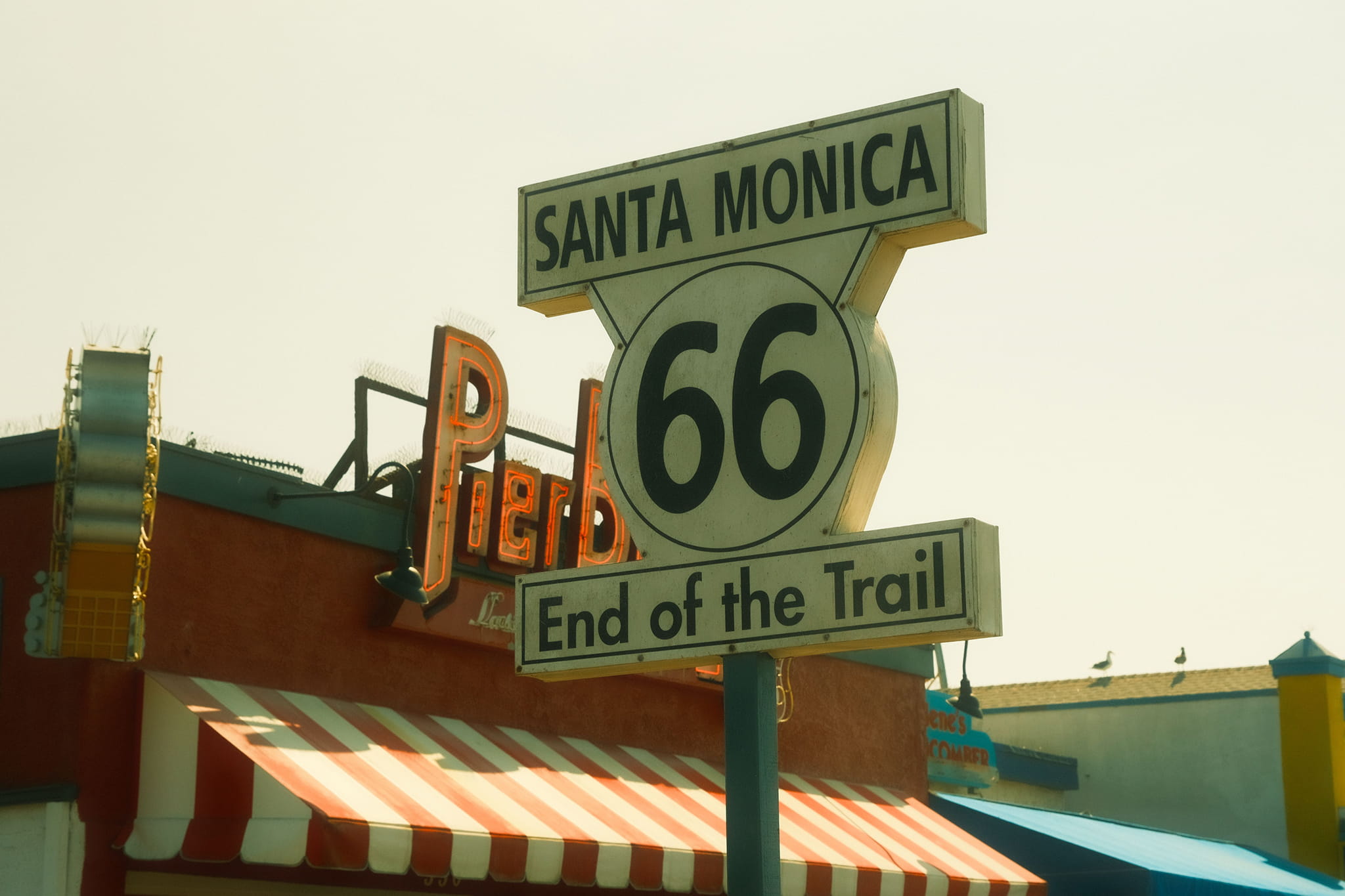
Santa Monica Pier, California. The official finish line. An “End of the Trail” sign marks the spot where the road meets the Pacific, and walking out the end of the pier to grab some fresh seafood at the water’s edge after finishing any real stretch of this road brings an incredible sense of accomplishment that hits harder than you might expect.
Practical Tips Before You Ride
Pack for extremes. Depending on the season and the states you take on, you could be dealing with Midwest humidity, afternoon heat in the high desert, and cold mountain mornings in places like Flagstaff, all within the same trip. So layer accordingly and don’t underestimate how much the temperature can swing between morning and afternoon along Route 66. Also, proper riding gear will not only keep you safe, but it’ll shield you from the intense sun, wind, and blowing desert dust along the journey.
Fuel up more often than you think you need. While gas stations are plentiful in the midwestern portions of Route 66, the gaps between towns widen significantly once you hit Texas, New Mexico, and the Mojave Desert. Make it a golden rule to start looking for fuel whenever your tank drops below half.
Get a dedicated Route 66 app or map. Standard GPS and navigation apps are typically programmed to find the fastest route, which means they’ll constantly try to redirect you away from the historic road and onto the interstate every chance it gets. For a smoother ride, download a dedicated Route 66 app that has the historic turn-by-turn alignments pre-mapped, or go old school with a physical tank bag paper map so you can track the route without the need for screens.
Book ahead for the iconic stays. Sounds obvious, but worth stating. Places like the Blue Swallow only have a handful of rooms, and they fill up fast during peak travel season. If there’s a specific motel on your must-do list, plan ahead.
Give yourself more time than feels necessary. The worst way to experience Route 66 is to rush through it. The entire magic of this road lies in the impromptu stops, roadside oddities, and the conversations with friendly locals who proudly keep their history alive. Budget the extra hours, days, or whatever you can spare. You won’t regret it.
Take the Grand Canyon detour. One common misconception worth clearing up: Route 66 doesn’t actually pass through the Grand Canyon. But Williams, Arizona sits close enough, about 55 miles from the South Rim—making a detour up AZ-64 one of the most popular side trips on the entire route, if you’ve got the time.
Don’t pass up a chance to get to know the locals (and other riders). One of the greatest parts of riding Route 66 is the incredible community of people who live, work, and ride along the historic strip. When you pull up to a gas pump or sit down at a diner, don’t hesitate to strike up a conversation. You’ll probably find the local business owners and residents know the best nearby spots, and swapping stories and tips with fellow riders along the way is something that happens naturally.
A Century of Riders, Still Riding
Generations of riders have sought out Route 66. Whether you’re chasing a sense of nostalgia, looking to check the legendary ride off your bucket list, or simply wanting to experience the immense beauty of the changing American landscape, this is a journey that has something to offer everyone.
If you’re new to riding and this feels like a big first trip to take on, it doesn’t have to be your first ride. Get started and build up the miles first, get comfortable on longer stretches closer to home, and let Route 66 be the trip you’ve earned rather than the one you jump into cold.
Looking for a few other iconic trips to take? Explore our Rider’s Bucket List, or our list of iconic city-to-city journeys for more ideas.
Your next ride is somewhere out there waiting.
See you out there.