Track or trail? When it comes to dirt bikes, some are drawn to high-flying stadium jumps and others to remote wilderness routes. Here’s how to find the off-road riding style calling your name.
Ask ten dirt bike riders what they love most about the sport, and you’ll probably get ten different answers.
That’s the beauty of off-road riding. It means different things to different people. To one rider, it’s launching off a high-flying motocross jump. To another, it’s being six hours deep on a trail, engine at a low rumble, without another soul in sight.
Think of it as a massive collection of distinct adventures instead of a single hobby.
Two of the most common paths new riders land on are motocross and trail riding, and they feel like two completely different sports once you’re out there. They’re built for different styles of fun, happen on different terrain, and require different types of bikes.
Neither one is the “right” way to ride off-road. It just depends on which one fires you up most.
Let’s break down how they compare and everything you need to figure out which one might be right for you.
What Actually Separates Track from Trail?
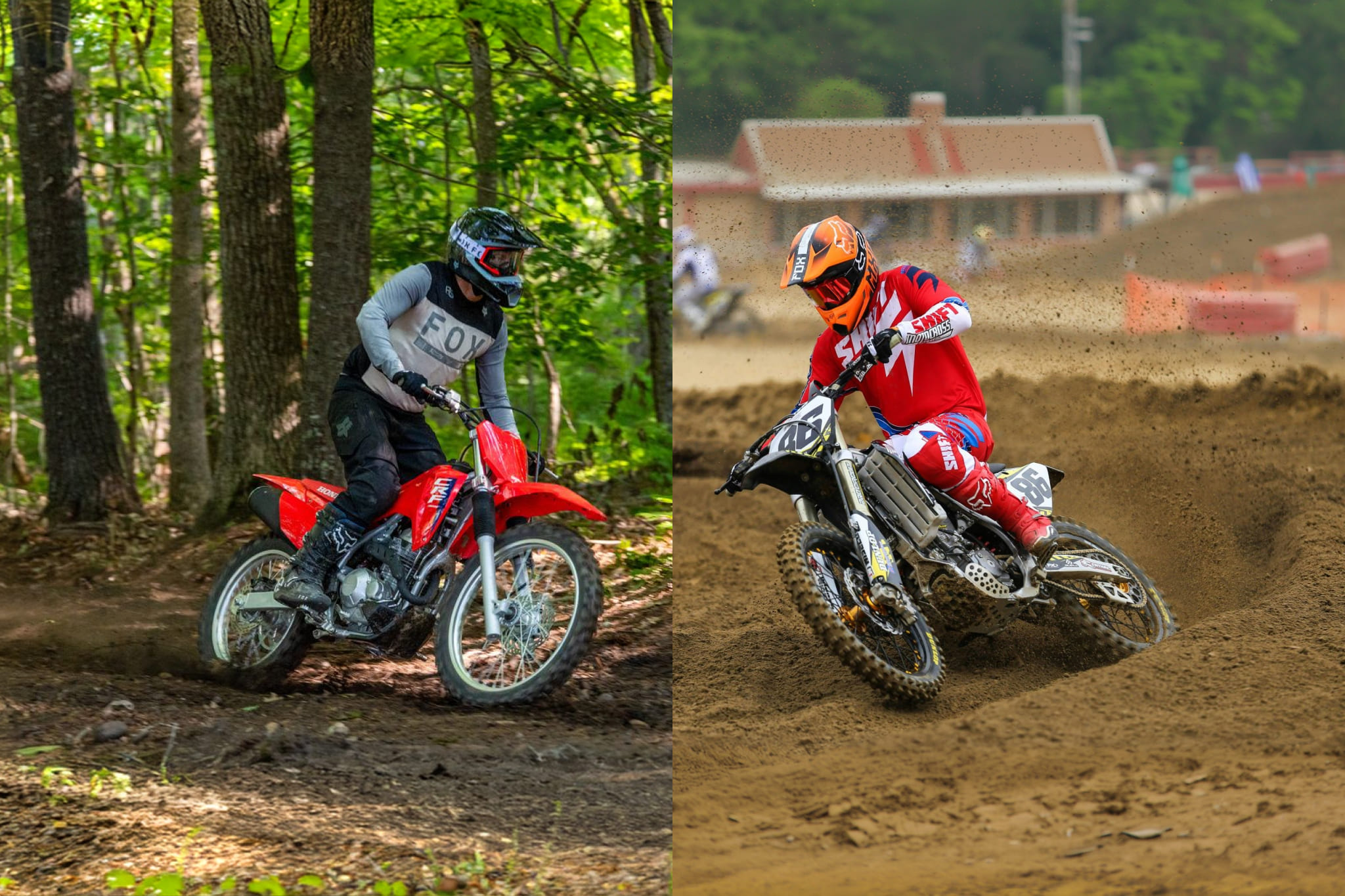
At its simplest level, motocross is off-road riding on a closed-circuit track, and trail riding is exploring on natural terrain.
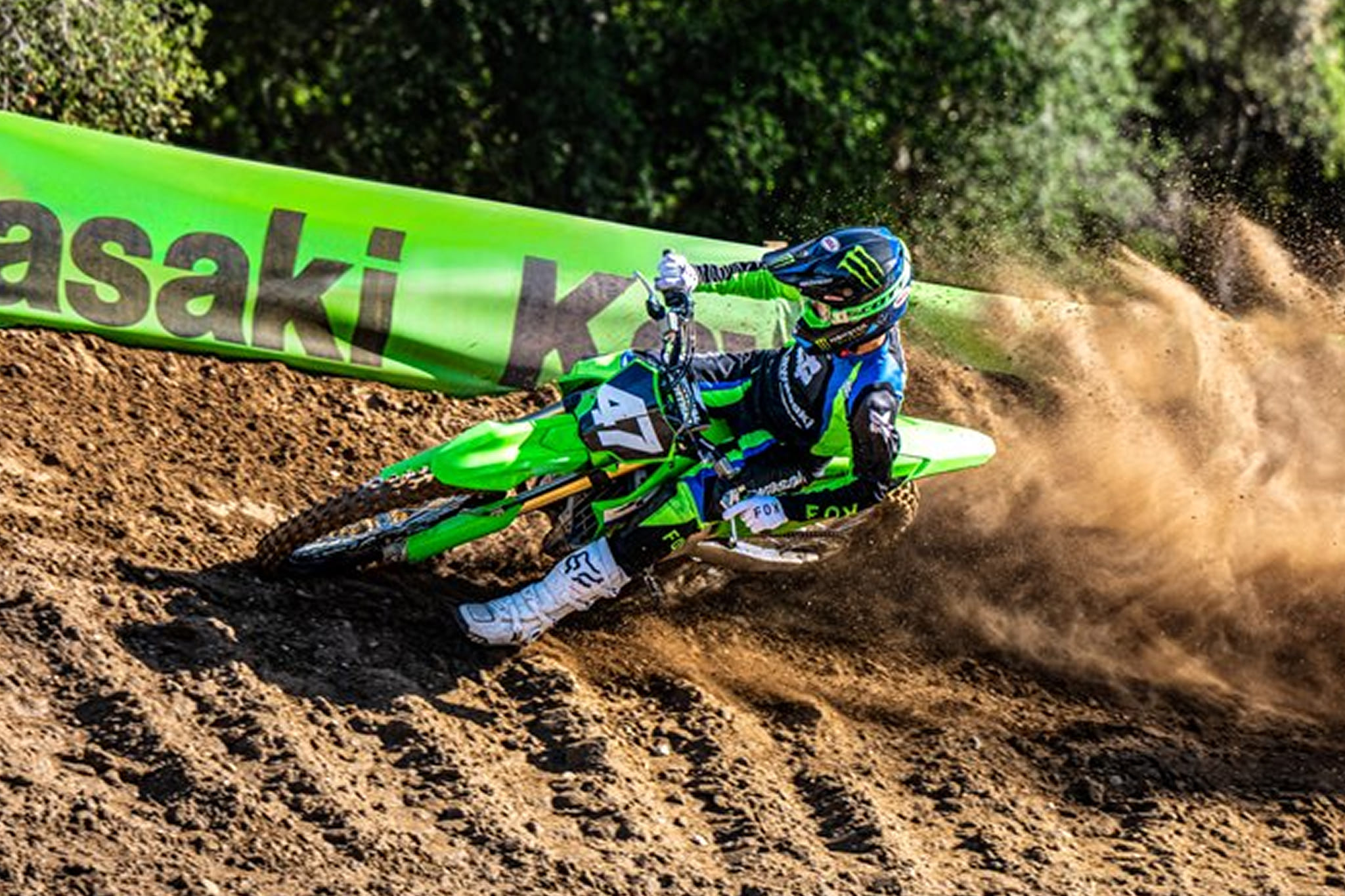
Motocross is a high-intensity, physically demanding sport. Riders ride on enclosed dirt circuits engineered with jumps, banked turns (called berms), rhythmic roller sections (called whoops), and tight turns. It’s a highly controlled environment designed to test your speed, fitness, and bike control over short but super intense sessions. Local amateur races typically run motos in the 15 to 20-minute range, and every second of that time is spent pushing the bike as hard as it’ll go.
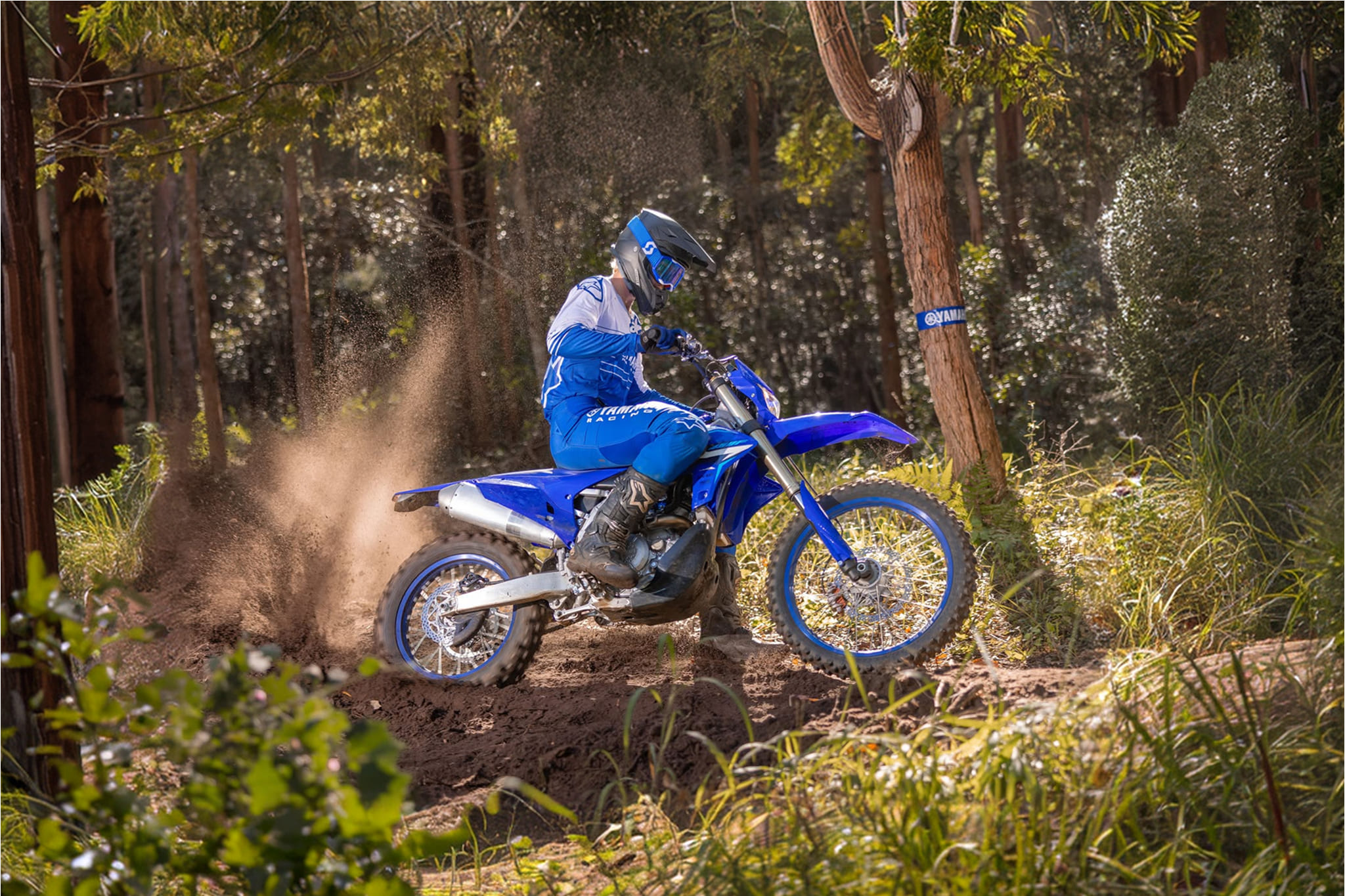
On the other hand, trail riding takes place out in the natural world. You’ll find yourself navigating forest paths, desert washes, rocky mountain passes, and winding fire roads. On the trail, there’s no clock or course marshal. The focus is more on exploration and navigation rather than high-speed track racing, and the adventure can be a couple of hours or a full day.
That difference in purpose changes everything else about the two disciplines, starting with the bikes themselves.
Keep in mind that, unlike dual-sport or adventure motorcycles (ADVs), pure dirt bikes are strictly off-road machines and aren’t street legal. In most parts of the country, you can’t simply ride one right out of your driveway onto public pavement, though a few states make exceptions for rural road shoulders or street conversions.
That means getting to the track or trailhead just takes a little planning ahead. Usually, that means loading your bike into a truck bed, pulling a small trailer, or securing it to a hitch carrier behind your vehicle.
Do You Need a Different Bike for Each?
Short answer: yes, ideally, because they’re engineered for different jobs.
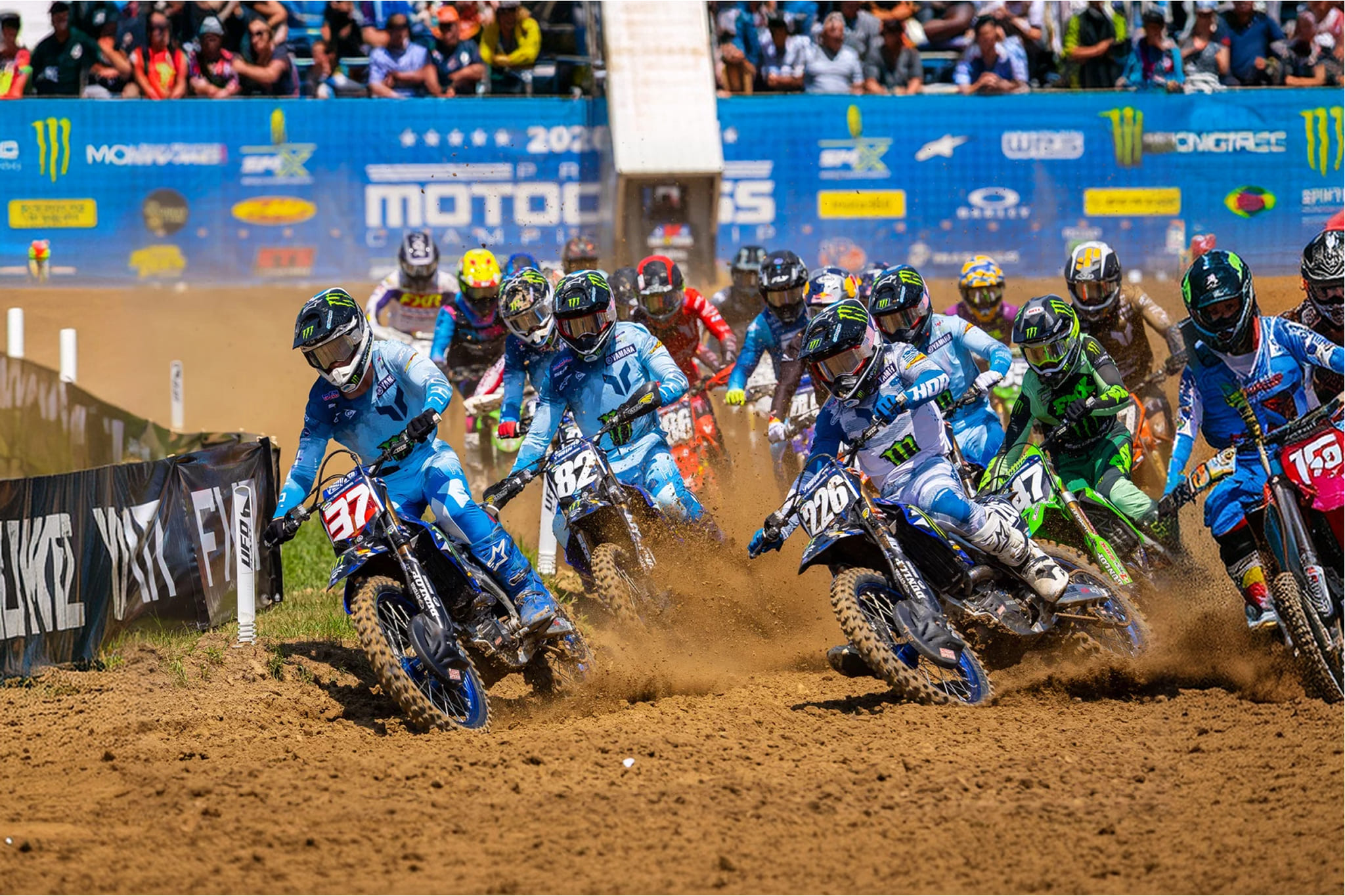
Motocross bikes are tuned stiff and aggressive, built to survive heavy landings off big jumps and reward full-throttle commitment. Take one out on a rugged trail, though, and that stiff racing suspension turns harsh fast. Bumps that a softer suspension would easily absorb will instead kick straight through the handlebars into your wrists. They’re also completely stripped down to save weight, meaning they lack simple trail conveniences like headlights or even a kickstand.
Trail bikes are the complete opposite. They have softer, more forgiving suspension and smooth, steady power that’s easy to control at lower speeds. This keeps the bike predictable through tricky terrain and comfortable for hours of riding. But because they prioritize this all-day comfort and control (rather than explosive, high-revving speed), they can feel sluggish the moment you point them at a motocross track.
You can technically ride either bike on the other’s terrain, but you probably won’t enjoy it. You’ll also wear down the bike (and yourself) faster doing it.
That doesn’t mean you need to buy two bikes to try both disciplines. Most beginners begin on an entry-level bike, and a trail-oriented bike is usually the most forgiving starting place. They’re built to keep you comfortable and in control while you’re still learning the basics of off-road riding. If motocross ends up pulling you in later, upgrading to a track-tuned bike is a path countless off-road riders have followed before you.
What to Expect on Your First Day at Each?
Numbers on a spec sheet only tell you so much. So what does it actually feel like to get out there on each?
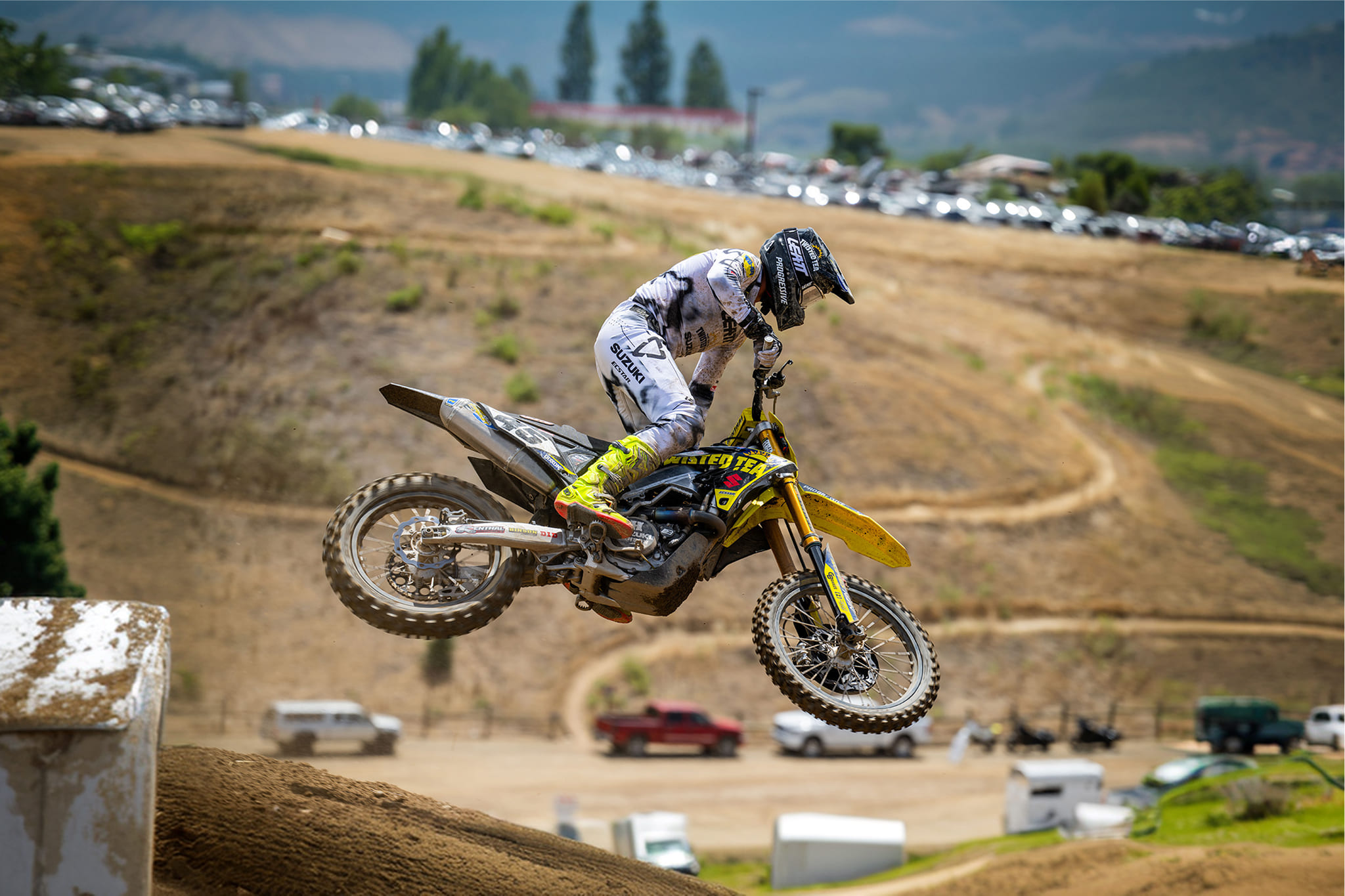
A session at the motocross track is a high-intensity sprint. You line up at the gate, take off with a pack of other riders, and spend the next 15 to 20 minutes fully locked in. You’re calculating jump distances, picking lines through rutted corners, timing your throttle, and managing explosive bursts of acceleration. It’s a demanding physical workout, and new riders are almost always surprised by how gassed they are after that first session.
A day on the trail is a different experience entirely. You’re moving at your own pace over hours and adapting to whatever nature throws at you. One minute you’re cruising a smooth dirt fire road, and the next you’re standing on the pegs to navigate a rocky stream crossing or pick your way through tree roots. You can ride solo and get lost in the quiet of it, or ride with a group and have it turn into one of those days you keep bringing up months later.
If you thrive on adrenaline-packed rides, defined sessions against a clock, and refining the same lap until it’s perfect, motocross is going to scratch that itch. If you’re drawn to clearing your head, seeing new scenery, and exploring at your own pace, trail riding is going to feel like home.
Where Enduro and Beyond Fit In?
If motocross and trail riding sound like opposite ends of a spectrum, that’s because they are. Fortunately, there’s a massive (and incredibly popular!) middle ground known as enduro.
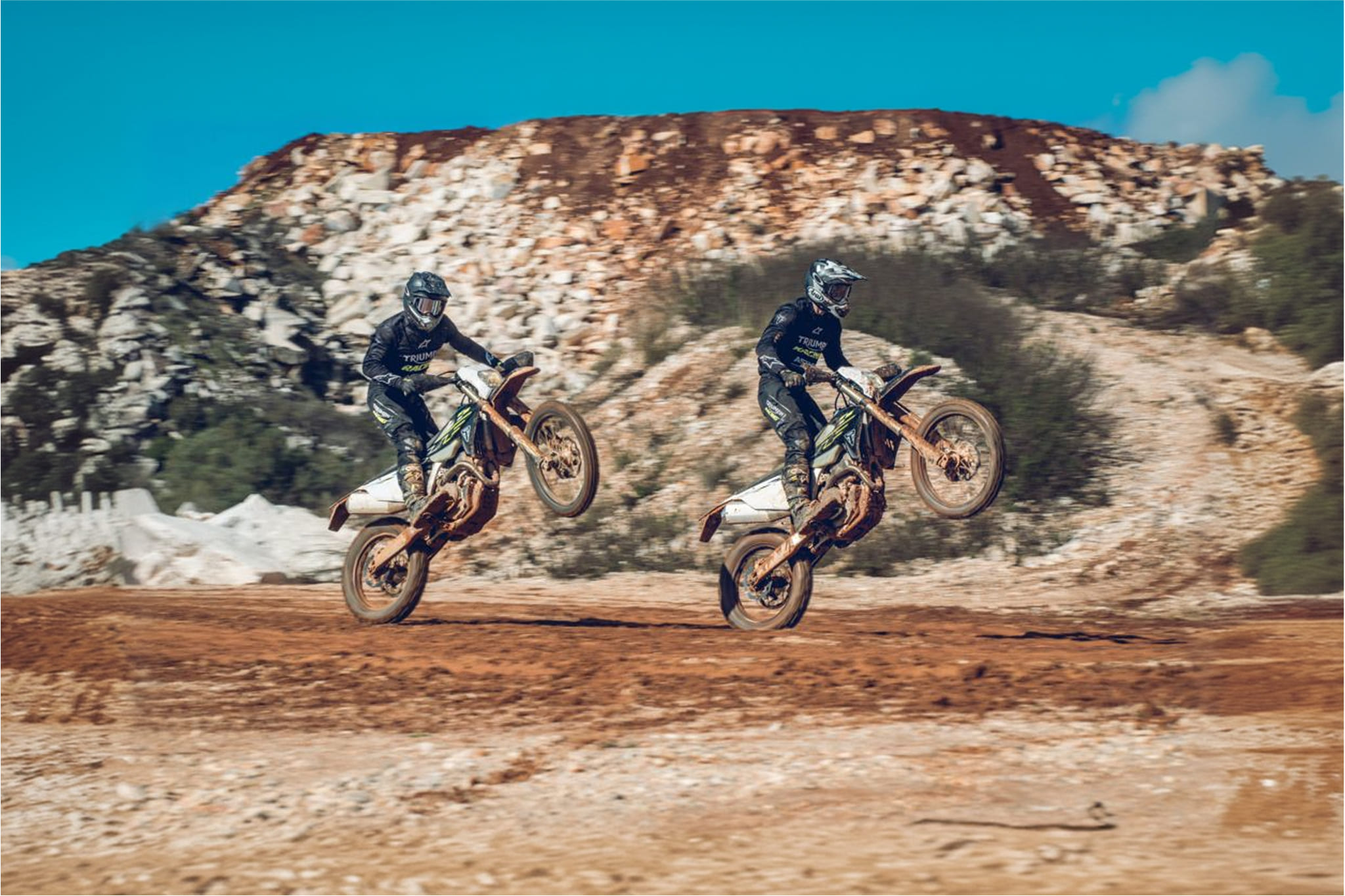
Enduro takes the long-distance, natural-terrain format of trail riding and introduces a competitive element. Instead of racing bar-to-bar for physical position, enduro riders navigate a marked course through the rugged wilderness and are scored against a strict schedule.
A classic enduro loop can span anywhere from 60 to 100 miles of highly technical terrain, demanding incredible physical stamina and advanced bike handling skills.
As you might expect, enduro motorcycles split the difference between their motocross and trail riding counterparts. They run stiffer suspension and more aggressive power than a pure trail bike, without going quite as far as a motocross setup.
Most new riders don’t start directly in the enduro scene. Rather, it represents an incredibly exciting progression to keep in your back pocket once you build your technical confidence. Beyond that, the off-road world branches into desert racing, hare scrambles, hard enduro, and more.
Don’t worry about learning all the ins and outs yet. Just know that motocross and trail riding aren’t the only options out there. They’re just the main entry points most riders start with, and the off-road community has a bunch of different paths once you’re ready for them.
Try Before You Commit
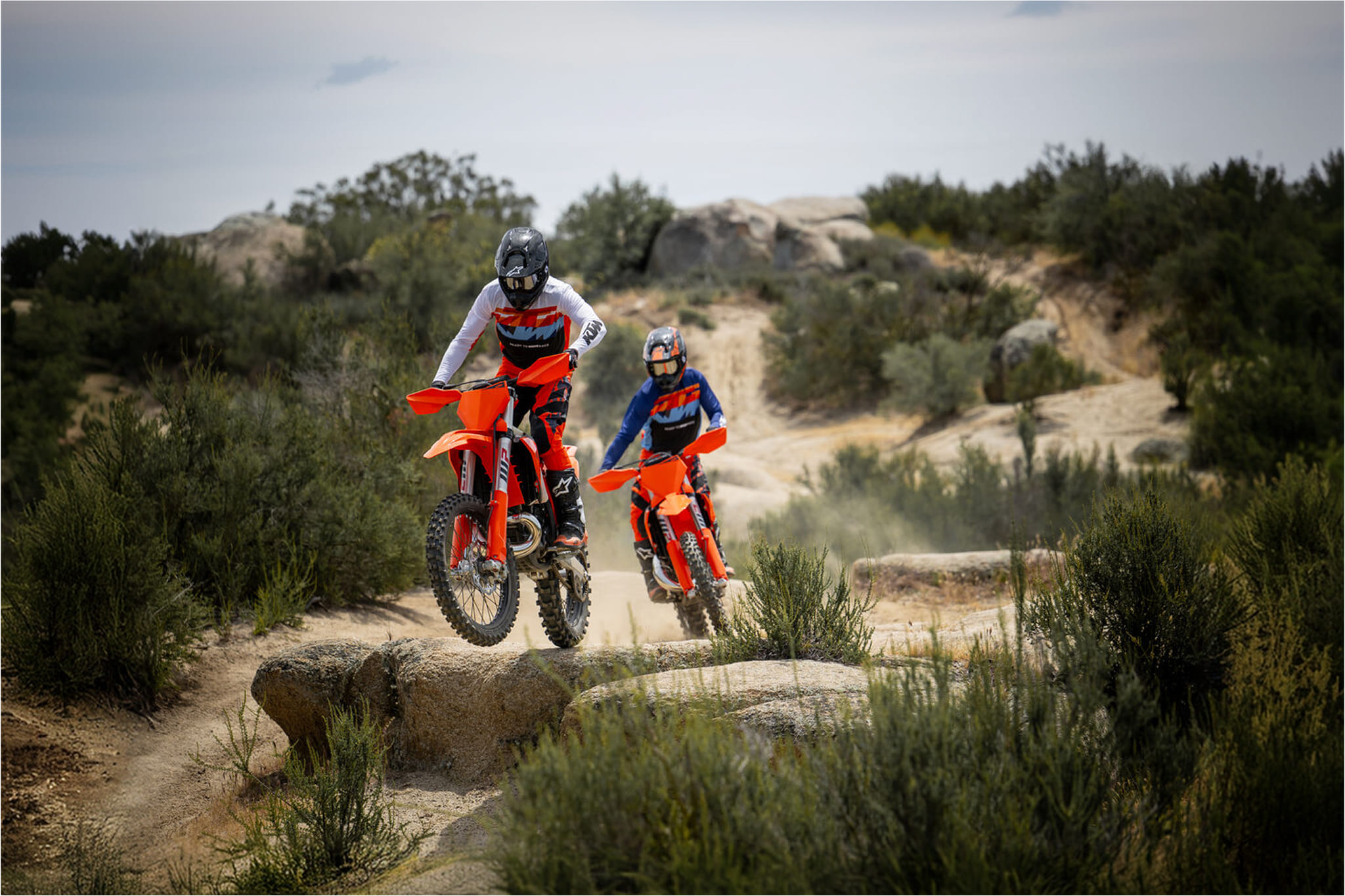
Still torn between the two? The good news is that you don’t have to make a permanent choice right this minute. We always recommend trying both, and plenty of new riders spend their first season doing exactly that. Most know within a handful of rides which path they want to chase further.
The single best way to get hands-on experience without a massive financial commitment is the Motorcycle Safety Foundation’s DirtBike School. It’s a fun, highly hands-on one-day training session led by certified coaches who provide you with a dirt bike and all the proper safety gear.
They’ll guide you through the fundamental building blocks of off-road riding, and once you complete the basics, their advanced trail-riding courses are the perfect way to get your feet wet out in the field with some expert guidance.
Beyond formal training, many dedicated off-road riding parks offer day rental packages to give you access to a bike, gear, and trails all in one place so you can test the waters. Have a friend who already rides and is willing to take you out for an afternoon? Even better. Either way, taking a few low-stakes test drives is the smartest way to figure out which environment speaks most to you.
What About the Gear?
If you’re worried about having to buy two completely different wardrobes just to sample both worlds, take a breath. The core safety gear is more or less the same. A DOT-approved full-face helmet, goggles, gloves, boots, and a chest protector are the baseline, whether you’re at the track or out on the trail.
Where the paths diverge is in the additions to your kit once you know which direction you’re leaning. At the track, riders tend to add knee braces instead of soft knee guards, since hard landings off jumps put rotational stress on the knee that a pad alone won’t handle. The boots are stiffer too, built to support the ankle through impact rather than flex for comfort over a long day.
Out on the trail, your priorities shift toward self-sufficiency instead of impact protection. You’ll want things like a hydration pack, snack bars, a basic tool kit and tire repair kit, and some way to navigate, since you could end up a long way from your truck.
For your first few rides, a standard set of core protection will do the job just fine, regardless of terrain. As you spend more time in either direction, you can fine-tune your kit to match the trail or the track.
Which Path Is Calling Out to You?
At the end of the day, both motocross and trail riding are built around the same magic that draws people to off-road riding in the first place. Start with whichever one is calling out to you the loudest, and let your instincts naturally tell you where to go from there.
Ready to explore the right off-road bike for your next adventure? Check out our Dealer Locator to connect with an expert near you who can steer you toward the right setup. Make sure you’ve read our comprehensive Dirt Bikes 101 Guide to keep expanding your off-road knowledge.