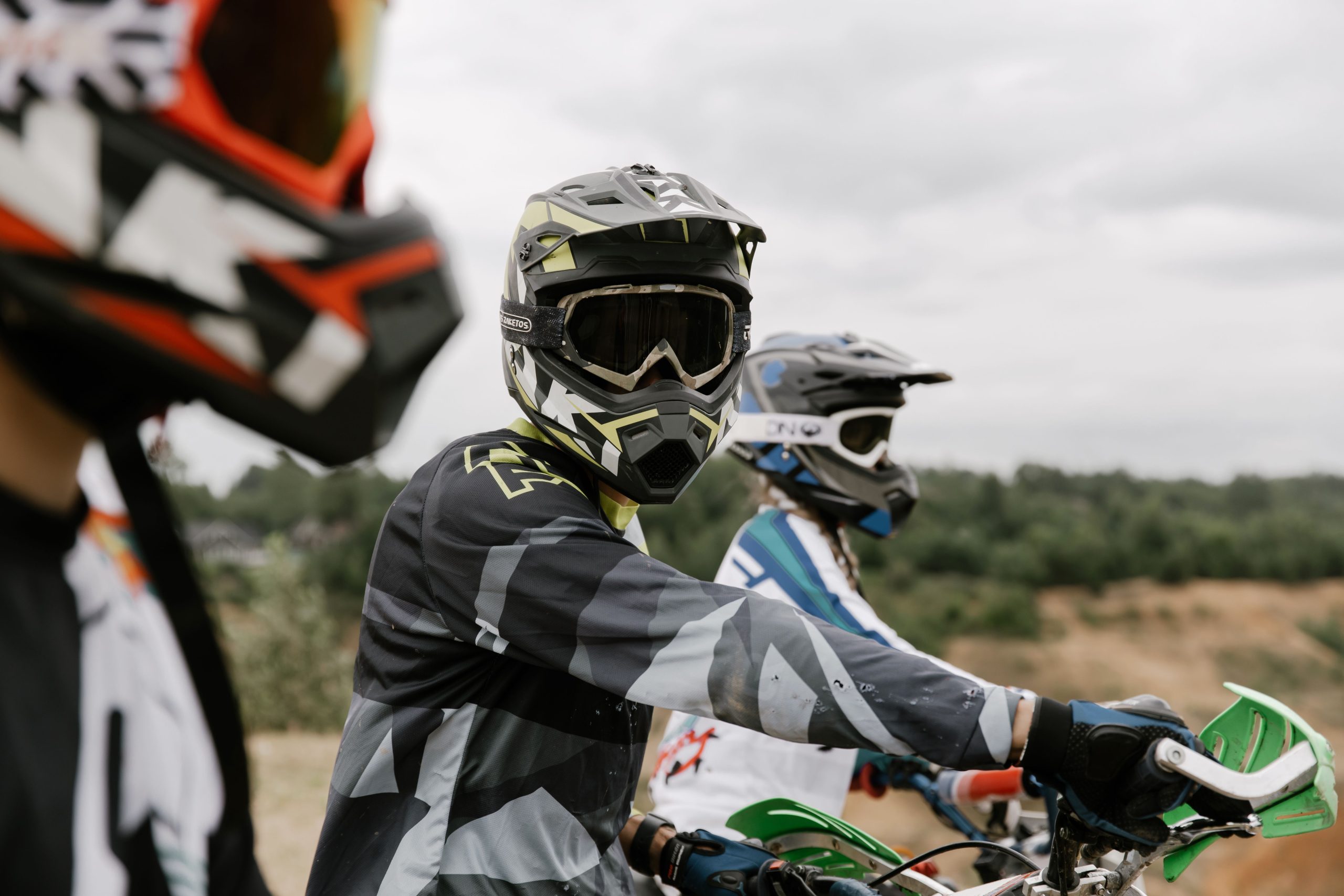
Your first day riding off-road does not feel like your first day riding anything else, even if you have been riding pavement for years. Speeds are lower, the terrain is unfamiliar, and the focus it demands is different from anything street riding asks of you. If you spend your first hour feeling a little awkward, that’s not a sign you are doing it wrong. That’s just what a first day looks like.
What to Expect Physically
Off-road riding asks more of your body than street riding does, and in different ways. Standing on the pegs, absorbing bumps and ruts through your legs instead of sitting through them, and constantly making small adjustments with your whole body rather than just your hands and feet. Muscles that barely register on a highway ride (your legs, your core, your forearms) will make themselves known by the end of your first short session.
Don’t plan a long day for your first time out. An hour or two is plenty to introduce your body to a kind of riding it hasn’t done before, and you’ll likely be surprised by how tired that short stretch leaves you.
Gear That Actually Changes
Your street gear does not fully transfer to off-road riding, and a few specific pieces are worth having before your first outing.
Off-road boots lock your ankle in place and are designed for standing and shifting your weight, not walking comfortably, the opposite priority of most street boots. Knee and elbow guards matter more here too, since off-road falls tend to happen at low speed but often onto uneven, unforgiving ground rather than smooth pavement. Goggles replace a street visor, since dust and debris behave differently off-road than road spray does. And an off-road helmet is not simply a street helmet with different graphics. It’s lighter, more ventilated, and shaped with a visor peak designed for a completely different riding position.
The Core Skills Worth Starting With
The biggest shift from street riding is realizing that sitting is not the default position anymore.
Stand over anything uneven, rocks, roots, ruts, or loose terrain, since standing lets your legs absorb the impact instead of your spine. Sit on smooth, straight stretches and corners over even ground, since sitting is less tiring and keeps your weight centered for cornering. At very low speeds through technical or slippery sections, many riders stay seated and paddle with their feet for balance almost like training wheels, rather than trying to balance the bike entirely on their own.
When you are standing, keep the balls of your feet on the pegs, knees bent, and your torso leaning slightly forward. You typically will keep your knees loose and away from the tank most of the time, which lets your body and the bike move somewhat independently over uneven ground. The exception is hard acceleration, hard braking, or a steep descent, when gripping the tank with your knees actually helps you stay connected to the bike.
Keep a slight bend in your arms with your elbows up, and rest only one or two fingers on the clutch and front brake rather than your whole hand. But never forget: where your eyes go, the bike tends to follow, so keep your eyes on where you’re headed.
What Trips Up Most First-Timers
A few patterns show up again and again on a first off-road day, and none of them are anything to be embarrassed about.
- Staying seated out of habit is probably the most common one. Street riding trains you to sit through almost everything, and it takes conscious effort at first to stand when the terrain calls for it.
- Looking down at the front wheel instead of ahead is another, understandable since you want to see what is right in front of you, but it actually makes it harder to pick a smooth path.
- Mistimed clutch and throttle coordination can cause a jerky, unexpected launch, which mostly just takes practice and smoother, more deliberate inputs to fix.
- And one of the most common patterns is not really a riding habit at all: starting on a bike that is more powerful than you need. A smaller, more predictable bike makes every other skill on this list easier to learn.
None of this is a sign you are not cut out for off-road riding. Like learning anything new, it’s just letting experience grow to hit the point where things click.
The Bigger Point
A first off-road day is supposed to feel a little clumsy. That’s the whole point of any first day. The skills compound faster than you would expect once the basics start to click: standing and sitting at the right moments, looking ahead instead of down, smooth inputs instead of sharp ones.
If you are ready to try it, look for a local off-road riding area or a beginner-focused clinic near you. A guided first outing is one of the best ways to build these habits early, with someone there to point out what’s working and what to adjust. Every confident off-road rider’s story starts with an awkward first outing that looked a lot like yours, so get that first day in the books and before you know it, you’ll find your own confidence off-road.