America has no shortage of spectacular national parks, and what better way to explore them than on two wheels? Here are a few of our favorite destinations for an unforgettable motorcycle adventure.
America is home to some of the world’s most extraordinary natural landscapes.
We have towering mountain ranges, ancient forests, vast deserts, rugged coastlines… the list goes on and on. There’s an incredible amount to discover right here in our own backyard, and we’re fortunate to have so much of it protected within our national parks.
If you love life on two wheels (or think you might), there’s no better way to experience it.
Heck, for plenty of riders, it’s the only way to experience it.
After all, there’s a reason the great American motorcycle road trip has become such an enduring tradition. Generations of riders have taken to the open road in search of adventure, new horizons, and places worth discovering.
And with some of the country’s most spectacular routes winding right through our national parks, it’s hard to imagine a better place to carry on that tradition.
So whether you’re dreaming up a cross-country adventure, planning a weekend getaway, or just looking for inspiration for your next ride, there’s no shortage of unforgettable destinations to choose from.
Here are a few of our favorite national parks across the country to explore by motorcycle.
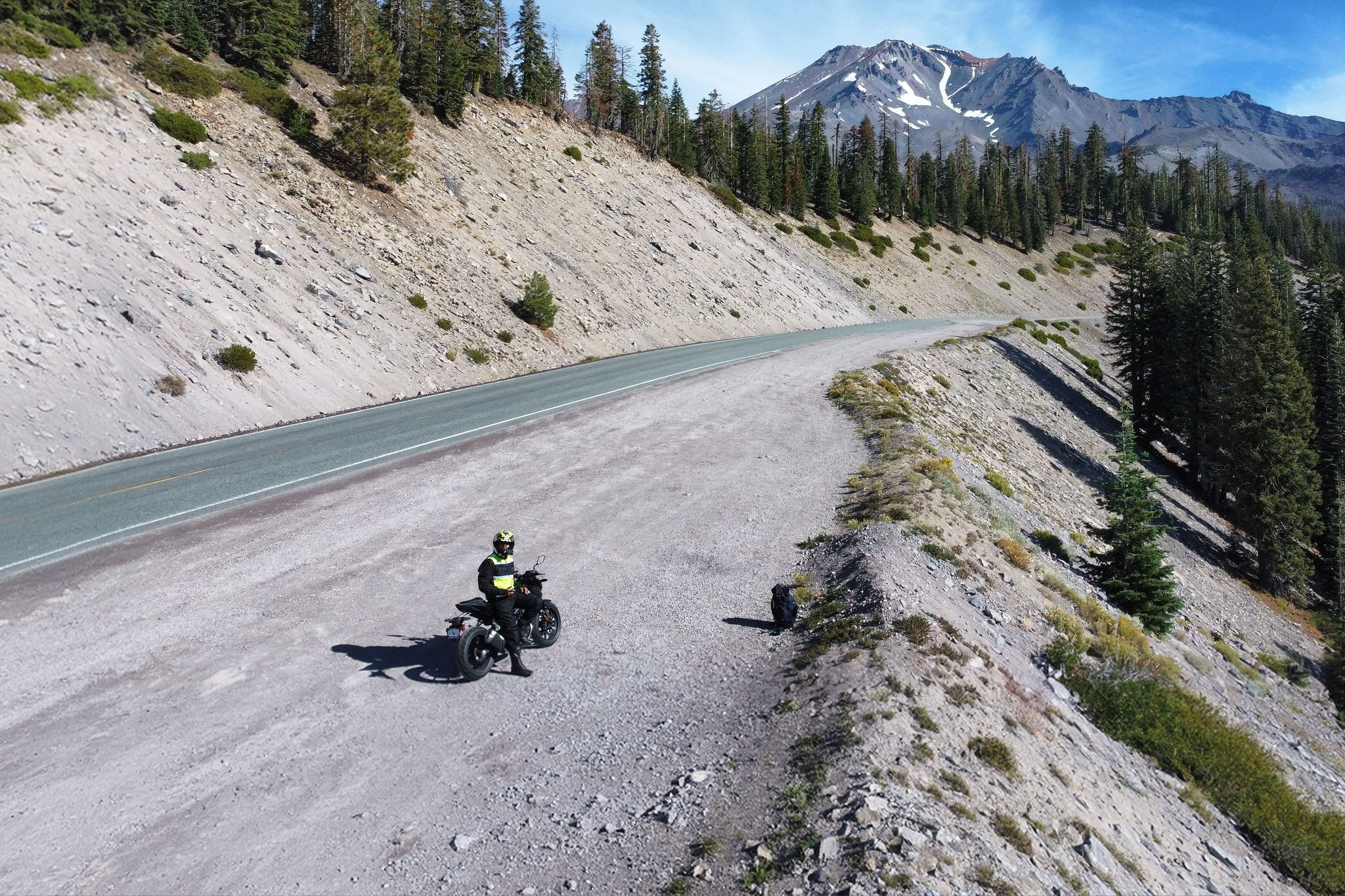
Yellowstone National Park, Wyoming, Montana and Idaho
There’s a reason Yellowstone holds a special place in American history.
This is where the idea of the national park began. Established in 1872, Yellowstone became the world’s first national park, setting the stage for the incredible network of protected landscapes we enjoy across the nation today.
And it’s enormous.
The park covers more than 2.2 million acres across three states. Its famous Grand Loop Road forms a 142-mile figure eight linking iconic sites like Old Faithful, Yellowstone Lake, the Grand Canyon of the Yellowstone, and Mammoth Hot Springs.
For riders, Yellowstone is less about finding that one perfect stretch of pavement and more about the sheer variety of experiences you can pack into a single trip.
One moment you’re riding through dense forests or sweeping open valleys. Next, you’re passing erupting geysers, colorful hot springs, or a herd of bison grazing alongside the road. With so much to discover, there’s always another reason to pull over and explore.
And that’s exactly how we’d recommend approaching Yellowstone: take your time.
The general park speed is 45 mph, and wildlife can slow things down considerably. Yes, bison jams are a very real thing! These animals sometimes wander onto the roads, and when they do, give them plenty of space and wait for them to move along. The National Park Service requires visitors to stay at least 25 yards from bison, elk, and other large animals, and at least 100 yards from bears, wolves, and cougars.
Yellowstone’s main roads are all paved. The riding here is mostly relaxed, paved cruising, so just about any bike will feel at home on the Grand Loop. And if you’re craving a little gravel, Blacktail Plateau Drive is a six-mile, one-way unpaved road that’s open in summer.
Above all, leave room for the unexpected. Because in Yellowstone, the unexpected is often the best part.
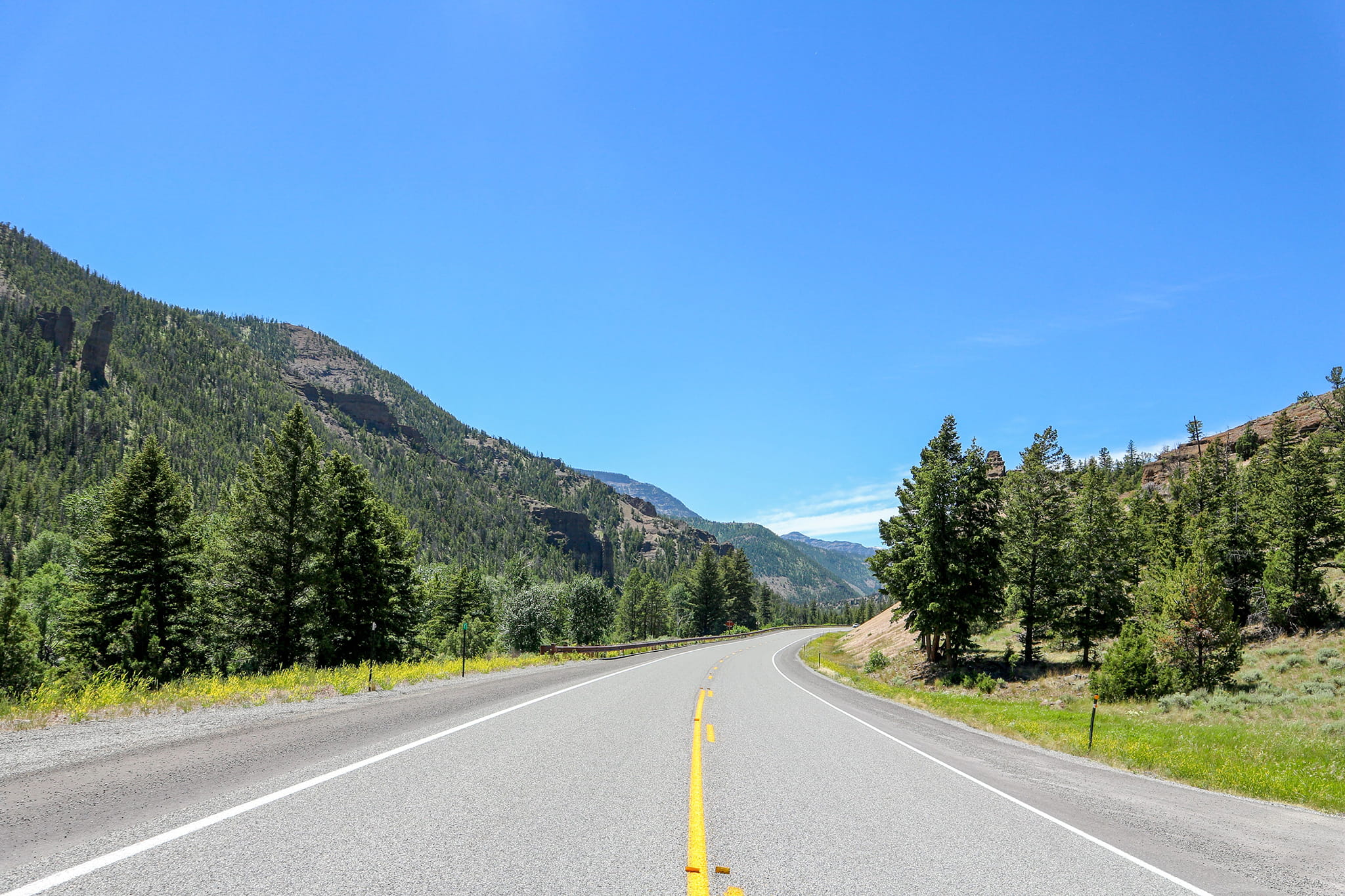
Great Smoky Mountains National Park, Tennessee and North Carolina
More people visit the Smokies than any other national park in the country, with more than 11 million visits recorded in 2025 alone.
And if your idea of a perfect ride involves winding mountain roads surrounded by thick forests, it doesn’t get much better than this.
Great Smoky Mountains National Park has 384 miles of roads, most of them paved, with routes passing streams, historic buildings, overlooks, and more.
Newfound Gap Road, also known as US 441, is the route you won’t want to miss. It connects Gatlinburg, Tennessee, with Cherokee, North Carolina, climbing to Newfound Gap at 5,046 feet above sea level along the way.
The climb is often compared to traveling from Georgia to Maine. You start with hardwood forests at lower elevations and finish in spruce and fir near the summit. You’ll notice the temperature changing, too. Even in the summer, the air at Newfound Gap can be considerably cooler than in the valleys below.
There’s plenty more to explore while you’re here. Consider a trip to Kuwohi, formerly known as Clingmans Dome, the highest point in the park at 6,643 feet. Or add Foothills Parkway West to your itinerary for sweeping mountain views.
And on two wheels, the journey between these destinations is every bit as memorable.
If you’re here and looking for something a little more adventurous, the legendary Tail of the Dragon also finds its home in this park. With 318 curves packed into just 11 miles of US 129, it’s becoming something of a rite of passage for riders.
Just remember that this famously technical stretch demands your full attention, so save the sightseeing for when you’re safely off the road.
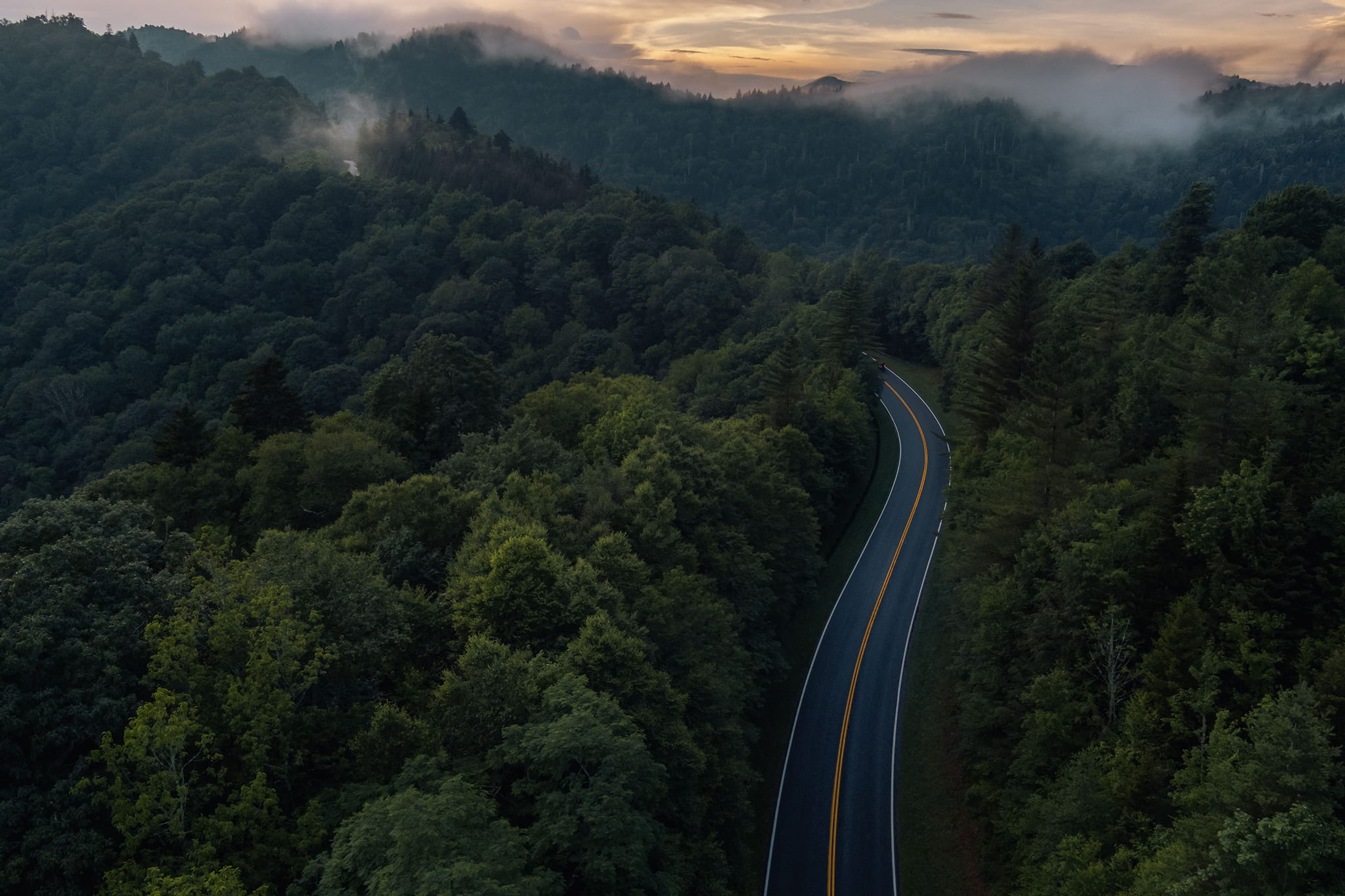
Zion National Park, Utah
Ever wanted to ride through the landscapes of an old Western movie?
Zion National Park might be as close as it gets.
Located in southwestern Utah, this national park is famous for its towering sandstone cliffs, deep canyons, and striking shades of red, orange, and cream. It’s a completely different world from the forested mountains of the East Coast or the alpine landscapes of the Rockies.
And the roads are part of the attraction.
One of the highlights for motorcyclists is the Zion-Mount Carmel Highway, a historic route connecting the park’s South and East Entrances. It climbs the canyon wall through a series of switchbacks, then disappears into a mile-long tunnel cut through the sandstone cliffs.
You come out on the other side into a different landscape of pale slickrock, and a few miles on, you’ll pass the crosshatched face of Checkerboard Mesa.
The highway is paved, as are almost all other routes inside the park, so you don’t need a specialized adventure bike to enjoy it. It suits cruisers, touring bikes, standards, and more all well. Just be prepared for winding curves, elevation changes, and some tighter sections along the way.
If you want to explore more of the park, Zion Canyon Scenic Drive is another popular spot. This six-mile road leads into the heart of the Zion Canyon and provides access to some of the park’s most famous sights and trails. Just know it’s generally closed to private vehicles during the park’s shuttle season, which typically runs from March through November. You’ll simply have to park your bike and take the free shuttle instead.
And don’t worry, there’s still plenty to explore on two wheels! The Zion-Mount Carmel Highway remains open to motorcycles, weather and road conditions permitting, along with other scenic routes like Kolob Canyons Scenic Drive.
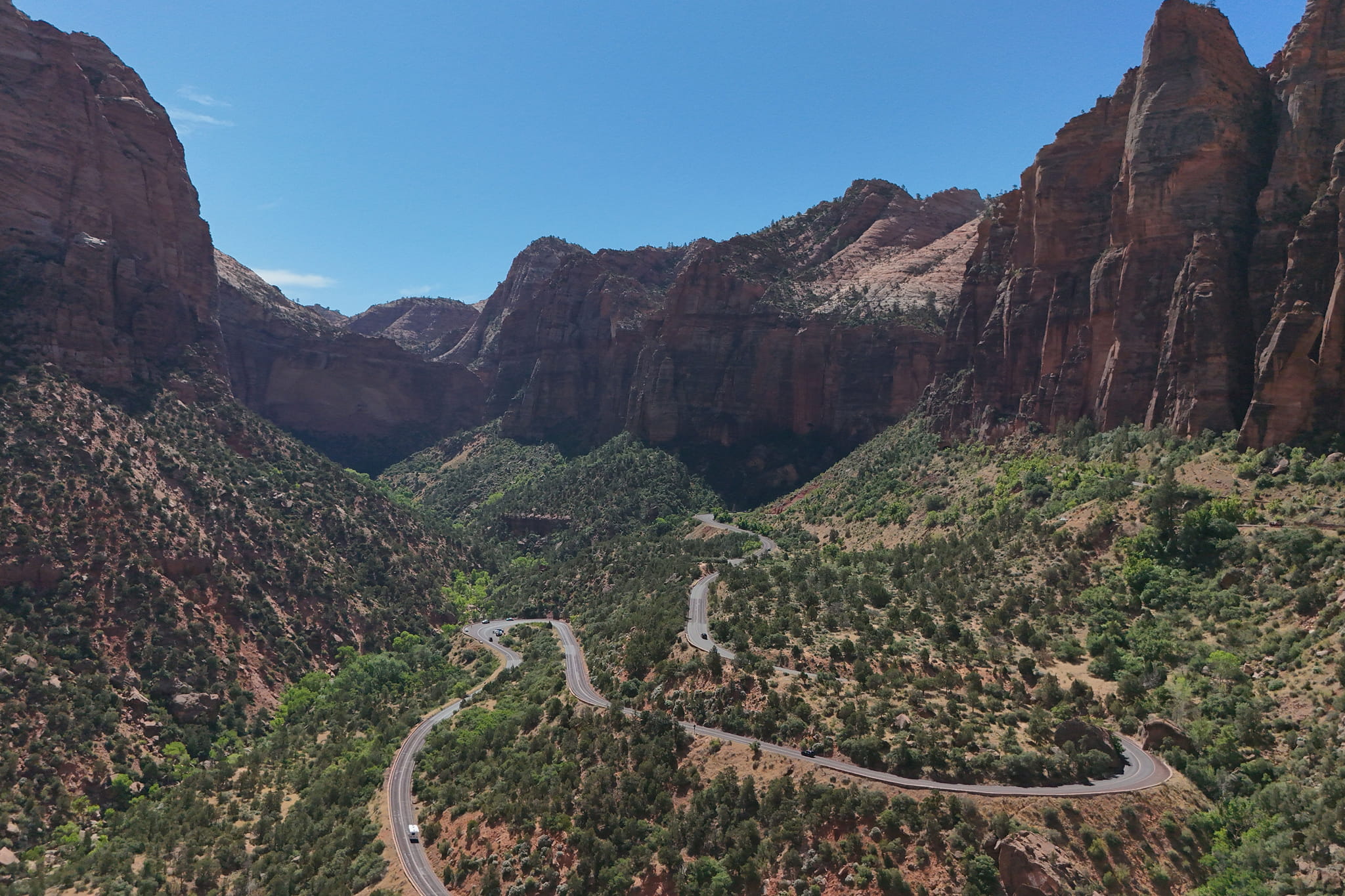
Rocky Mountain National Park, Colorado
Back in 1931, National Park Service director Horace Albright predicted, “It is hard to describe what a sensation this new road is going to make.”
Nearly a century later, it’s safe to say he was right.
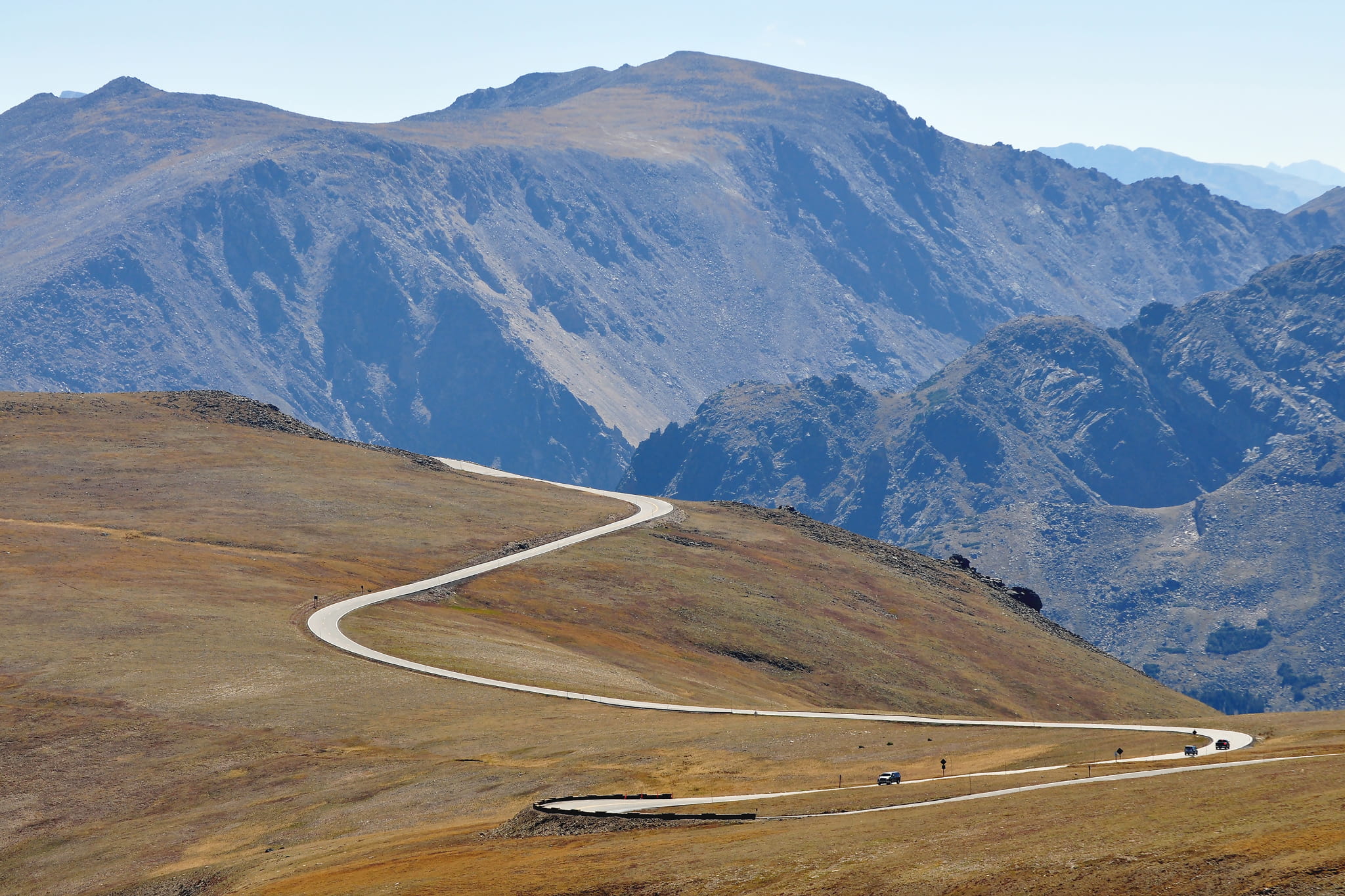
He was talking about Trail Ridge Road, the highest continuous paved road in the United States and one of the most spectacular motorcycle routes in the country. Stretching 48 miles between Estes Park and Grand Lake, it climbs to an incredible 12,183 feet above sea level, taking riders through some of Colorado’s most spectacular mountain scenery.
And the journey up is half the fun.
You’ll start among towering evergreen forests before climbing into an entirely different world above the tree line. Up here, the landscape begins to open into alpine tundra, with panoramic views of the Continental Divide, mountain valleys, and distant peaks stretching as far as the eye can see.
You’ll find some memorable stops along the way, too. The Alpine Visitor Center (the highest visitor center in the National Park Service) sits near the road’s high point, while Forest Canyon Overlook and Rainbow Curve offer some of the road’s best views without requiring a long hike.
But riding at this elevation comes with a few considerations. The park says it’s normally 20 to 30 degrees colder up top than in Estes Park or Grand Lake, and afternoon thunderstorms can roll in quickly. You’ll also want to take your time adjusting to the altitude, especially if you’re arriving from lower elevations.
If mountain riding is your kind of thing, this is one road that undoubtedly deserves a place on the bucket list.
Acadia National Park, Maine
Who says an unforgettable motorcycle adventure has to involve towering mountains or hundreds of miles of highway?
Head to the coast of Maine, and you’ll discover a completely different kind of riding experience.
Acadia National Park sits along the rugged Atlantic coastline, where forested mountains meet rocky shores, tranquil lakes, and picturesque New England communities.
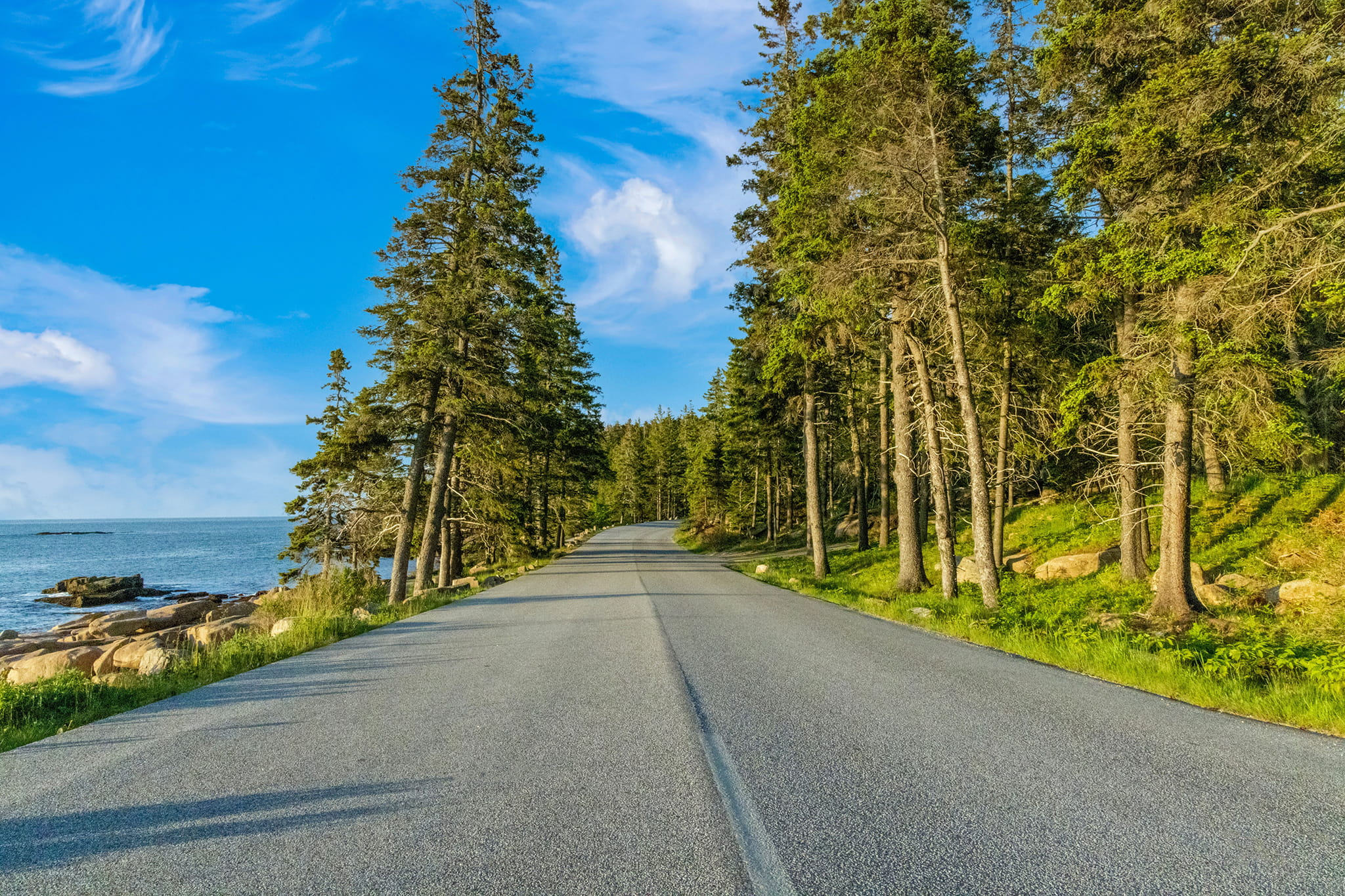
It’s also home to the Park Loop Road, a 27-mile paved scenic route connecting many of the park’s most famous attractions. It’s open from mid-April through November, weather permitting, of course.
The road winds through forests and along the coastline, passing places like Sand Beach, Thunder Hole, and Jordan Pond. Some sections offer sweeping ocean views, while others take you beneath the trees or alongside granite cliffs.
And if you’re looking for a particularly memorable ride, try Cadillac Summit Road.
This winding route climbs Cadillac Mountain, the highest point along the North Atlantic seaboard at 1,530 feet above sea level. From the summit, you’ll enjoy panoramic views of the surrounding islands, coastline, and nearby Bar Harbor. Just note that from around May through October, you’ll need a vehicle reservation to ride it, and each motorcycle needs its own.
Unlike some of the enormous parks on this list, Acadia is compact enough to explore at a more relaxed pace. So if you love the idea of combining beautiful coastal roads with charming towns and plenty of opportunities to explore on your bike, this is the place for you.
Death Valley National Park, California and Nevada
There’s something almost otherworldly about riding through Death Valley.
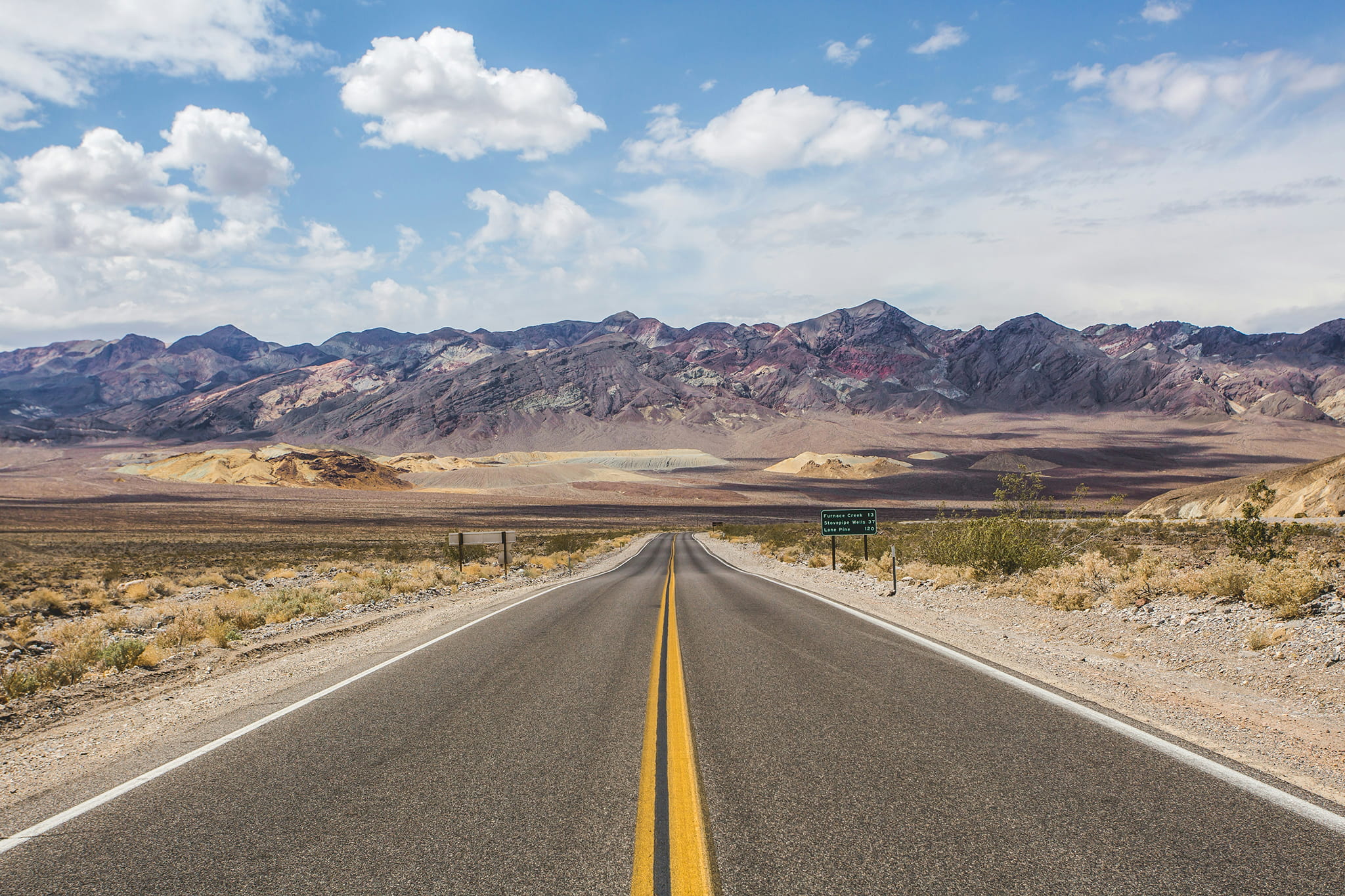
Where other national parks are defined by lush forests or snowcapped peaks, Death Valley offers a different kind of extreme: vast desert landscapes, rugged mountains, colorful rock formations, and seemingly endless stretches of open road.
And for motorcycle riders, that’s a pretty incredible combination.
The park spans more than 3.4 million acres across California and Nevada, making Death Valley the largest national park in the contiguous United States. It’s also home to Badwater Basin, the lowest point in North America at 282 feet below sea level.
But the real attraction for riders is the journey through this extraordinary landscape.
California Highway 190 is the park’s main thoroughfare, winding through mountain passes and desert valleys with epic views in every direction.
For something a little different, take a detour onto Artists Drive, a nine-mile scenic loop that winds through colorful hills and unusual rock formations. The road’s curves and dips make it a particularly memorable stretch to experience on two wheels, and certain parts will have you questioning whether you’re still on the same planet.
And don’t miss Zabriskie Point, one of the park’s most famous overlooks, where you can take in the surrounding badlands and absorb just how unique it is.
For experienced adventure motorcyclists, there’s another side of Death Valley worth exploring. This park is one of the best in the country for ADV and dual-sport riders. Beyond the main paved routes, the park has hundreds of miles of unpaved backcountry roads, ranging from relatively manageable gravel stretches to rugged terrain.
Just be sure to check which roads are open to street-legal motorcycles, and research conditions carefully before heading out.
Of course, Death Valley’s extreme environment requires some extra prep beforehand. This is one most riders prefer to visit during the cooler months, as summer temperatures regularly exceed 120°F and can create dangerous conditions for motorcyclists.
But with the right preparation, Death Valley offers a motorcycle adventure unlike anywhere else in America.
Glacier National Park, Montana
Some roads are worth planning an entire trip around.
And Glacier National Park’s Going-to-the-Sun Road is one of them.
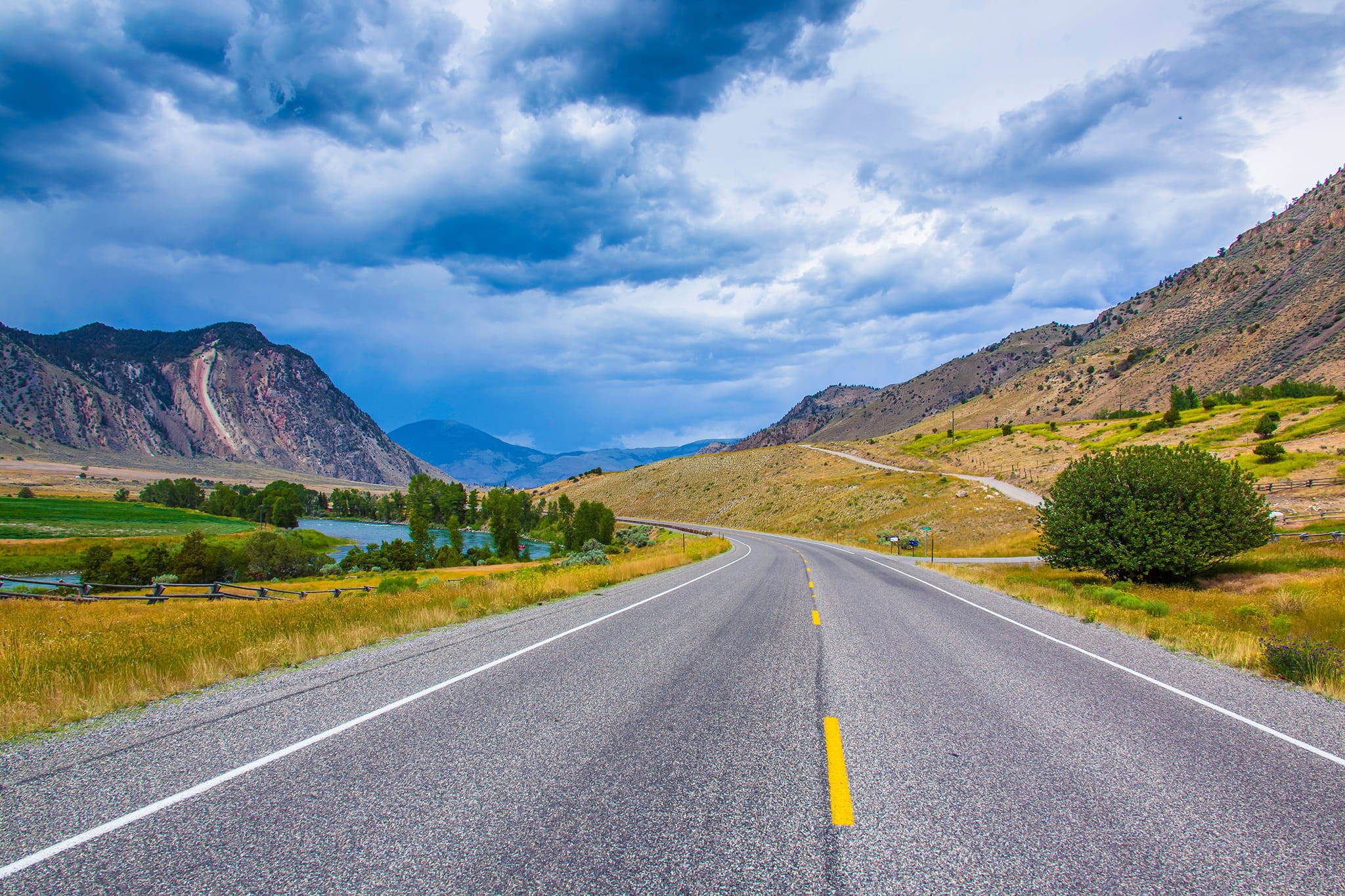
Stretching roughly 50 miles across the park, this legendary motorcycling route takes you through the heart of Montana’s Northern Rockies. Along the way, you’ll pass enormous mountain walls, glacial valleys, waterfalls, and alpine lakes.
And once you’ve experienced it for yourself, you’ll understand why riders have been making this journey for generations.
The journey takes you up Logan Pass at 6,646 feet above sea level, crossing the Continental Divide along the way. Some sections of the route are carved directly into the mountainside, with gut-wrenching drop-offs and views stretching across the valleys below.
And there are plenty of reasons to get off the bike, too.
Lake McDonald is one of the park’s most recognizable destinations, with its clear waters and surrounding mountain scenery. The aforementioned Logan Pass is another highlight with panoramic views and access to several hiking trails.
Going-to-the-Sun Road is best enjoyed at an unhurried pace, which makes it a great match for touring bikes, cruisers, and standard motorcycles. ADV and dual-sport riders can also head to the park’s remote North Fork, where rough and dusty dirt roads lead to Bowman and Kintla Lakes.
But for all motorcyclists, Glacier National Park offers the kind of rides where you’ll want to enjoy every mile rather than rush toward the finish line.
After all, when the scenery is this spectacular, what’s the rush?
The Open Road Is Calling
The beauty of exploring America’s national parks by motorcycle is that no two adventures are ever the same.
One trip might take you high into the Rocky Mountains, surrounded by snowcapped peaks and alpine scenery. Another might lead you through the deserts of the Southwest, along the Atlantic coastline, or into the forests of Appalachia.
And that’s part of what makes these motorcycle adventures so special. You get to experience everything along the way.
There’s a perk for riders too. As of 2026, one America the Beautiful annual pass, which costs $80 for U.S. residents, covers two motorcycles. So bring a friend.
Of course, a little preparation goes a long way. Before setting out for any of these parks, check the park’s current road conditions, seasonal closures, and entry requirements. Give yourself plenty of time, plan your fuel stops carefully, ride within your comfort level, and remember that wildlife, weather, and traffic can all be unpredictable.
But above all, enjoy the journey.
Because whether you’re planning your first big motorcycle road trip or your fiftieth, there’s always another incredible place waiting to be discovered.
And sometimes, the best adventures start with nothing more than a motorcycle, a destination, and the decision to get out and ride.
See you out there.