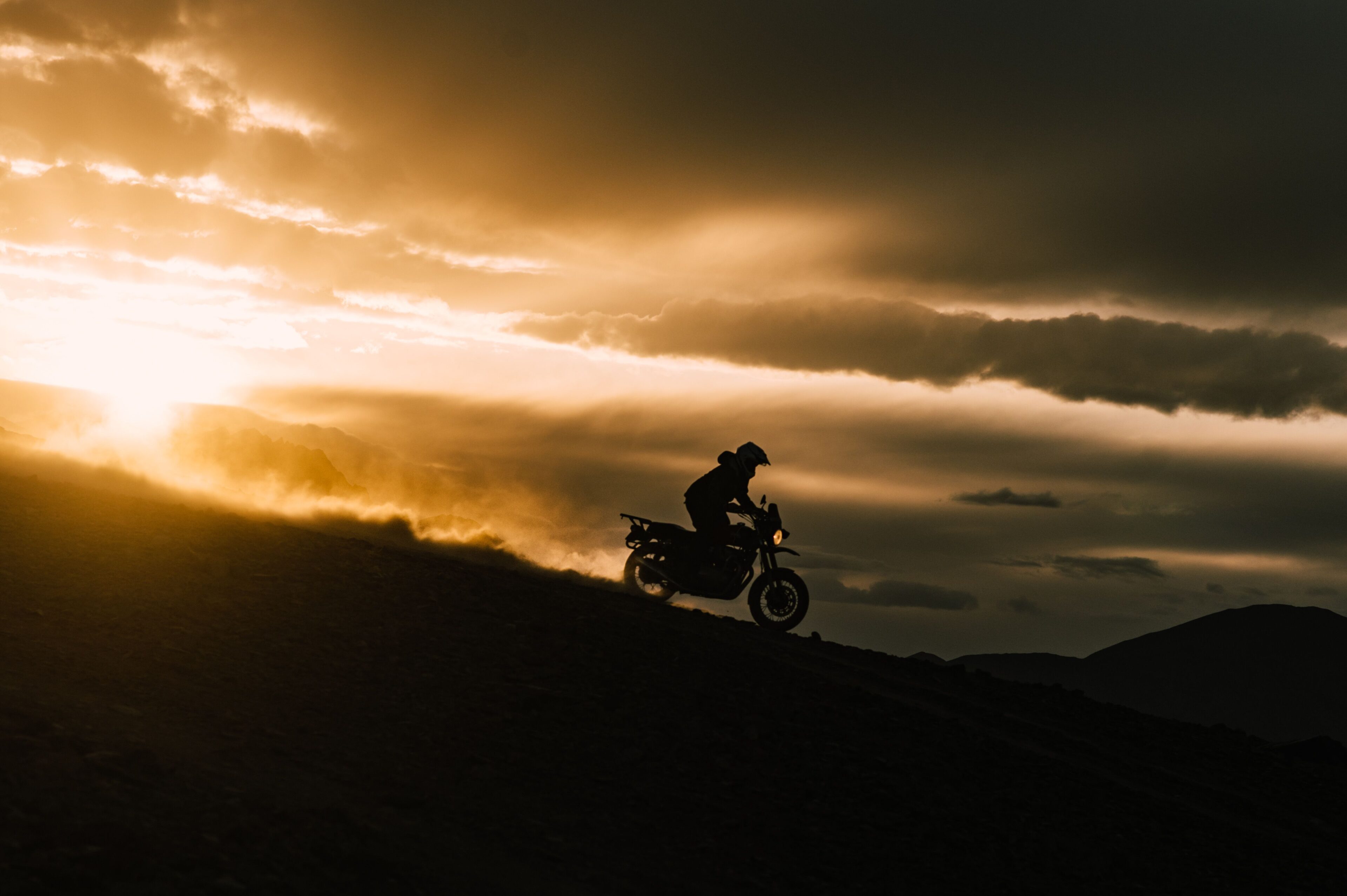
Riders have always known it. The hard part is explaining it to someone who has never been on a bike.
There is something that happens when you ride. Something difficult to put into words but impossible to miss. You leave feeling better than you arrived. The noise in your head quiets down. Whatever was weighing on you before you left does not weigh quite as much when you get back.
It turns out there is actual science behind that feeling. And it is worth understanding.
Your Brain on a Motorcycle
Riding a motorcycle is one of the most cognitively demanding things you can do.
That is not a warning. It is actually the point.
When you ride, your brain is doing an enormous amount of work at once. You are reading the road ahead, monitoring traffic, managing throttle and brakes, scanning for hazards, adjusting your body position, and making constant micro-decisions about speed and space. All of it simultaneously, all of it in real time.
This level of engagement has a name: flow state. It is the same mental condition that athletes, musicians, and surgeons describe when they are fully locked into what they are doing. The outside world falls away. Only the task in front of you exists.
For most people, flow state is hard to access on purpose. For riders, it happens every single time they get on the bike.
The Dopamine Loop
Every time you navigate a curve well, anticipate a traffic situation correctly, or execute a smooth stop, your brain rewards you.
Dopamine is the neurotransmitter associated with reward, motivation, and pleasure. It gets released when you accomplish something that required skill and attention. Riding delivers those moments constantly.
This is part of why experienced riders describe certain roads as addictive. The twists, the elevation changes, the need to read and react. Each successful input is a small reward. Hundreds of them add up over the course of a ride.
It is also why riders often say they feel sharper after a ride, not tired. Dopamine does not just feel good. It also improves focus, motivation, and mood. The mental clarity that follows a good ride is not a coincidence.
What Happens to Stress
Research on motorcycling and cognitive load has shown something interesting: riding significantly reduces cortisol levels.
Cortisol is your primary stress hormone. When life gets overwhelming, cortisol builds up. It contributes to anxiety, poor sleep, difficulty concentrating, and that general sense of being stretched too thin. Riding burns through it.
The focused attention that riding requires essentially interrupts the stress response. You cannot ruminate on the meeting that went sideways or the email you forgot to send when you are managing a bike through traffic. Your brain does not have the bandwidth. The stress does not disappear, but it gets interrupted long enough for your nervous system to reset.
Riders who commute regularly often describe this effect without knowing the science behind it. The ride home clears the day. The ride in sets the tone. The bike becomes a kind of moving reset button.
The Sensory Experience
A car insulates you from the world. A motorcycle puts you inside it.
You feel the temperature shift when you drop into a valley. You smell the rain before you see it. You hear the engine note change when the road tilts upward. You notice the way afternoon light hits the road differently from morning light.
This sensory richness is not just pleasant. It is neurologically significant.
The brain responds to novel sensory input by staying alert and engaged. Environments that are varied and unpredictable keep the brain active in ways that repetitive, insulated environments do not. Riding keeps you present in a way that very few other daily activities can match.
It is the opposite of the mental autopilot that most commutes and routines encourage. Every ride asks something of you, and your brain rises to meet it.
Why It Feels Like Freedom
There is a reason riders use the word freedom so often, even when it sounds like a cliche.
Freedom, at a neurological level, is associated with a sense of agency. The feeling that your choices matter, that you are in control of what happens next, that the outcome depends on you.
Riding delivers that feeling constantly. Every input has a direct consequence. Lean here, the bike responds. Adjust your speed, the corner opens up. The relationship between rider and road is immediate, honest, and deeply satisfying in a way that most modern life is not.
We spend a lot of time in environments where our choices feel small or disconnected from outcomes. Riding reverses that completely. You are always the variable that matters most.
The Social Side
Riding also does something for the people around you.
There is a reason riders wave to each other. A reason strangers in a parking lot will spend twenty minutes talking about their bikes like they have known each other for years. A reason that group rides feel like something more than just a group of people going the same direction.
Shared experience creates connection, and the experience of riding is specific enough that people who ride understand each other in a way that is hard to explain to people who do not.
That sense of belonging has its own neurological weight. Social connection reduces stress, improves mood, and contributes to long-term well-being in documented ways. The riding community is not just a nice bonus. It is part of what makes riding good for you.
So Why Does It Feel Like That
Because your brain was built for exactly this.
Engagement over passivity. Agency over autopilot. Sensory richness over insulation. Skill development over repetition. Community over isolation.
Riding delivers all of it at once, every time you get on the bike. The feeling you have been trying to describe to people who do not ride is not just a mood. It is your brain functioning the way it was designed to.
That is worth something. That is worth getting on the bike for.
Curious what it feels like for yourself? Start with our getting started guide and find the right bike for where you are as a rider at ridewithus.com.