Thinking about your first motorcycle training course? Here’s exactly what to expect and why so many riders end up saying they wish they’d done it sooner.
Maybe you’ve been thinking about riding for a while. Maybe someone you know just got a bike, and it sparked something in you. Maybe you’re still not even sure if motorcycles are for you.
Whatever led you to this point, the MSF Basic RiderCourse is where most riders begin their journey. It’s a structured two-day program built for complete beginners, and it’s the fastest path from curious to licensed and riding.
Here’s exactly what to expect.
The MSF has offered rider training for over fifty years, serving over 10 million motorcyclists nationwide.
What Is the MSF Basic RiderCourse and Why Should I Take It?
The MSF Basic RiderCourse is a structured motorcycle training program run by the Motorcycle Safety Foundation (MSF), the national organization behind rider education in the U.S. for over 50 years. They have over 2,500 course sites across the country, meaning there’s almost certainly one near you.
The course is designed for complete beginners aged 16 and up. Zero prior riding experience is required. The only real prerequisites are that you can balance on a bicycle and have a valid driver’s license or motorcycle learner’s permit. That’s it. Everything else is taught from scratch.
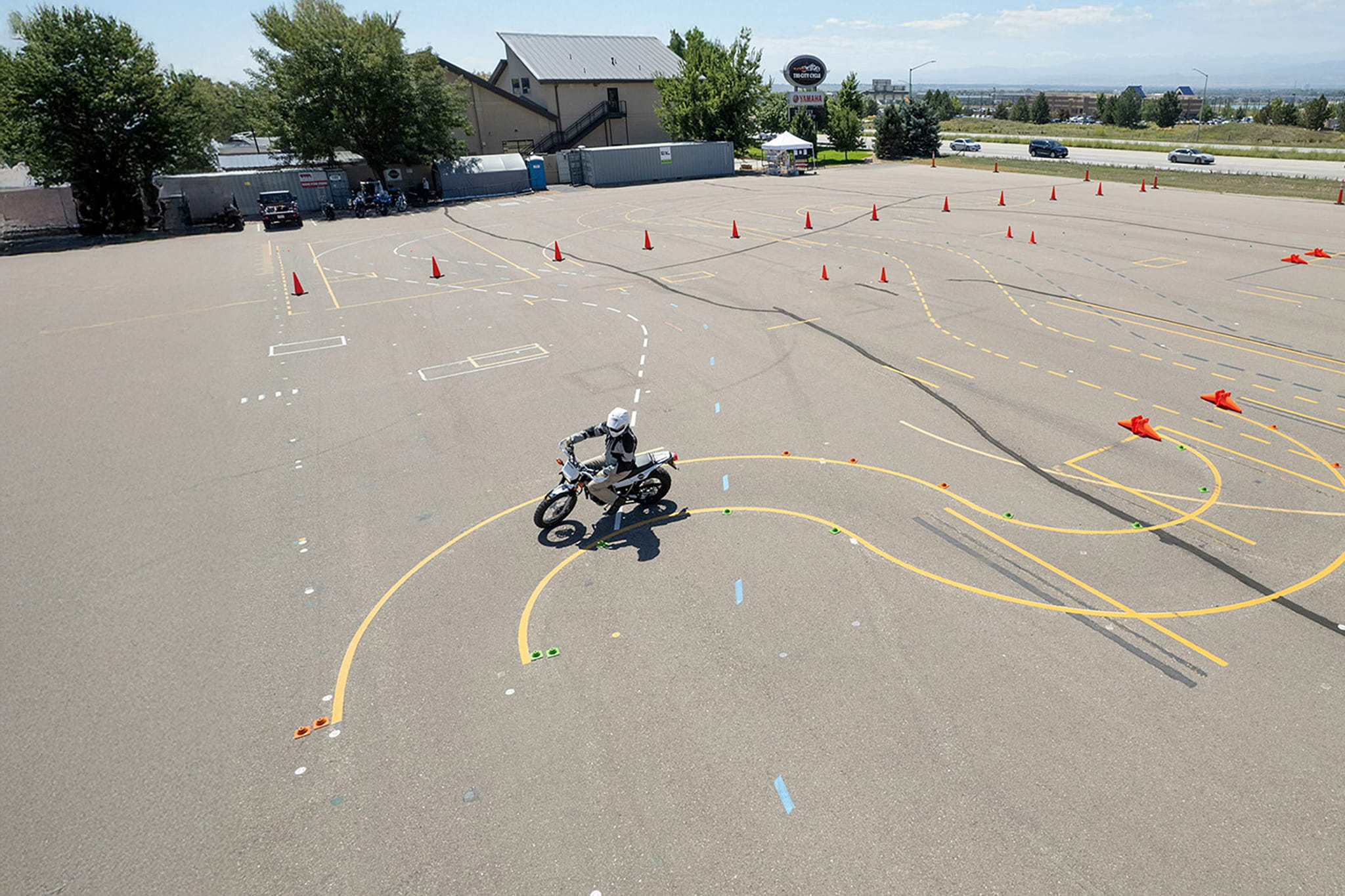
The format is 15 hours in total. This includes around five hours of online coursework before you arrive, followed by ten hours of hands-on riding spread across two days on a closed range. Motorcycles, helmets, and gloves are all provided, meaning all you need to do is show up.
By the end of those two days, you’ll have real skills. You’ll have the education behind fundamental techniques, along with the actual muscle memory for starting, stopping, shifting, cornering, and emergency maneuvering on a motorcycle. It’s the clearest path from curious to actually riding.
In most states, passing the MSF Basic RiderCourse waives the need to take the DMV road skills test entirely. The exact rules vary by state, but generally, that means no separate DMV appointment with an examiner watching you perform under pressure. Take a look at our Licensing and Training Guide for all the specifics behind getting your license.
What It Costs and What You Need to Bring
Most MSF Basic RiderCourse sessions run between $200 and $350, depending on where you are. Some states subsidize the cost, with military discounts sometimes available, too. Certain motorcycle brands and clubs offer partial or full tuition reimbursement. All things worth asking about when you register.
Factor in the insurance discount you’ll likely earn as a graduate and the DMV skills test you won’t have to pay for in most states, and the math gets pretty favorable pretty quickly. It’s one of the most straightforward investments you’ll make as a new rider.
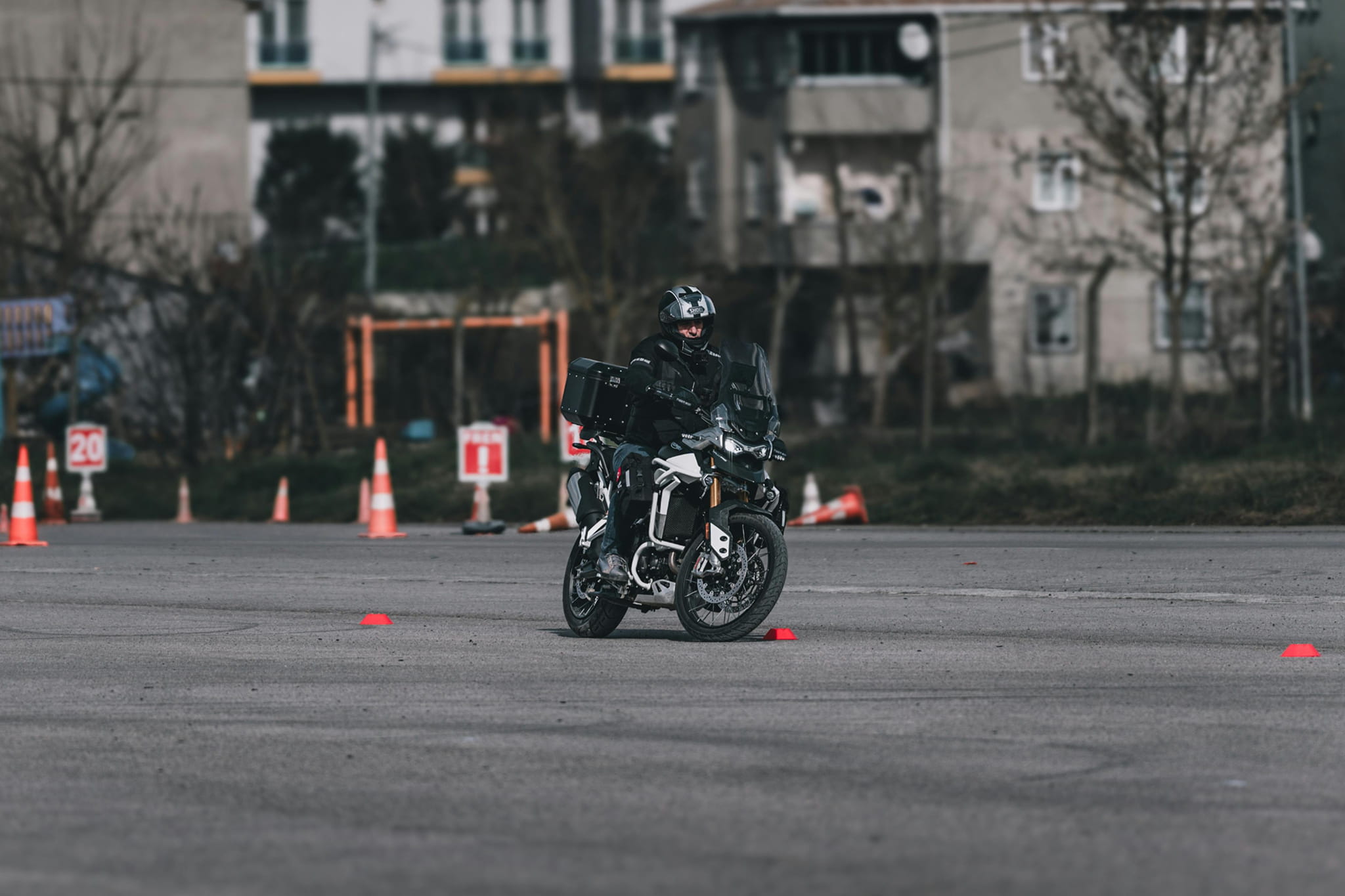
You also don’t need to bring your own motorcycle. Bikes are provided for all on-range exercises, typically lightweight 250-300cc models that are easy to manage at low speeds and ideal for learning.
Proper gear is required to participate. You’ll need a DOT-compliant helmet, eye protection, a long-sleeve jacket, long pants in denim or another durable material, sturdy over-the-ankle boots, and full-finger gloves. Many locations lend or rent gear if you don’t have your own yet. Just be sure to check when you register. If you prefer to bring your own, our essential gear guide is a great place to start.
Before You Arrive: The Online eCourse
Before your first day on the range, you’ll complete the MSF’s Basic eCourse online. It takes about five hours and covers motorcycle operation basics, different types of bikes, hazard recognition, and the mental side of riding (how to think, where to look, and how to make decisions before you need to make them fast).
The eCourse builds the mental framework you need before you ever touch a throttle, so when you get to the range, you’re building on something instead of starting cold. Videos and graphics walk you through the key concepts, and the course is available in both English and Spanish.
Day One: Where Riding Starts to Make Sense
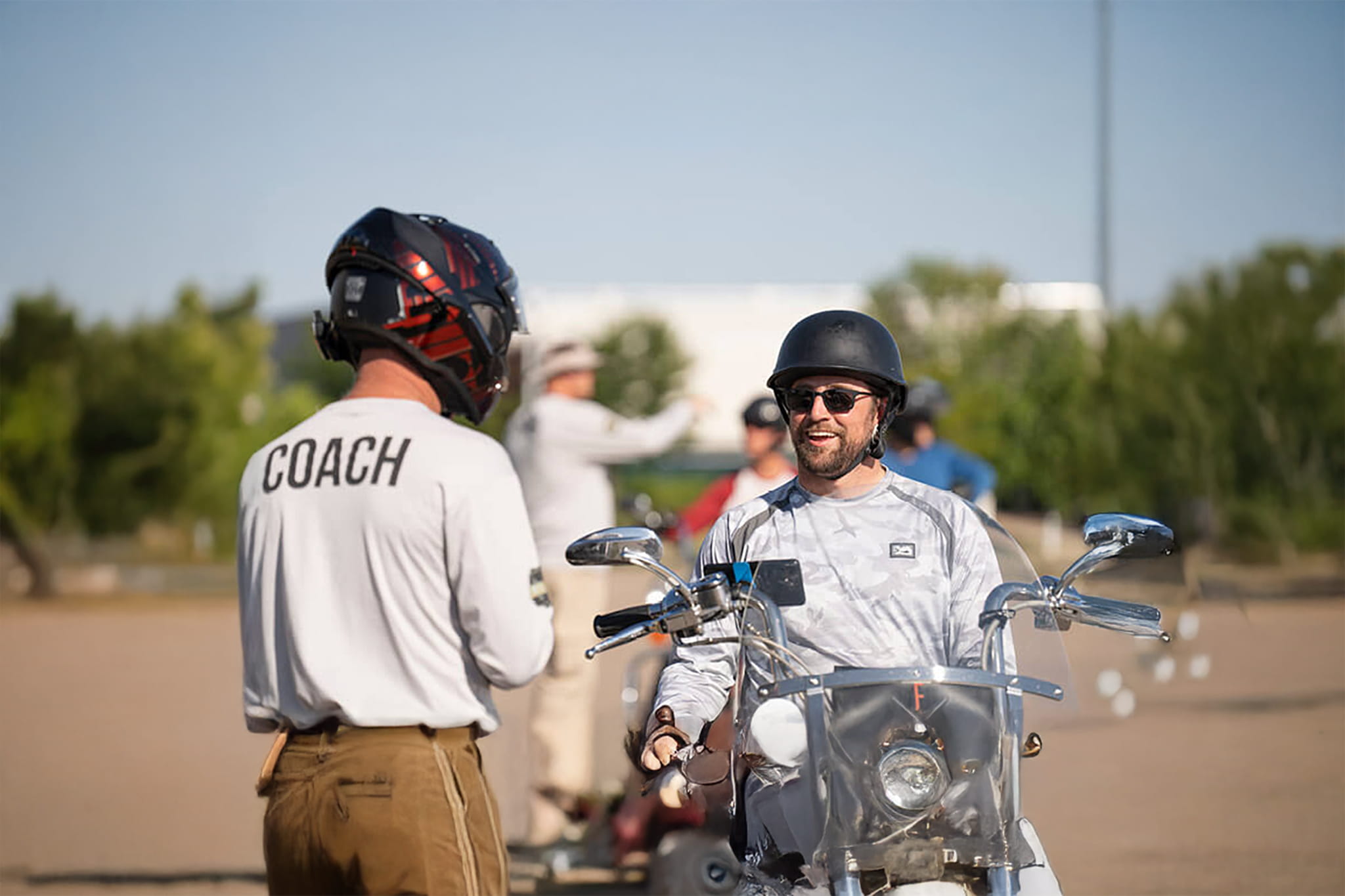
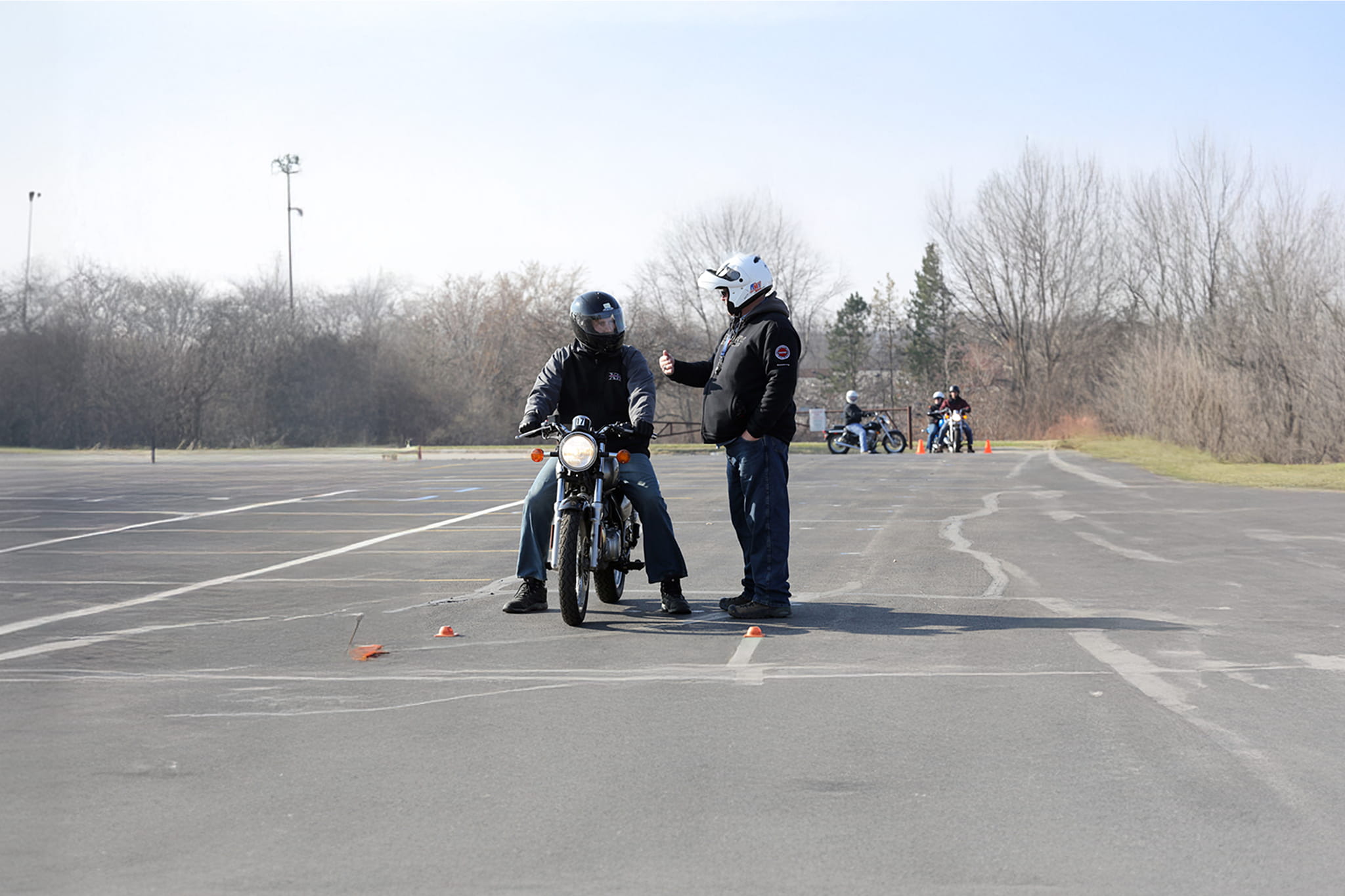
The hands-on portion is where the course comes to life. You’ll spend both days with the same small group. Everyone is a beginner and figuring out the same things in real time. Don’t worry about making mistakes or looking foolish. Nobody is watching you, and you’re not expected to arrive knowing anything.
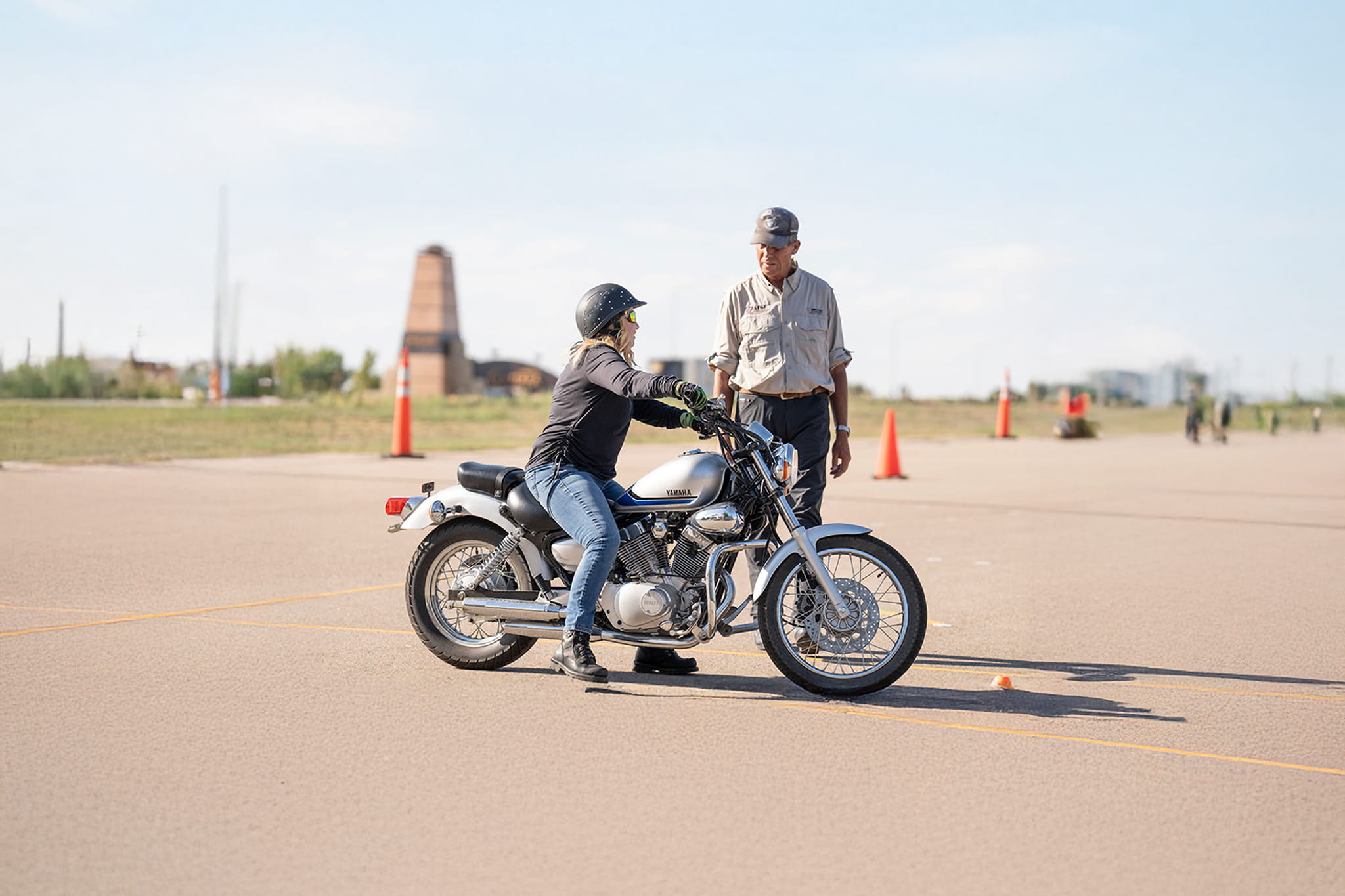
Your RiderCoach is a certified, experienced rider who’s there to guide you through every exercise with individual feedback, at a pace built for people who are starting from zero.
Day one starts with getting familiar with the motorcycle itself, meaning the controls, the pre-ride inspection, and how to mount and dismount properly. From there, your instructor walks you through different fundamentals, building progressively from straight-line riding to shifting to basic turns and low-speed maneuvering.
The exercise that tends to be the turning point for students is the friction zone. This is the narrow, sensitive range in the clutch where the engine connects to the wheel, and the bike starts to move. It sounds technical, but it’s really about feel over force. And when it clicks (usually faster than you expect), the whole bike starts to make sense.
By the end of day one, most people are genuinely surprised by how much they can do!
Day Two: Raising the Bar and the Skills Test
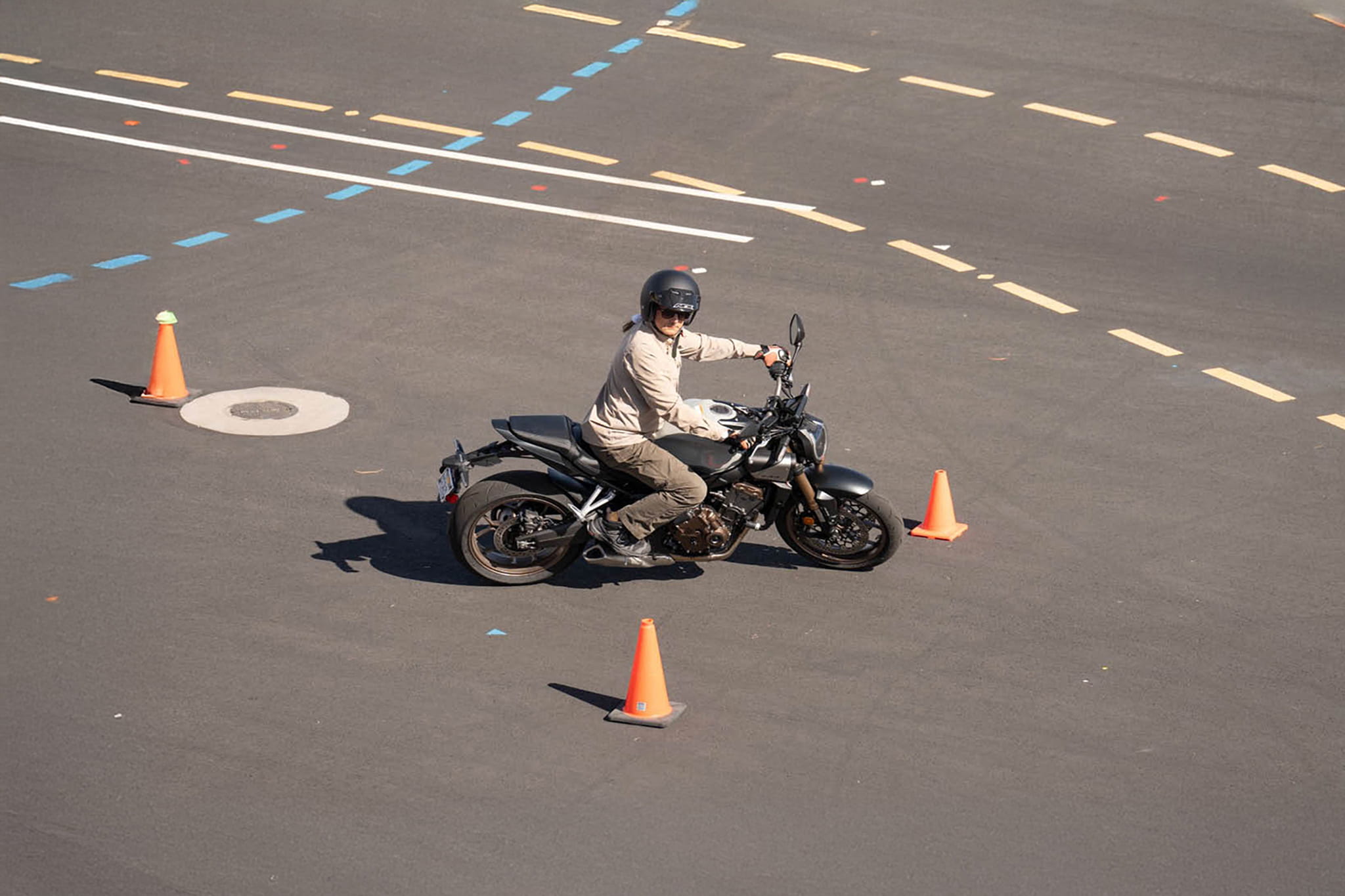
Day two picks up where day one left off and pushes further. You build on the skills you’ve already learned, and the exercises start to feel like real riding, including emergency braking, swerving to avoid obstacles, reading and negotiating corners, managing lean angle, linking curves, and lane changes in sequence.
The day closes with a capstone exercise that puts everything together and a final chance to feel the full picture before the skills test. By this point, you might have a real moment of clarity about how far you’ve come in such a short period of time. Maybe you’re even beginning to feel like a real rider.
The skills test itself is a series of cone-marked exercises: a weave, a normal stop, turning from a stop, a U-turn within a marked box, a quick stop from 15 mph, an obstacle swerve, and a cornering maneuver. There’s also a short written knowledge test on what you covered in the eCourse. Pass both, and your MSF completion card is yours.
Most people do pass. For anyone who doesn’t pass on the first attempt, most providers offer a retake at a reduced rate.
This Is Where It All Starts
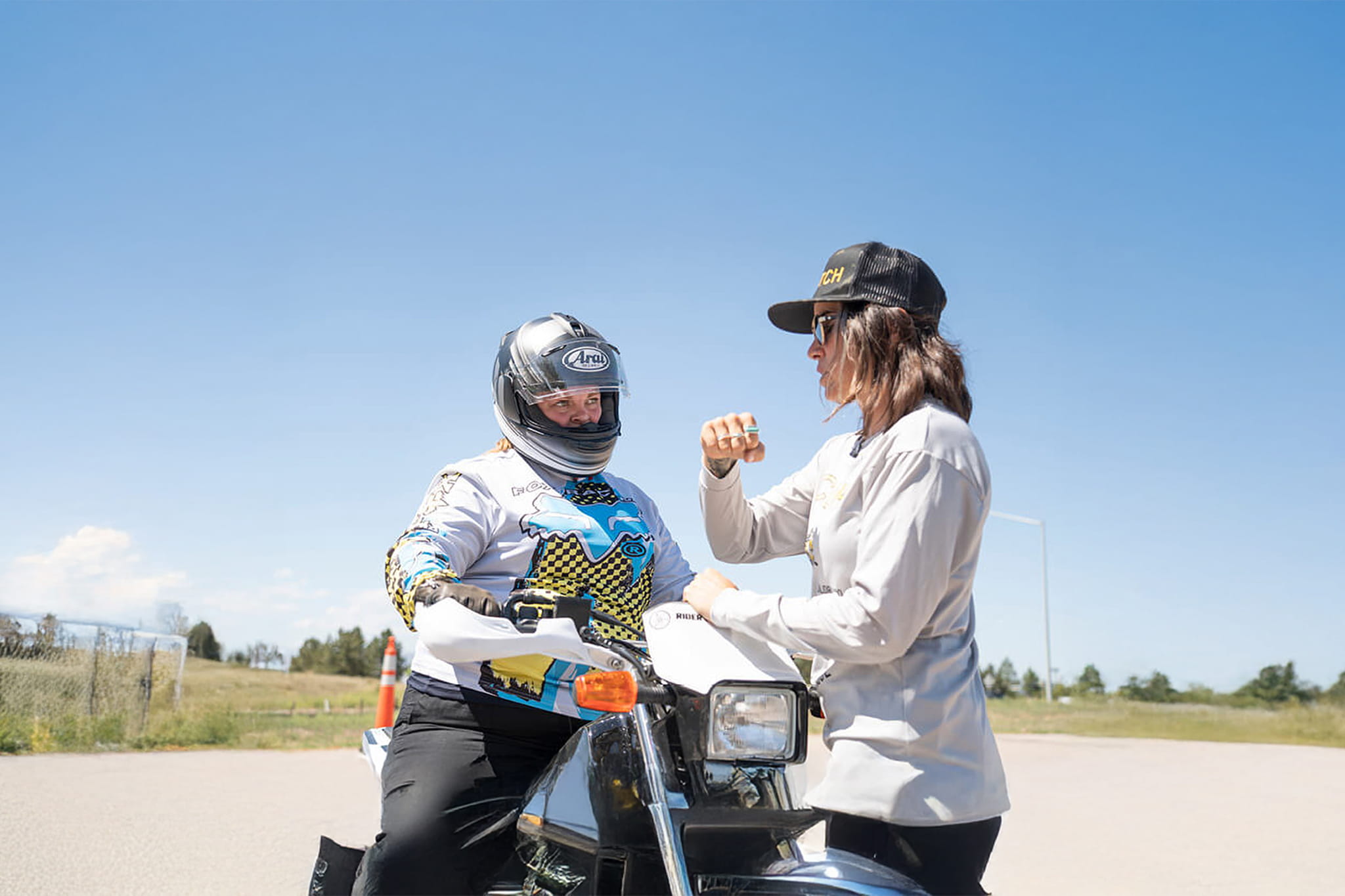
A lot of people show up to the MSF course still on the fence. Almost none of them leave that way.
You might walk in uncertain. But you walk out with muscle memory, a completion card, and the full confidence that comes from gaining real skills and techniques, not watching videos or figuring it out alone. What takes self-taught riders years of trial and error to develop, you’re getting in two days from people who’ve spent decades refining it.
Once you’re licensed, the MSF offers follow-on courses like the Basic RiderCourse 2 and Rider Skills Lab for those who want to keep building on the fundamentals. And the USMCA connects riders with certified coaches for more specialized training in off-road, ADV, track, and beyond.
This course is a rite of passage that opens the door. What’s on the other side of it is up to you.
The first step: find a course near you and check out our Licensing and Training Guide for how to set yourself up for success from day one.
See you out there.