What is an adventure motorcycle? Here’s everything you need to know about ADV bikes, the culture built around them, and how to find out if adventure riding is right for you.
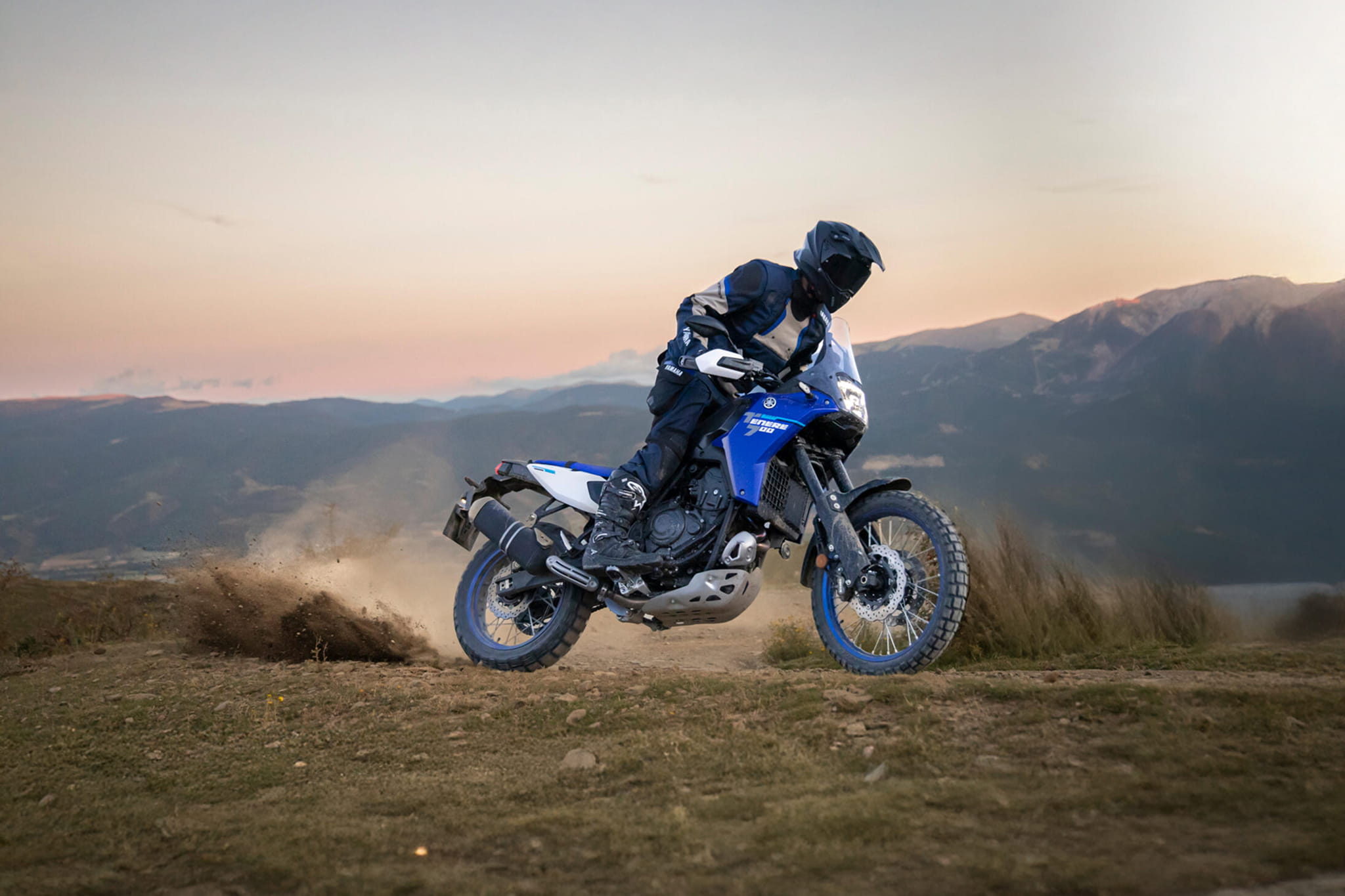
There’s a certain type of rider who looks at where the pavement ends and instead sees a starting point. What’s down that dirt track? Where does that gravel path lead? What’s on the other side of that mountain pass?
If that sounds like you, adventure motorcycles might be exactly what you’ve been looking for.
Riders call them ADVs. They’re built to go almost anywhere you’re willing to take them. Paved highways, mountain switchbacks, gravel roads, forest tracks, river crossings. They’re designed for those who want the freedom to explore without limits, and who don’t turn around just because the road runs out.
The adventure riding community has exploded over the past decade, and it’s easy to see why. These bikes tap into something primal: the urge to explore, to go further, to find out what’s around the next bend.
Let’s get into what makes adventure motorcycles so compelling
 What Makes an Adventure Motorcycle, an Adventure Motorcycle?
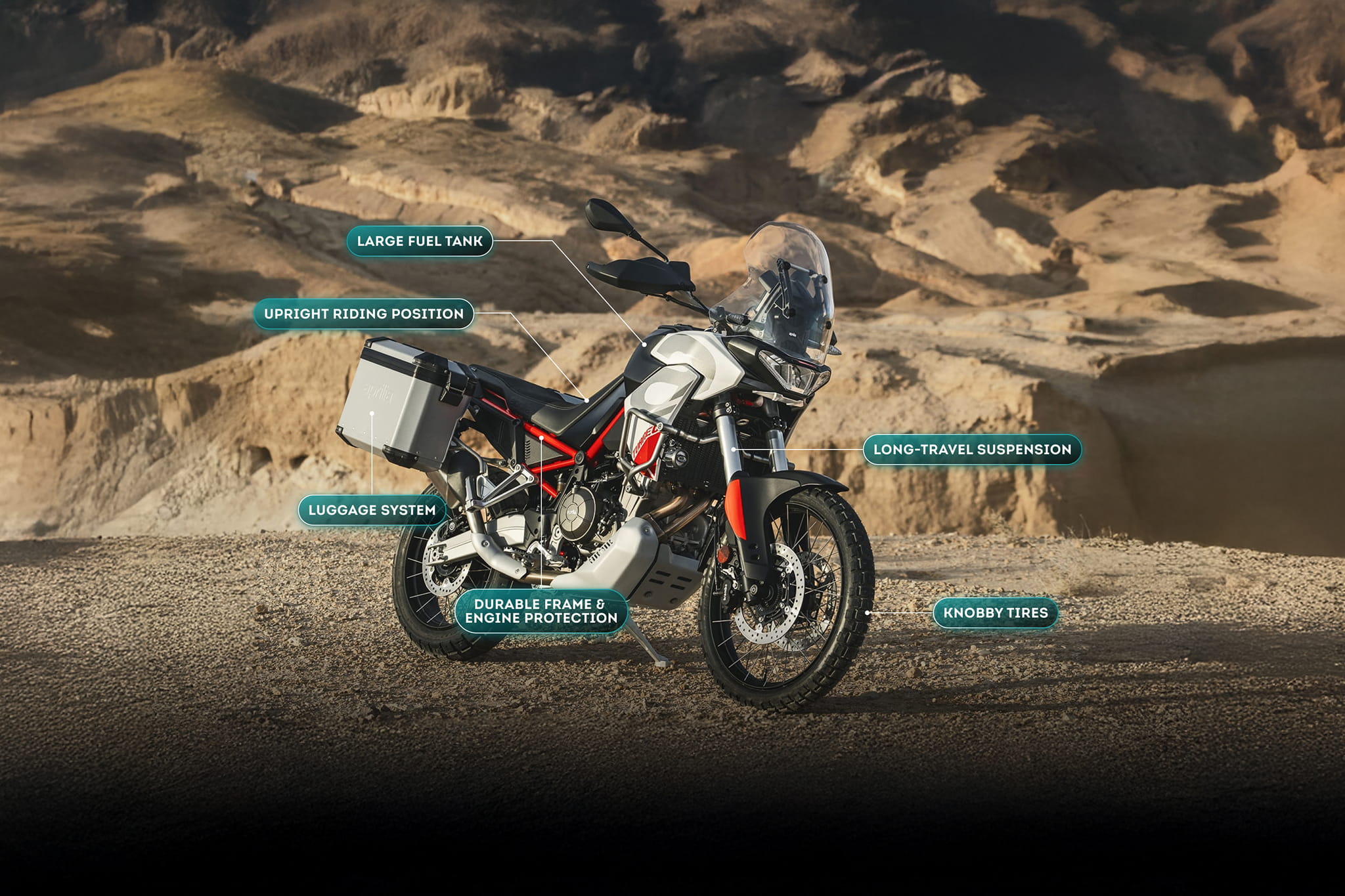
At their core, adventure motorcycles are built to handle more than one kind of road. They combine the comfort and range of a touring bike with the capability of an off-road motorcycle, resulting in something incredibly versatile.
A few things set ADV bikes apart from everything else in the garage:
- Long-travel suspension that absorbs rough terrain
- Upright riding position for visibility and control
- Knobby tires that grip both pavement and dirt
- Large fuel tanks designed to take you far between fill-ups
- Durable frames and engine protection built to handle falls and rough terrain
- Luggage systems for multi-day travel
That combination of features means you can start on the highway, turn onto a forest trail, set up camp in the middle of nowhere, and ride home again. All on the same bike.
That’s not something you can say about a cruiser, a sport bike, or a standard. That’s what makes ADVs different.
 Adventure Riding: A Mindset First. A Motorcycle Second.
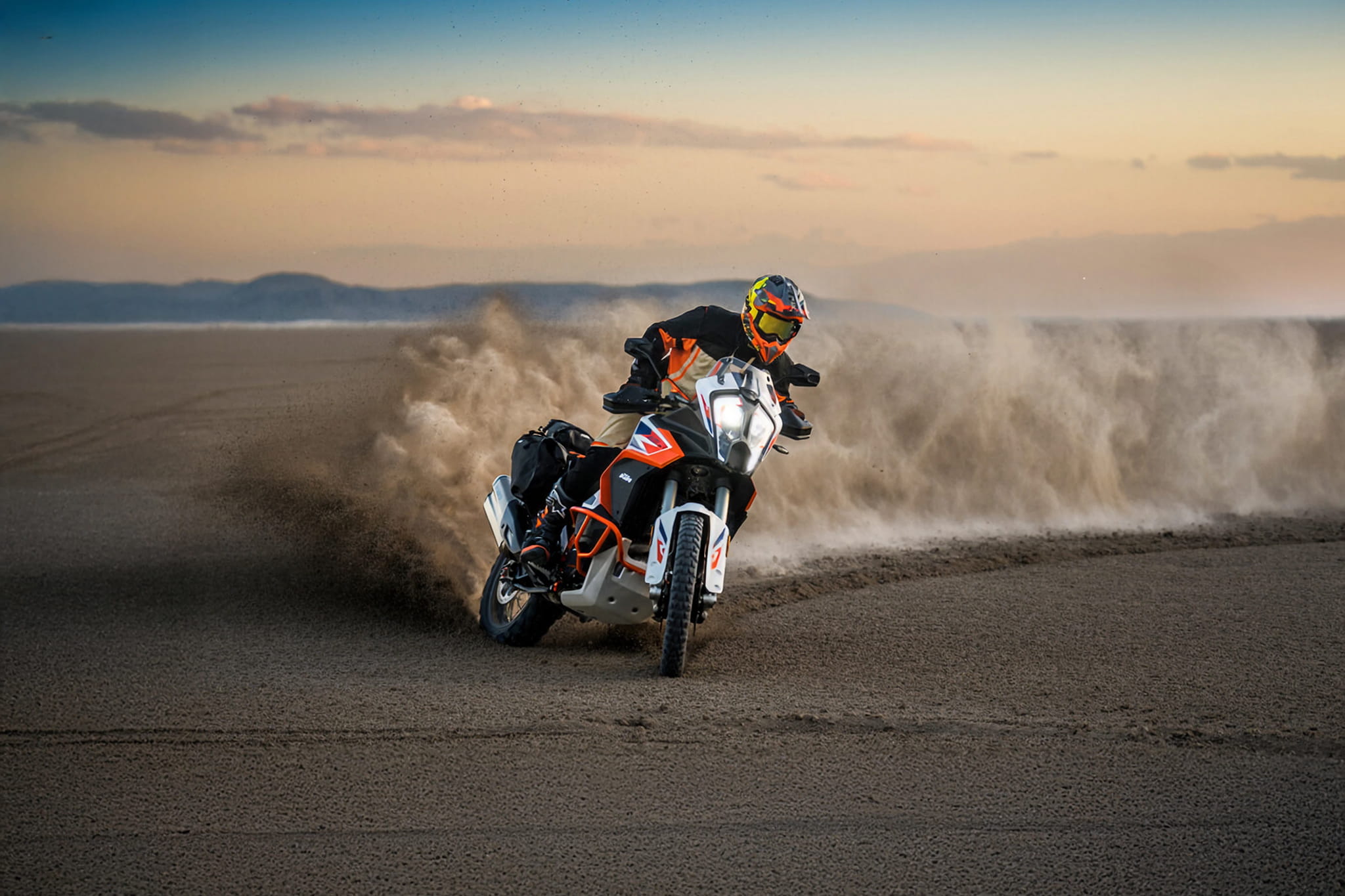
Adventure riding is as much a mindset as it is a style of motorcycle.
It calls out to the rider who sees a map less like a guide and more like a starting point. They want to know what’s past the last marked trail or whether that mountain road is actually rideable in spring. They have an instinct to stay curious about what’s further ahead, even if they’re not exactly sure what they’ll find.
Adventure riding grew out of a simple desire to follow the road wherever it went, even when it stopped being a road. Smooth asphalt was fine, but what about the dirt road that cut 40 miles off the route? Or the river crossing that led to a valley with breathtaking views that don’t exist on any Instagram page?
So the bikes evolved. And once they did, a whole culture formed around them.
That culture is defined by self-sufficiency. ADV riders plan their own routes, carry their own tools, and fix their own problems on the side of the road in the middle of nowhere. Multi-day trips are common. Sometimes you end the day at a campsite, sometimes a roadside inn, sometimes wherever you happen to land.
It’s also built around distance, but not in the way you might think. It’s not only about how far you go. It’s about how far you’re willing to push into the unknown. Where a weekend cruiser might mean hundreds of miles of familiar highway, an ADV weekend might mean crossing two state lines and riding terrain no GPS has a name for.
Because for ADV riders, the unpredictability is entirely the point.
 Adventure Riding vs. Dual Sport vs. Overlanding: What’s the Difference?
The ADV world has its own language, and a few terms get used interchangeably. Here’s how the main terms break down:
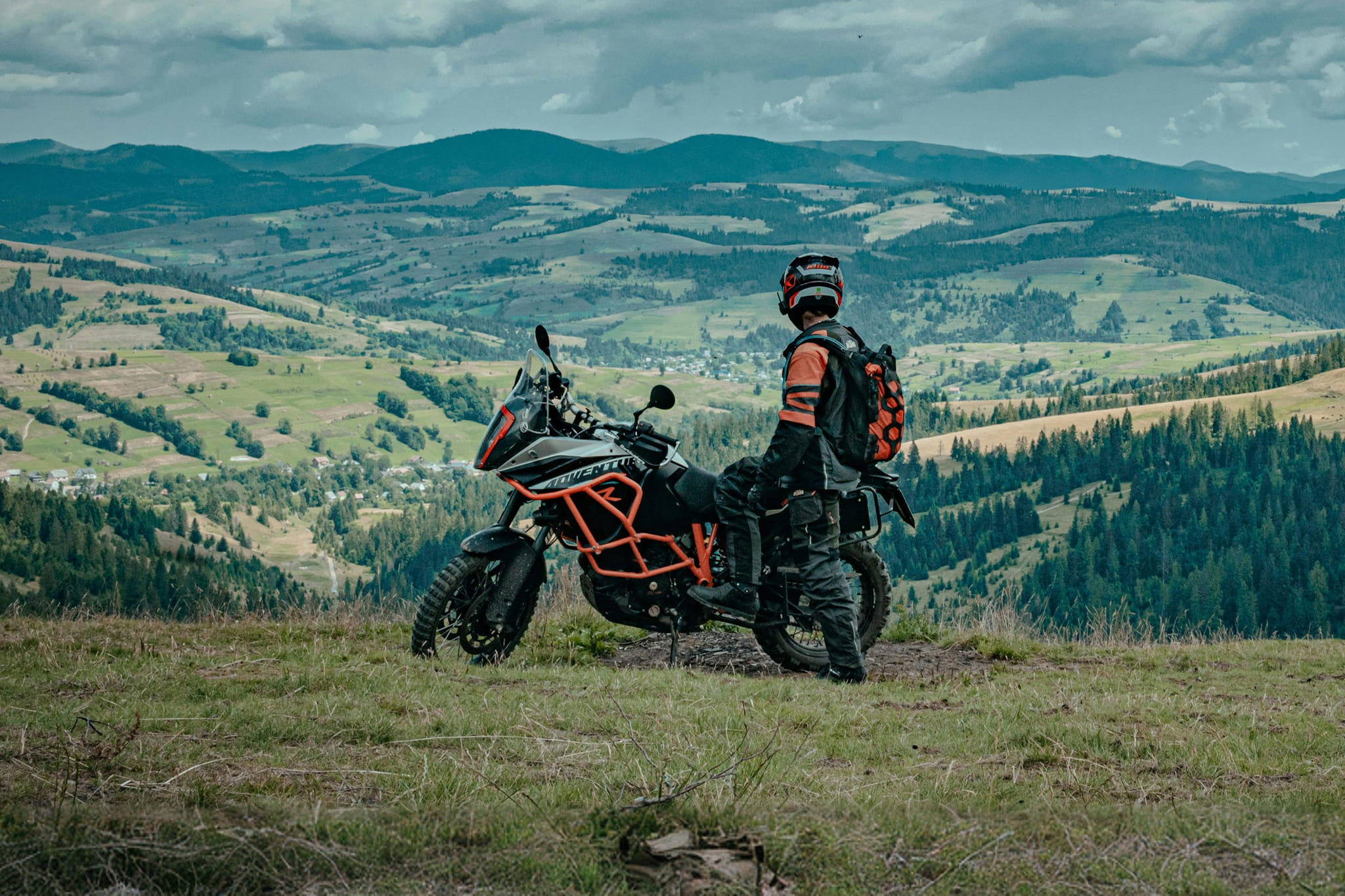
Adventure riding is the broad category. Any riding that mixes on-road and off-road terrain, usually with an emphasis on distance and exploration.
Dual sport refers specifically to a type of motorcycle that is lighter and street legal but built heavily for off-road use. Think of them as dirt bikes you can actually ride to the trail. They’re nimble, affordable, and a great entry point if you want to explore without hauling a week’s worth of gear.
Adventure motorcycles (ADVs) sit between touring bikes and dual sports. They’re heavier, super comfortable, and built for longer distances while still handling dirt and gravel.
Overlanding is the deep end: long-distance riding across challenging terrain, sometimes spanning multiple states or even countries, with everything you need to be self-sufficient for days or weeks at a time strapped to the bike. Most overlanders have years of riding under their belt before they go there.
You don’t need to commit to a cross-continent expedition to be an adventure rider. It could be as simple as a weekend camping trip on the backroads. The scale is completely up to you.
 Small ADV vs. Large ADV: Choosing the Right Bike for You
Adventure bikes come in a range of sizes, and choosing the right one depends on how you actually want to ride.
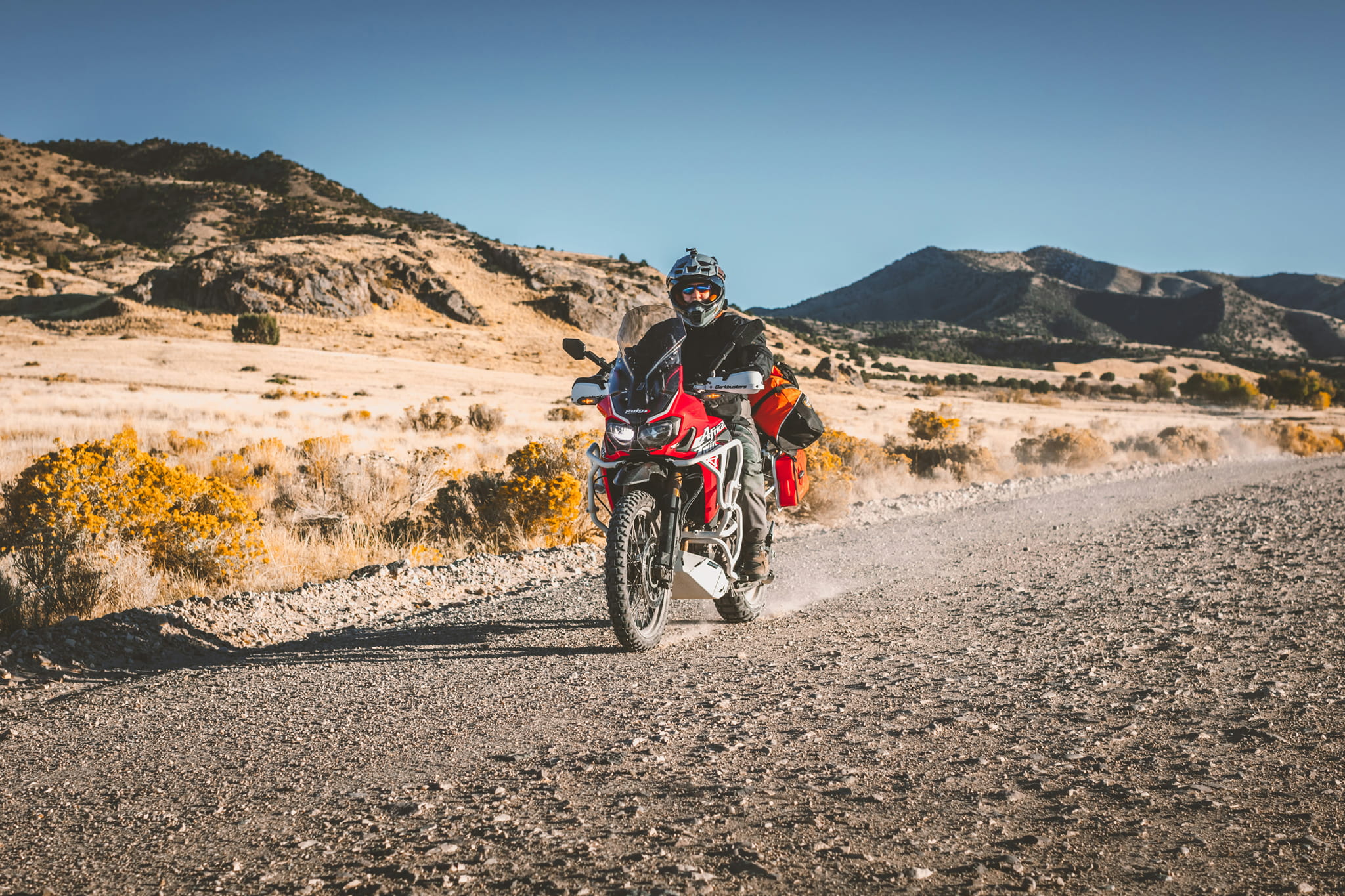
Small ADVs (300cc-500cc) are lighter, more manageable, and easier to handle when off-road. They’re more forgiving at low speeds, easier to pick up if you drop them, and provide a great entry point for newer riders. Popular examples include the Honda CRF300L and the Royal Enfield Himalayan.
Midweight ADVs (600cc-900cc) are often considered the sweet spot for many riders. They balance power, weight, and off-road capability well. Examples include the Yamaha Ténéré 700 and Aprilia Tuareg 660.
Large ADVs (1,000cc and up) are built for serious distance and long-haul touring. They handle highways with authority, carry more gear, and come loaded with features like ride modes, traction control, heated grips, large windscreens, and connectivity systems. The BMW R 1300 GS, Honda Africa Twin, and KTM 1290 Super Adventure sit in this category.
For most new riders, small or midweight bikes are a great place to start. The ability to maneuver confidently at low speeds and on rough terrain matters far more than top-end performance. You can always move up once you’ve built your skills.
 Where Do Adventure Riders Actually Go?
That’s part of the appeal. The answer is basically anywhere.
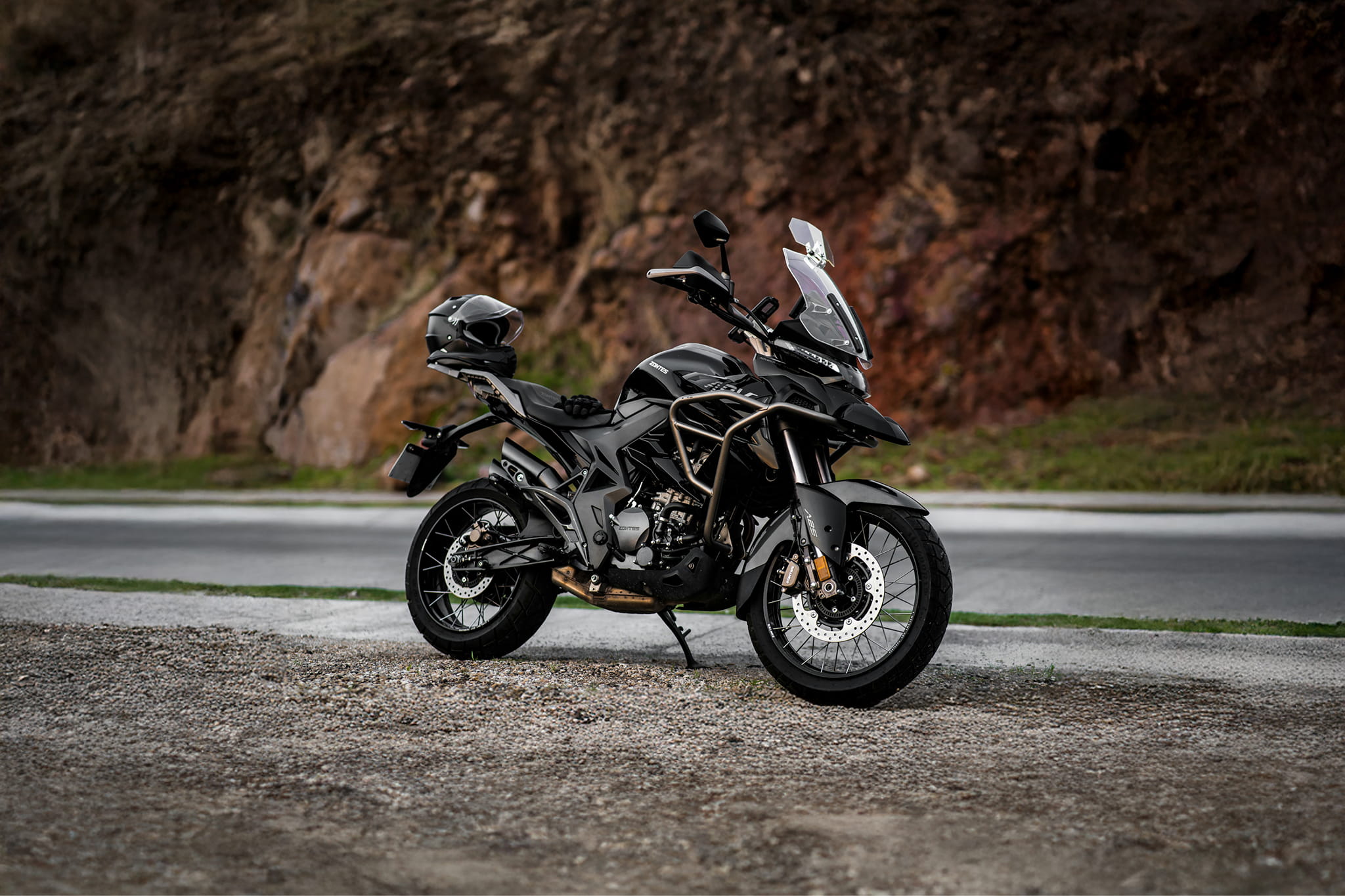
For many riders, it starts with fire roads, national forest tracks, scenic highway routes, and gravel roads that cut through farming country. The kinds of places most people drive past without thinking twice.
As skills improve, riders move into more technical terrain, like rocky mountain passes, river crossings, sand, or alpine trails. The further you push into that territory, the more skill and preparation it demands.
And then there are the big journeys. Routes like the Trans-America Trail, the Pan-American Highway, or cross-continental rides through South America, Africa, or Central Asia.
But it doesn’t have to be that big. Sometimes it’s just a place you’ve never seen before and enough curiosity to see where it goes.
 Gear Built for the Unknown
Adventure riding has its own gear demands, and they’re crucial to understand before you head off-road.
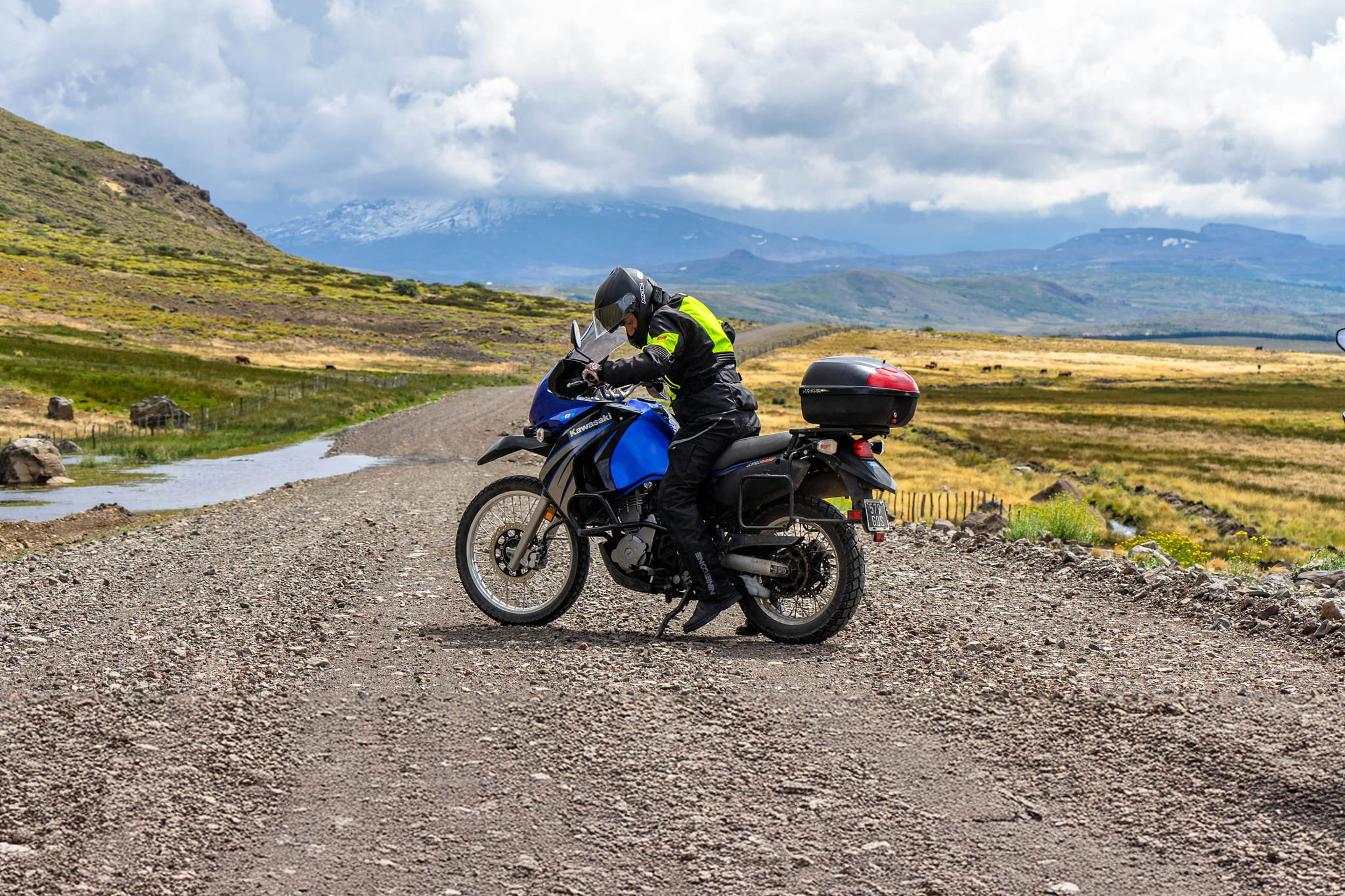
Adventure helmet: Most ADV riders choose a dual-sport or adventure helmet, which features a sun visor, a peak (the visor on top), and strong ventilation for varying conditions. Full-face protection is non-negotiable.
Jacket and pants: Textile jackets and pants with CE-rated armor are the go-to. Look for multiple ventilation zones, waterproofing, and layering options since adventure riding takes you through changing climates and conditions.
Adventure boots: You want something that works on and off the bike. ADV-specific boots offer ankle protection, sole grip for walking on uneven terrain, and enough stiffness to protect your feet in a get-off. They’re one of the most important gear investments you’ll make.
Gloves: Short-cuff gloves for warmer weather, longer gauntlet gloves for cold and wet conditions. Look for palm sliders and knuckle protection.
Navigation: Most ADV riders use a combination of GPS devices and smartphone mounts. Apps like iOverlander and Gaia GPS are popular for off-road route planning, especially when you’re heading somewhere cell service can’t reach.
Pack light, pack smart, and always carry a basic tool kit.
 Is Adventure Riding Right for You?
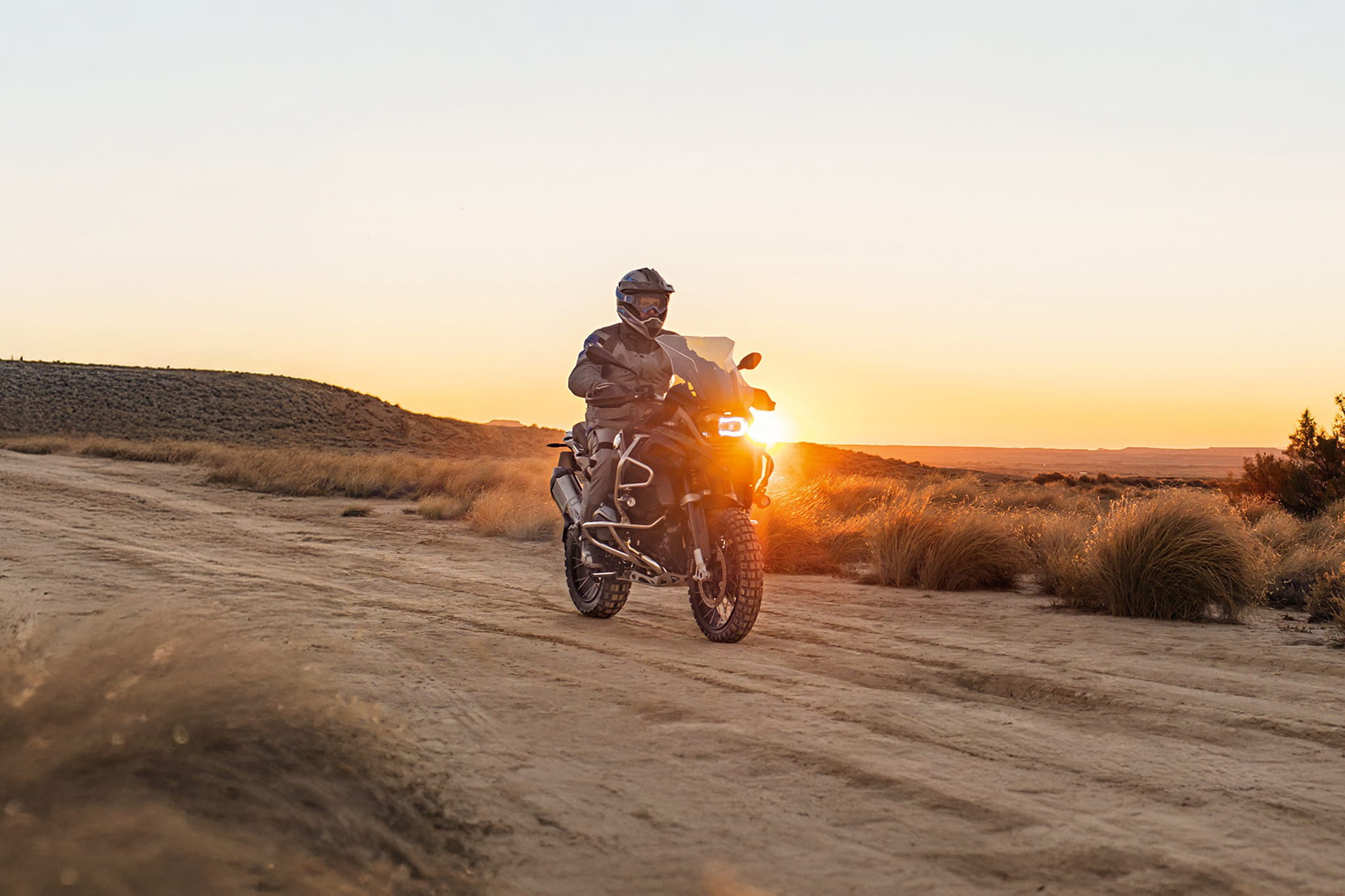
Adventure riding is for the rider who isn’t satisfied with the same roads every weekend. The one who glances at a map and immediately starts wondering which of those lines hasn’t been ridden yet.
It can feel intimidating at first, but every rider you see out there started in the exact same place. You don’t need a massive bike for a transcontinental trip. All you need is curiosity and a willingness to take it one new road at a time.
Because adventure riding changes your relationship with where you’re going and how you get there.
Ready to figure out what kind of rider you might be? Whether you’re drawn to weekend gravel roads or dreaming of something more, the right bike is out there waiting for you.
Take our bike finder quiz to discover what suits your style and goals, or use our dealer locator to connect with someone who can point you in the right direction.