What is a 3-wheel motorcycle? Here’s exactly what they are, who rides them, and how to know if they’re right for you.
So you’ve been eyeing a 3-wheeler?
Maybe a Can-Am passed you on the highway, and you did a full double-take. Maybe you rented a Polaris Slingshot on your last vacation and haven’t stopped thinking about it since. Or perhaps you’ve always wanted to ride, but the idea of balancing a motorcycle at a stoplight has kept you on the sidelines.
Whatever it was that piqued your curiosity, you’re certainly not alone.
Often referred to as trikes, three-wheeled motorcycles offer a unique middle ground. They don’t look (or ride) like anything else on the road. They deliver the rock-solid stability of a wider, planted footprint, but they don’t ask you to sacrifice the open-air freedom and pure excitement that drew you to riding in the first place. You get the breeze, the view, and the twisty roads, just with a little extra confidence built into the chassis.
Let’s break down what 3-wheel motorcycles actually are, why they’re loved by so many new and seasoned riders, and how to figure out which style belongs in your garage.
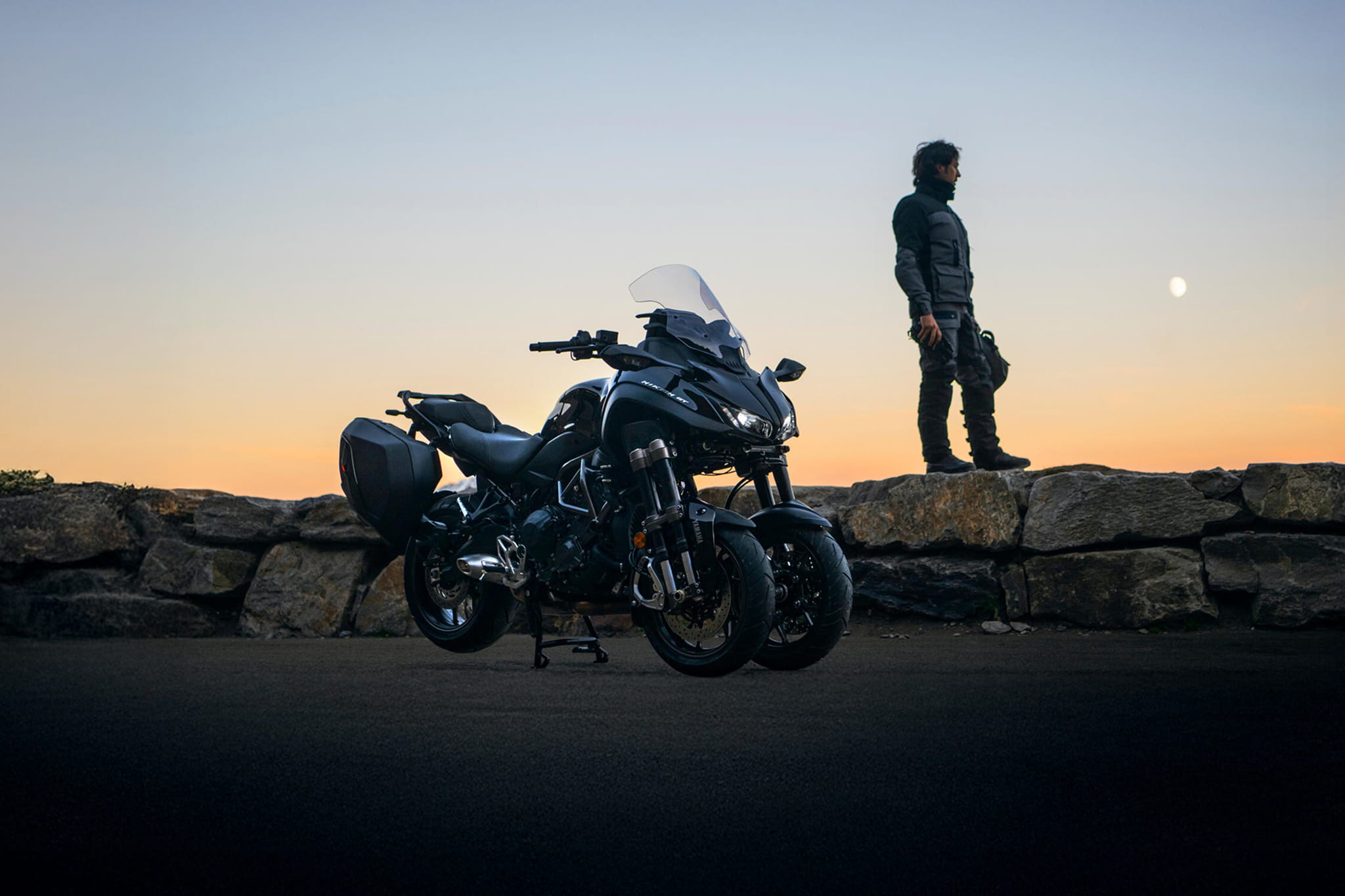
What Is a 3-Wheel Motorcycle, Exactly?
A 3-wheeler is exactly what it sounds like: a motorcycle built with three wheels instead of two. Past that, the details vary depending on the bike.
That extra wheel means more contact with the road, and that translates directly into stability. A lot of 3-wheelers stand upright entirely on their own, so you never have to worry about holding it up.
The control setup is also incredibly friendly for beginners. Many popular models feature automatic transmissions that eliminate the clutch lever and foot shifter. To make things even simpler, many models use a single foot brake that stops all three wheels simultaneously, so you don’t have to think about separate front and rear brakes.
None of that makes the ride any less exciting at all. You still get a sporty, confident feel through corners, along with extra storage and creature comforts that a lot of two-wheelers simply can’t match.
Two Wheels in the Front or the Back?
We’re glad you asked. How a 3-wheeler handles depends entirely on its design, and the market is generally split into a few key categories.
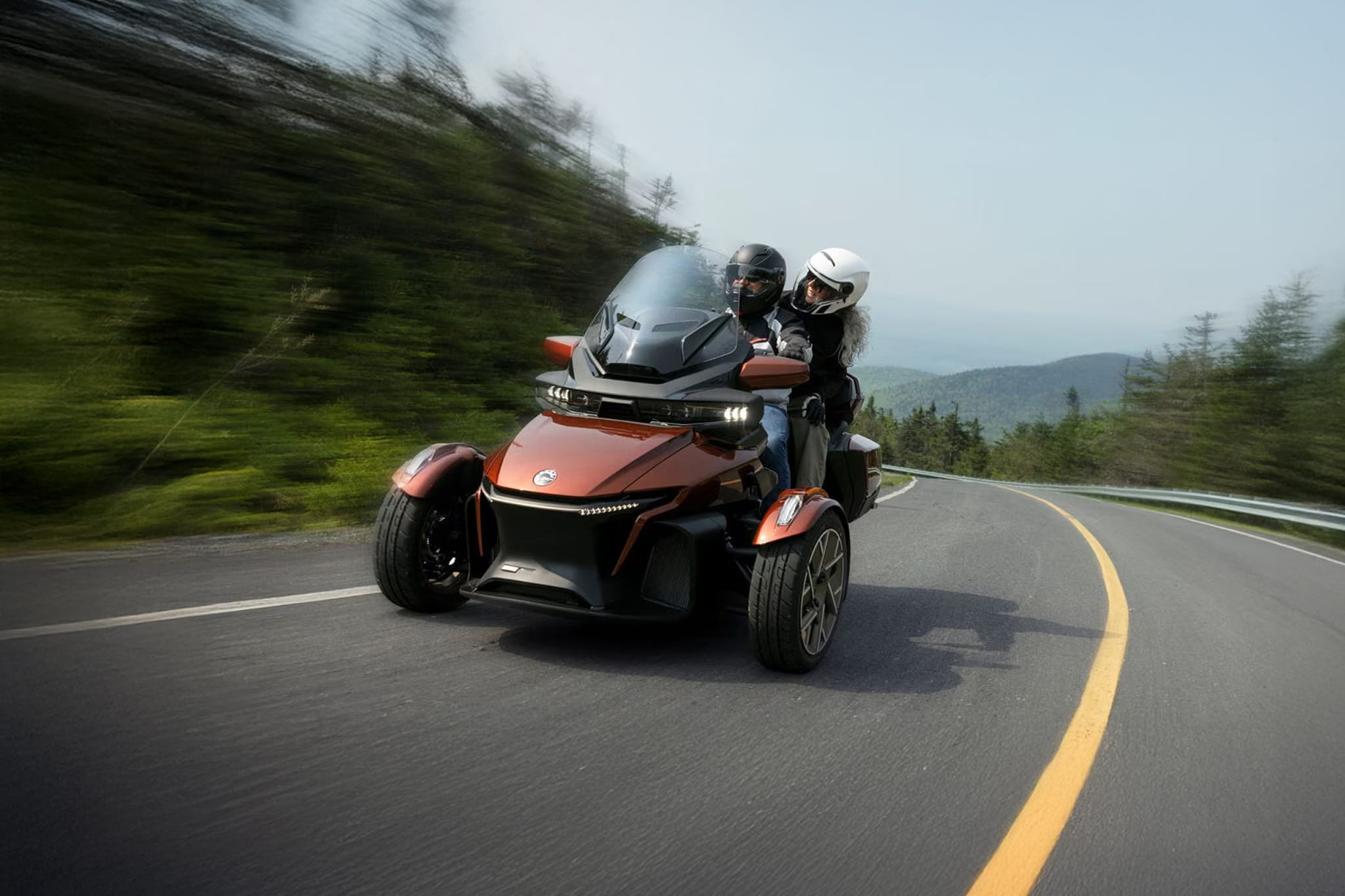
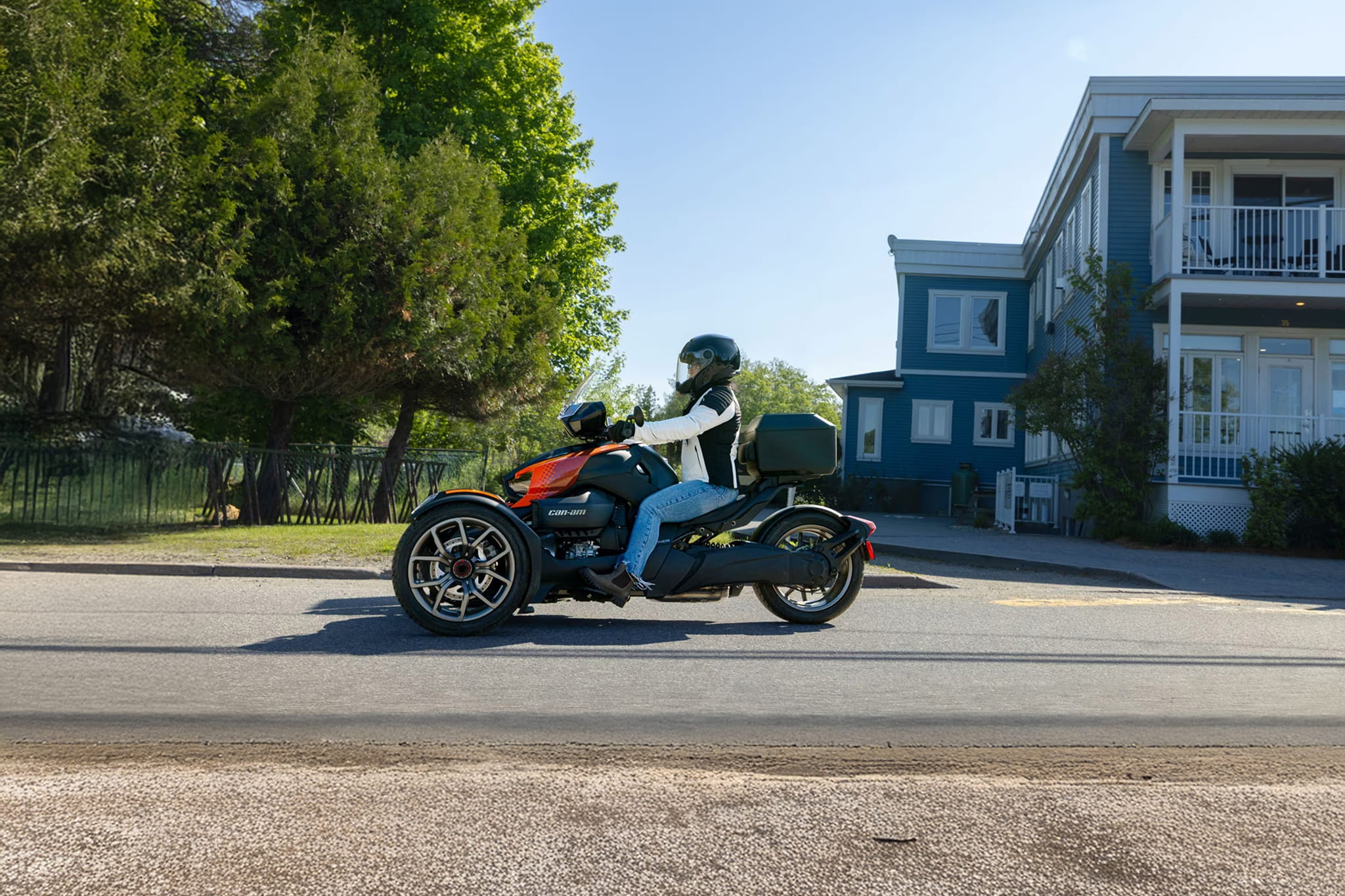
Some put two wheels up front and one in the back. This setup is known as a reverse trike, and it’s found on popular models like the Can-Am Ryker and Spyder. It offers immediate stability because the bulk of the bike’s weight sits between the two front wheels.
These motorcycles use direct steering, meaning you physically push and pull the handlebars to turn, similar to riding an ATV or a snowmobile, and they stay completely flat on corners, providing a highly stable yet still athletic ride.
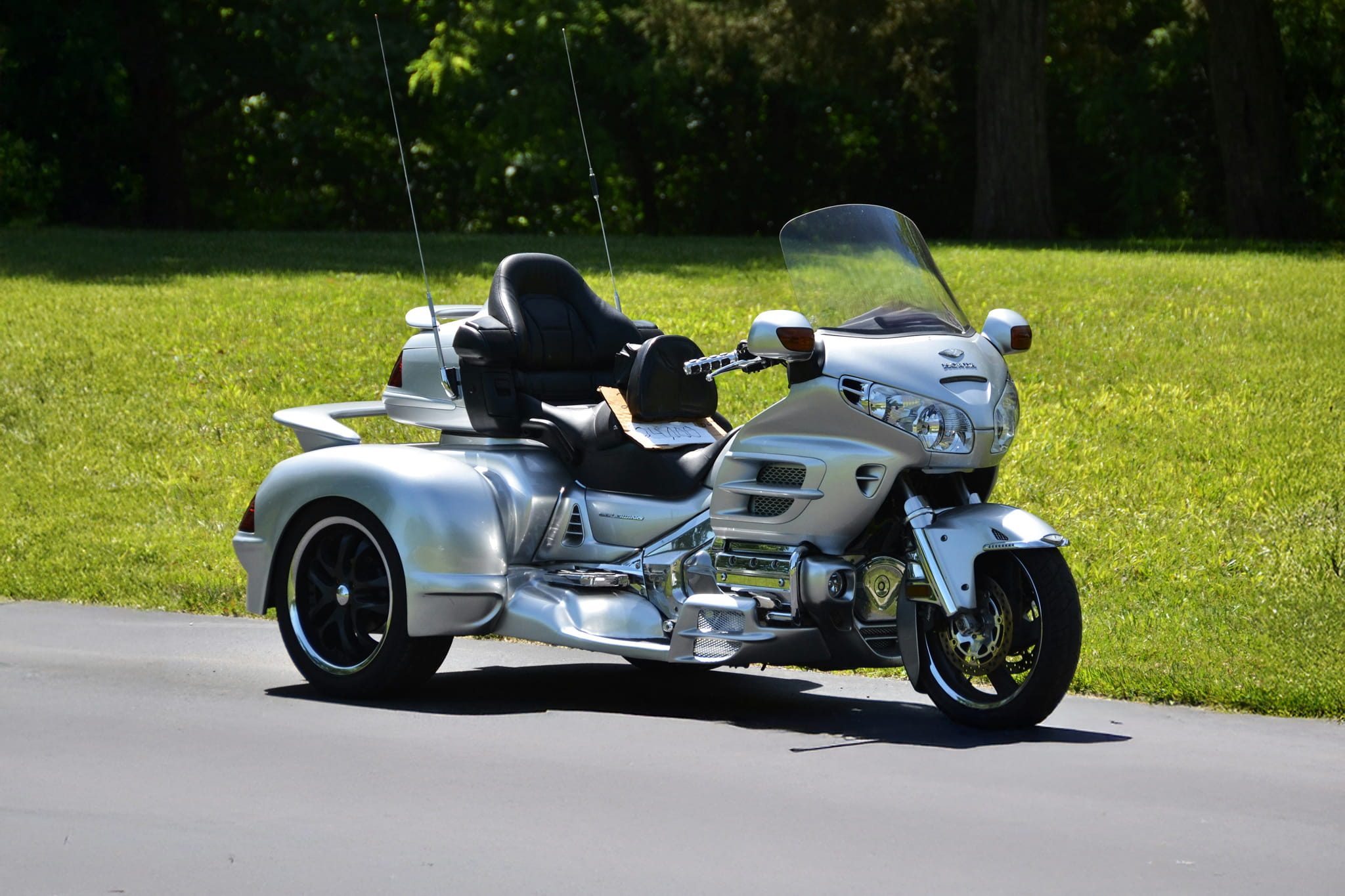
Traditional trikes (one wheel in the front, two in the back) have the classic silhouette that most people picture when they think of a trike, and you’ll often find it built on touring and cruiser platforms. Like reverse trikes, they use direct steering, but they offer a heavier, traditional cruiser stance built almost entirely for straight-line highway comfort and massive cargo storage.
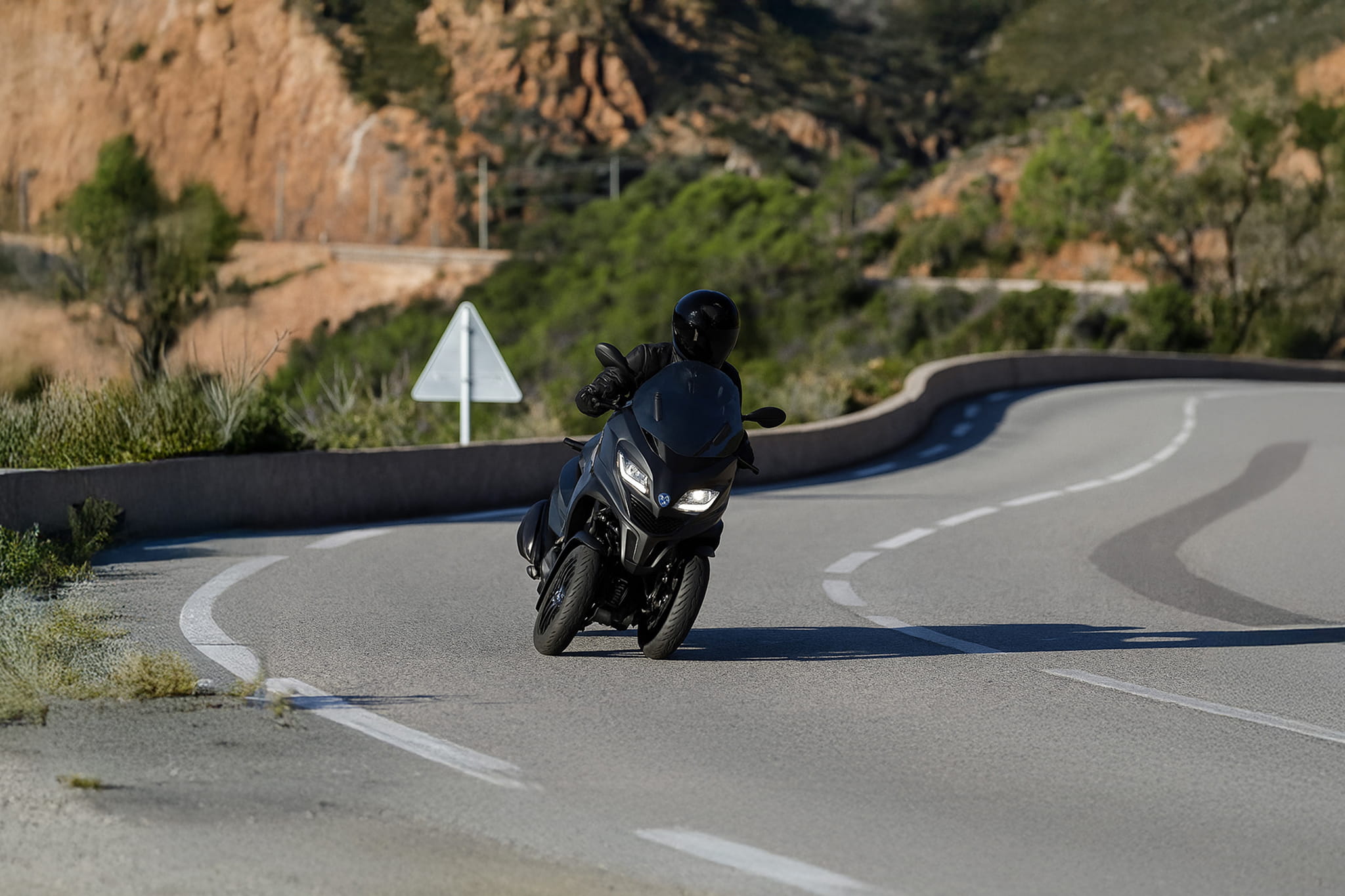
Then there are leaning multi-wheelers. For riders who want the exact physical sensation of a 2-wheel motorcycle with an added safety net, models like the Yamaha Niken or the Piaggio MP3 scooter are the answer. Thanks to a high-tech, linked front suspension, these motorcycles require traditional counter-steering. You actively lean the machine into corners just like a standard bike, but the dual front tires provide double the traction on wet pavement or uneven roads.
Who Rides 3-Wheel Motorcycles?
3-wheel riders come from all over the map. The trike community is incredibly diverse because these bikes solve a lot of real-world problems for different types of riders.
First, it’s a natural entry point into motorsports. Without the learning curve of a manual clutch or the physical demands of balancing a bike, new riders can dedicate 100% of their mental energy to watching traffic and learning the rules of the road.
But plenty of seasoned riders find their way to three wheels, too. Sometimes, it’s the key to staying on the road. Whether managing an old sports injury, back pain, or simply the natural physical limitations that come as we age, switching to a trike eliminates the strain of managing a traditional motorcycle. It allows veteran riders to keep enjoying the open road and community rides.
Finally, trikes attract people who just want a high-performance toy. Whether it’s a cross-country tourer with enough trunk space for a week’s worth of luggage, or a high-tech sports trike built to carve up mountain passes, these bikes are just plain fun to take out on the road.
There’s a Ride for Every Style
The modern 3-wheel market has expanded way beyond standard highway cruisers. Today, you can find the right selection based exactly on how and where you envision yourself riding.
If you’re looking for a light, approachable commuter for city streets or casual weekend riding, entry-level models with twist-and-go transmissions keep things simple and effortless. The Can-Am Ryker and Piaggio MP3 remain among the most popular options for beginners, and for good reason.
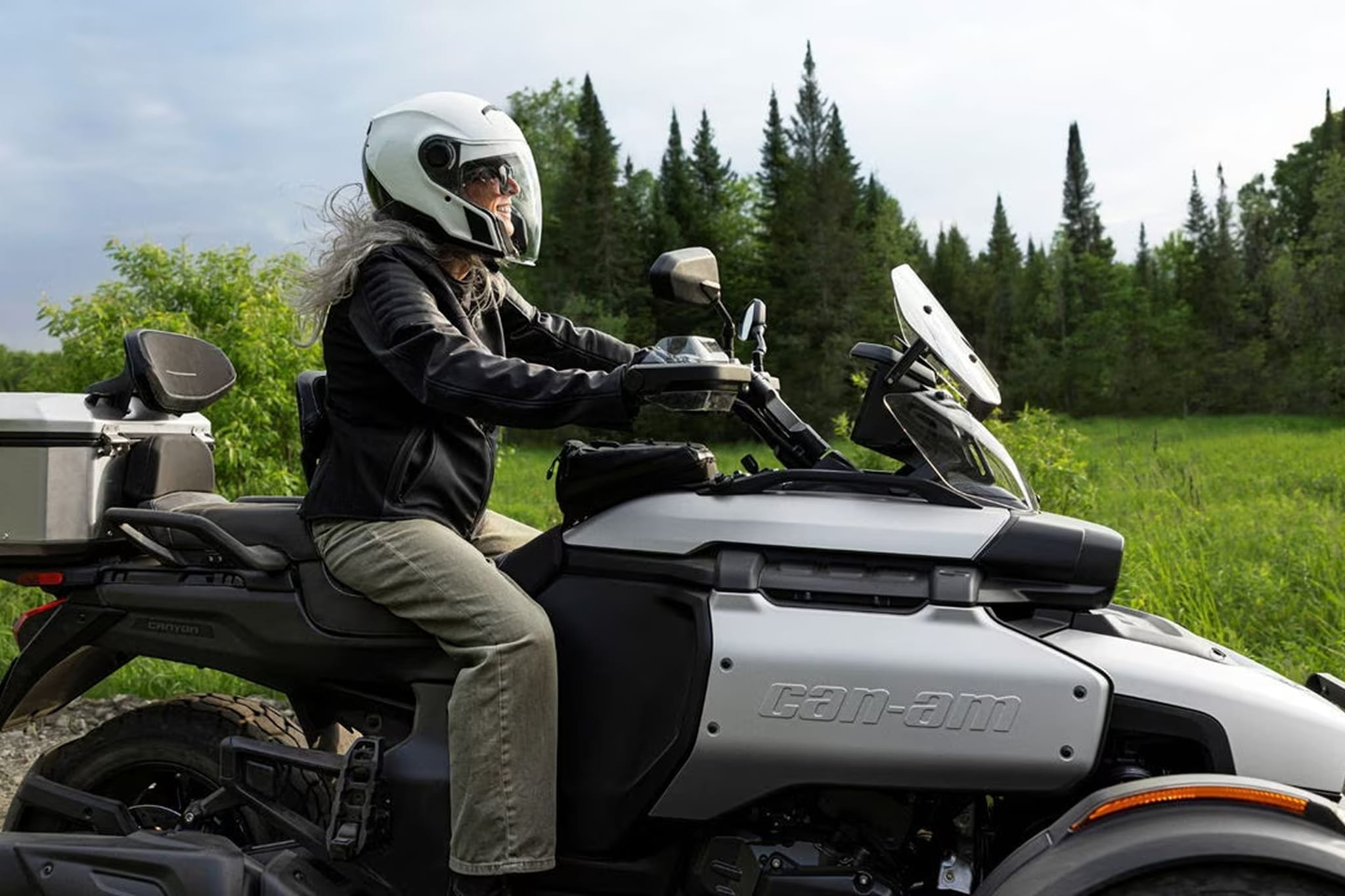
What if your plans involve long-distance travel? There are plenty of full-dress touring trikes out there that come equipped with massive passenger backrests, electronic cruise control, heated seats, integrated stereos, and extra cargo space designed for weeks on the interstate. There are even newer, rugged adventure trikes built with upgraded suspension meant to take you off the beaten path and onto unpaved dirt roads.
Then there’s the autocycle category, most notably led by the Polaris Slingshot. These vehicles trade traditional handlebars for a steering wheel, foot pedals, and side-by-side bucket seats. If you love that car-like interface, boutique brands like Vanderhall offer upscale, vintage-styled autocycles, while machines like the Campagna T-REX deliver a track-ready experience on three wheels.
Whatever pulls you in, you can bet there’s a 3-wheeler built for it.
Do You Need a Special License to Ride a 3-Wheel Motorcycle?
It’s one of the most common questions new riders ask, and the answer comes down to how the vehicle is controlled and where you live.
Vehicles like the Polaris Slingshot use a steering wheel and foot pedals rather than handlebars. Because of this, 49 states actually classify them as “autocycles,” meaning you only need a standard driver’s license to legally drive one. Massachusetts is the lone holdout, where they’re still classified as motorcycles.
For straddle-style 3-wheelers with handlebars (like the Can-Am Ryker, Spyder, or a traditional cruiser trike), the rules depend entirely on your home state. If you live in California, Nevada, or South Carolina, you’re in luck! These states allow you to operate any trike with a standard driver’s license. In the other 47 states, you’ll need some form of motorcycle credential to ride legally.
If you think you’ll only be riding 3-wheel motorcycles (and not standard 2-wheel motorcycles), you’ll be happy to hear that some states offer a 3-wheel-only endorsement. In these cases, if you take your training and testing on a 3-wheeler, your license simply gets a restriction noting that you’re legally limited to three wheels.
Just keep in mind that while a 3-wheel endorsement limits you to trikes, a traditional, standard motorcycle license allows you to ride both 2-wheel and 3-wheel bikes.
The exact rules and regulations shift from state to state, so it’s worth checking with your local DMV before you buy, rent, or make any final plans.
One thing that helps either way: the Motorcycle Safety Foundation (MSF) offers a 3-Wheel Basic RiderCourse dedicated entirely to the steering and handling of trikes. In many states, passing this quick weekend course completely waives the DMV road skills test, automatically earns you your 3-wheel endorsement, and can even score you a healthy discount on your insurance premium.
For more information on this topic, we also recommend you check out our motorcycle licensing and training guide.
Three Wheels That Offer the Same Freedom
Whether on two wheels or three, we’re all chasing the same thing as riders: freedom, community, and that feeling you only get out on the open road.
Every type of motorcycle you see on the road was built for a specific purpose that is right for certain people, needs, or situations. It’s all about finding the right style for you, and 3-wheel motorcycles are another way to get you there a little differently, and it’s easy to see why they’ve become so popular.
If a trike has you curious, there’s no wrong way to start exploring. Sit on a few models, talk to riders who already have one, and perhaps take the leap and test ride one next. Use our dealer locator to connect with a dealer near you.
Still exploring your riding style? Try our bike finder quiz to find a ride that matches your style and riding goals.
See you on the road.